LEADER 02237ntm 2200265 a 4500
001 583916
003 TR_AnAIT
005 20250715040021
008 160602t2011 enk#### 000 eng##
020 |a9780521880732 (hardback)
020 |a9780521300650 (paperback)
040 |aTTK
041 |aeng
049 |aTürk Tarih Kurumu Kütüphanesi
090 |aA.VIII/3458
100 |aNiketas, Siniossoglou.
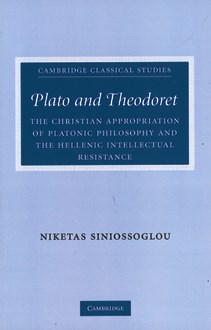
245 10|aPlato and Theodoret :|bthe Christian appropriation of Platonic philosophy and the Hellenic intellectual resistance /|cNiketas Siniossoglou.
250 |a1st paperback edition.
260 |aCambridge ;|aNew York :|bCambridge University Press,|c2011, ©2008.
300 |axi, 267 s. ;|c22 cm.
490 0 |aCambridge classical studies
500 |aİndeks s. 259-267.
504 |aBibliyografya s. 245-258.
520 |a"In late antiquity Plato's philosophy became a battlefield between the competing discourses and rival intellectual paradigms represented by Hellenism and Christianity. Focusing on Theodoret of Cyrrhus' Graecarum Affectionum Curatio, Dr Siniossoglou examines the philosophical, rhetorical and political dimensions of the Neoplatonic–Christian conflict of interpretations over Plato. He shows that the apologist's aim was to procure a radical shift in Hellenic intellectual identity through the appropriation of Platonic concepts and terminology. The apologetical strategies of appropriation are confronted with the perspective of the intended audience, the Hellenic elite, by means of comparative discourse analysis. The outcome is a reconstruction of a vital trial of strength between Neoplatonic hermeneutics and the Christian rhetorical mode of rewriting Plato. The volume concludes that the fundamental Hellenic–Christian opposition outweighed any linguistic merging that might have occurred between the two systems, and that this opposition outlived the dominance of Christianity in late antique society and politics." --|cYayıncı.