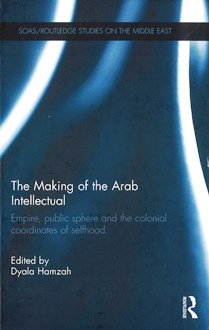
The making of the Arab intellectual : empire, public sphere and the colonial coordinates of selfhood / edited by Dyala Hamzah.
Yer Numarası
A.VIII/3776
ISBN
9780415488341 (hbk)
9780203080474 (ebk)
9780203080474 (ebk)
Dil Kodu
İngilizce
Kütüphane
Türk Tarih Kurumu Kütüphanesi
Basım Bildirimi
1st published.
Yayın Bilgisi
New York ; London : Routledge, Taylor & Francis Group, ©2013.
Fiziksel Niteleme
xii, 278 s. ; 24 cm.
Dizi
SOAS/Routledge studies on the Middle East ; 18
Genel Not
İndeks s. [270]-278.
Bibliyografi, vb. Notu
Bibliyografya s. [245]-267.
İçindekiler Notu
Introduction : the making of the Arab intellectual, 1880-1960 : empire, public sphere and the colonial coordinates of selfhood / Dyala Hamzah, s. [1]-19 -- Pharaoh's revenge : translation, literary history and colonial ambivalence / Samah Selim, s. [20]-39 -- Public deliberations of the self in fin-de-siècle Egypt / Michael Gasper, s. [40]-62 -- Inscribing socialism into the nahãa : al-Muqtạtaf, al-Hilāl, and the construction of a leftist reformist worldview, 1880-1914 / Ilham Khuri-Makdisi, s. [63]-89 -- From ʻIlm to Sihafa or the politics of the public interest (maṣlaḥa) : Muḥammad Rashīd Riḍā and his journal al-Manār, 1898-1935 / Dyala Hamzah, s. [90]-127 -- Partitioned pasts : Arab Jewish intellectuals and the case of Esther Azharī Moyal, 1873-1948 / Lital Levy, s. [128]-163 -- The mahjar as literary and political territory in the first decades of the twentieth century : the example of Amīn Rīḥānī, 1876-1940 / Leyla Dakhli, s. [164]-187 -- The generation of broad expectations : nationalism, education, and autobiography in Syria and Lebanon, 1930-1958 / Christoph Schumann, s. [188]-211 -- Waiting for the superman : a new generation of Arab nationalists in 1930s Iraq / Peter Wien, s. [212]-244.
Özet, vb.
"In the wake of the Ottoman Empire’s nineteenth-century reforms, as guilds waned and new professions emerged, the scholarly ‘estate’ underwent social differentiation. Some found employment in the state’s new institutions as translators, teachers and editors, whilst others resisted civil servant status. Gradually, the scholar morphed into the public writer. Despite his fledgling status, he catered for the public interest all the more so since new professionals such as doctors, engineers and lawyers endorsed this latest social role as an integral part of their own self-image.
This dual preoccupation with self-definition and all things public is the central concern of this book. Focusing on the period after the tax-farming scholar took the bow and before the alienated intellectual prevailed on the contemporary Arab cultural scene, it situates the making of the Arab intellectual within the dysfunctional space of competing states’ interests known as the ‘Nahda’. Located between Empire and Colony, the emerging Arab public sphere was a space of over- and under-regulation, hindering accountability and upsetting allegiances.
The communities that Arab intellectuals imagined, including the Pan-Islamic, Pan-Arab and socialist sat astride many a polity and never became contained by post-colonial states. Examining a range of canonical and less canonical authors, this interdisciplinary approach to The Making of the Modern Arab Intellectual will be of interest to students and scholars of the Middle East, history, political science, comparative literature and philosophy." -- Yayıncı.
Konu
Emeği Geçenler
Hamzah, Dyala, editör.

Eseri Alıntıla
Referansları kullanmadan önce gözden geçirmeniz ve varsa gerekli düzeltmeleri yapmanız önerilir.
Dijital Kaynak
MARC Görünümü
LEADER 04338ntm 2200337 a 4500
001 584314
003 TR_AnAIT
005 20250715034714
008 160803t2013 nyu#### 000 eng##
020 |a9780415488341 (hbk)
020 |a9780203080474 (ebk)
040 |aTTK
041 |aeng
049 |aTürk Tarih Kurumu Kütüphanesi
090 |aA.VIII/3776
245 04|aThe making of the Arab intellectual :|bempire, public sphere and the colonial coordinates of selfhood /|cedited by Dyala Hamzah.
250 |a1st published.
260 |aNew York ;|aLondon :|bRoutledge, Taylor & Francis Group,|c©2013.
300 |axii, 278 s. ;|c24 cm.
490 0 |aSOAS/Routledge studies on the Middle East ;|v18
500 |aİndeks s. [270]-278.
504 |aBibliyografya s. [245]-267.
505 |tIntroduction : the making of the Arab intellectual, 1880-1960 : empire, public sphere and the colonial coordinates of selfhood /|rDyala Hamzah,|gs. [1]-19 --|tPharaoh's revenge : translation, literary history and colonial ambivalence /|rSamah Selim,|gs. [20]-39 --|tPublic deliberations of the self in fin-de-siècle Egypt /|rMichael Gasper,|gs. [40]-62 --|tInscribing socialism into the nahãa : al-Muqtạtaf, al-Hilāl, and the construction of a leftist reformist worldview, 1880-1914 /|rIlham Khuri-Makdisi,|gs. [63]-89 --|tFrom ʻIlm to Sihafa or the politics of the public interest (maṣlaḥa) : Muḥammad Rashīd Riḍā and his journal al-Manār, 1898-1935 /|rDyala Hamzah,|gs. [90]-127 --|tPartitioned pasts : Arab Jewish intellectuals and the case of Esther Azharī Moyal, 1873-1948 /|rLital Levy,|gs. [128]-163 --|tThe mahjar as literary and political territory in the first decades of the twentieth century : the example of Amīn Rīḥānī, 1876-1940 /|rLeyla Dakhli,|gs. [164]-187 --|tThe generation of broad expectations : nationalism, education, and autobiography in Syria and Lebanon, 1930-1958 /|rChristoph Schumann,|gs. [188]-211 --|tWaiting for the superman : a new generation of Arab nationalists in 1930s Iraq /|rPeter Wien,|gs. [212]-244.
520 |a"In the wake of the Ottoman Empire’s nineteenth-century reforms, as guilds waned and new professions emerged, the scholarly ‘estate’ underwent social differentiation. Some found employment in the state’s new institutions as translators, teachers and editors, whilst others resisted civil servant status. Gradually, the scholar morphed into the public writer. Despite his fledgling status, he catered for the public interest all the more so since new professionals such as doctors, engineers and lawyers endorsed this latest social role as an integral part of their own self-image.
This dual preoccupation with self-definition and all things public is the central concern of this book. Focusing on the period after the tax-farming scholar took the bow and before the alienated intellectual prevailed on the contemporary Arab cultural scene, it situates the making of the Arab intellectual within the dysfunctional space of competing states’ interests known as the ‘Nahda’. Located between Empire and Colony, the emerging Arab public sphere was a space of over- and under-regulation, hindering accountability and upsetting allegiances.
The communities that Arab intellectuals imagined, including the Pan-Islamic, Pan-Arab and socialist sat astride many a polity and never became contained by post-colonial states. Examining a range of canonical and less canonical authors, this interdisciplinary approach to The Making of the Modern Arab Intellectual will be of interest to students and scholars of the Middle East, history, political science, comparative literature and philosophy." --|cYayıncı.
600 1 |aMoyal, Esther Azharī, 1873-1948.
600 1 |aRīhānī, Amīn, 1876-1940.
650 |aEntelektüeller|zArap ülkeleri|xTarih|y19. yy.
650 |aEntelektüeller|zArap ülkeleri|xTarih|y20. yy.
651 |aArap ülkeleri|xEntelektüel yaşam|y19. yy.
651 |aArap ülkeleri|xEntelektüel yaşam|y20. yy.
700 1 |aHamzah, Dyala,|eeditör.
001 584314
003 TR_AnAIT
005 20250715034714
008 160803t2013 nyu#### 000 eng##
020 |a9780415488341 (hbk)
020 |a9780203080474 (ebk)
040 |aTTK
041 |aeng
049 |aTürk Tarih Kurumu Kütüphanesi
090 |aA.VIII/3776
245 04|aThe making of the Arab intellectual :|bempire, public sphere and the colonial coordinates of selfhood /|cedited by Dyala Hamzah.
250 |a1st published.
260 |aNew York ;|aLondon :|bRoutledge, Taylor & Francis Group,|c©2013.
300 |axii, 278 s. ;|c24 cm.
490 0 |aSOAS/Routledge studies on the Middle East ;|v18
500 |aİndeks s. [270]-278.
504 |aBibliyografya s. [245]-267.
505 |tIntroduction : the making of the Arab intellectual, 1880-1960 : empire, public sphere and the colonial coordinates of selfhood /|rDyala Hamzah,|gs. [1]-19 --|tPharaoh's revenge : translation, literary history and colonial ambivalence /|rSamah Selim,|gs. [20]-39 --|tPublic deliberations of the self in fin-de-siècle Egypt /|rMichael Gasper,|gs. [40]-62 --|tInscribing socialism into the nahãa : al-Muqtạtaf, al-Hilāl, and the construction of a leftist reformist worldview, 1880-1914 /|rIlham Khuri-Makdisi,|gs. [63]-89 --|tFrom ʻIlm to Sihafa or the politics of the public interest (maṣlaḥa) : Muḥammad Rashīd Riḍā and his journal al-Manār, 1898-1935 /|rDyala Hamzah,|gs. [90]-127 --|tPartitioned pasts : Arab Jewish intellectuals and the case of Esther Azharī Moyal, 1873-1948 /|rLital Levy,|gs. [128]-163 --|tThe mahjar as literary and political territory in the first decades of the twentieth century : the example of Amīn Rīḥānī, 1876-1940 /|rLeyla Dakhli,|gs. [164]-187 --|tThe generation of broad expectations : nationalism, education, and autobiography in Syria and Lebanon, 1930-1958 /|rChristoph Schumann,|gs. [188]-211 --|tWaiting for the superman : a new generation of Arab nationalists in 1930s Iraq /|rPeter Wien,|gs. [212]-244.
520 |a"In the wake of the Ottoman Empire’s nineteenth-century reforms, as guilds waned and new professions emerged, the scholarly ‘estate’ underwent social differentiation. Some found employment in the state’s new institutions as translators, teachers and editors, whilst others resisted civil servant status. Gradually, the scholar morphed into the public writer. Despite his fledgling status, he catered for the public interest all the more so since new professionals such as doctors, engineers and lawyers endorsed this latest social role as an integral part of their own self-image.
This dual preoccupation with self-definition and all things public is the central concern of this book. Focusing on the period after the tax-farming scholar took the bow and before the alienated intellectual prevailed on the contemporary Arab cultural scene, it situates the making of the Arab intellectual within the dysfunctional space of competing states’ interests known as the ‘Nahda’. Located between Empire and Colony, the emerging Arab public sphere was a space of over- and under-regulation, hindering accountability and upsetting allegiances.
The communities that Arab intellectuals imagined, including the Pan-Islamic, Pan-Arab and socialist sat astride many a polity and never became contained by post-colonial states. Examining a range of canonical and less canonical authors, this interdisciplinary approach to The Making of the Modern Arab Intellectual will be of interest to students and scholars of the Middle East, history, political science, comparative literature and philosophy." --|cYayıncı.
600 1 |aMoyal, Esther Azharī, 1873-1948.
600 1 |aRīhānī, Amīn, 1876-1940.
650 |aEntelektüeller|zArap ülkeleri|xTarih|y19. yy.
650 |aEntelektüeller|zArap ülkeleri|xTarih|y20. yy.
651 |aArap ülkeleri|xEntelektüel yaşam|y19. yy.
651 |aArap ülkeleri|xEntelektüel yaşam|y20. yy.
700 1 |aHamzah, Dyala,|eeditör.
Materyaller
Depodan talep edilen materyal sadece kütüphane içerisinde kullanılmaktadır.
Materyal dışarıya ödünç verilmemektedir.
