LEADER 02062ntm 2200253 a 4500
001 584708
003 TR_AnAIT
005 20250715033437
008 161003t201 nyu#### 000 eng##
020 |a9780521763813 (hardback)
020 |a9780521188029 (paperback)
040 |aTTK
041 |aeng
049 |aTürk Tarih Kurumu Kütüphanesi
090 |aA.VIII/4090
100 |aAssmann, Jan,|d1938-
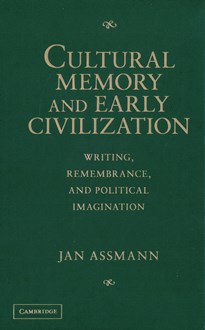
245 10|aCultural memory and early civilization :|bwriting, remembrance, and political imagination /|cJan Assmann.
250 |a1st English edition.
260 |aNew York :|bCambridge University Press,|c2011.
300 |axii, 319 s. ;|c24 cm.
500 |aİndeks s. 301-319.
504 |aBibliyografya s. 277-300.
520 |a"Now available to an English-speaking audience, this book presents a groundbreaking theoretical analysis of memory, identity and culture. It investigates how cultures remember, arguing that human memory exists and is communicated in two ways, namely inter-human interaction and in external systems of notation, such as writing, which can span generations. Dr Assmann defines two theoretical concepts of cultural memory, differentiating between the long-term memory of societies, which can span up to 3,000 years, and communicative memory, which is typically restricted to 80 to 100 years. He applies this theoretical framework to case studies of four specific cultures, illustrating the function contexts and specific achievements, including the state, international law, religion and science. Ultimately, his research demonstrates that memory is not simply a means of retaining information, but rather a force that can shape cultural identity and allow cultures to respond creatively to both daily challenges and catastrophic changes." --|cYayıncı.