LEADER 03450ntm 2200493 a 4500
001 584813
003 TR_AnAIT
005 20250715033117
008 161011t2012 xxk#### 000 eng##
020 |a9781842175026
040 |aTTK
041 |aeng
049 |aTürk Tarih Kurumu Kütüphanesi
090 |aB.I/7190
100 |aPetersen, Andrew.
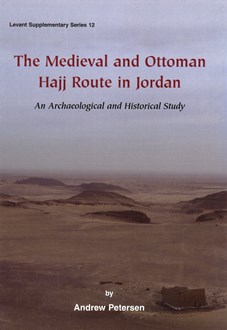
245 14|aThe medieval and Ottoman hajj route in Jordan :|ban archaeological and historical study /|cAndrew Petersen ; with contributions by Michael Diboll, Dennis Genequand, Tony Grey, St John Simpson and Mehmet Tütüncü.
260 |aOxford, UK :|bOxbow Books :|bCouncil for British Research in the Levanta,|c©2012.
300 |axv, 240 sayfa :|bresim, harita, plan ;|c30 cm
500 |aİndeks s. [237]-240.
504 |aBibliyografya s. [227]-236.
520 |a“As one of the five pillars of Islam the pilgrimage to Mecca (the Hajj) is central to the life of all Muslims. A network of roads radiates from the Hijaz like a giant spider's web, connecting Mecca to all parts of the Muslim world. Historically the most significant of these routes starts at Damascus in Syria, and is a direct continuation of the ancient trade route connecting Arabia to the Levant. The Prophet Muhammad is known to have used this route when he travelled as a merchant from Mecca to Bosra in Syria. In more recent times this was the route chosen for the Hijaz railway which figured prominently in the great Arab Revolt. A significant part of this route runs through Jordan, from the wide grasslands of the north to the sandy desert of the far south. This book documents the archaeological and architectural remains which line this route, paying particular attention to the forts and cisterns built and maintained by the Ottoman rulers from the 16th century onwards. A series of introductory chapters provide the historical context, with an emphasis on the political and military significance of the route from the 16th to the 18th centuries. In addition to the detailed coverage of Jordanian Hajj forts, the book also describes the sites and path of the route through Syria and Saudi Arabia. The final part of the book describes the results of excavations at one of the forts, which gives an insight into the material culture of both the pilgrims and the soldiers who manned the forts.“ --|cYayıncı.
650 4|aMüslüman hacılar ve hac|zSuudi Arabistan|zMekke|xTarih.
650 4|aArkeolojik kazılar|zÜrdün.
650 4|aArkeolojik alanlar|zÜrdün|y1500-1800.
650 4|aArkeolojik alanlar|zÜrdün|yOrta Çağ.
650 4|aTahkimat (askeri)|zÜrdün|y1500-1800.
650 4|aTahkimat (askeri)|zÜrdün|yOrta Çağ.
650 4|aTahkimat (askeri)|zFilistin|y1500-1800.
650 4|aTahkimat (askeri)|zFilistin|yOrta Çağ.
650 4|aKaleler|zÜrdün|y1500-1800.
650 4|aKaleler|zÜrdün|yOrta Çağ.
650 4|aKaleler|zSuudi Arabistan|y1500-1800.
650 4|aKaleler|zSuudi Arabistan|yOrta Çağ.
650 4|aHac yolu|zÜrdün|yOrta Çağ.
650 4|aHac yolu|zSuriye|yOrta Çağ.
650 4|aYazıtlar, Arapça|xHac yolu.
650 4|aYazıtlar, Türkçe|xHac yolu.
700 1 |aDiboll, Michael,|eişbirliği.
700 1 |aGenequand, Dennis,|eişbirliği.
700 1 |aGrey, Tony,|eişbirliği.
700 1 |aSimpson, St. John,|eişbirliği.
700 1 |aTütüncü, Mehmet,|eişbirliği.