LEADER 02592ntm 2200289 a 4500
001 584978
003 TR_AnAIT
005 20250715032554
008 161111t2010 ne#### 000 eng##
020 |a9789062582242 (Netherlands Institut voor het Nabije Oosten, Leiden)
020 |a9789042922945 (Peeters, Leuven)
040 |aTTK
041 |aeng
049 |aTürk Tarih Kurumu Kütüphanesi
090 |aB.I/7216
100 |aBorghouts, Joris Frans.
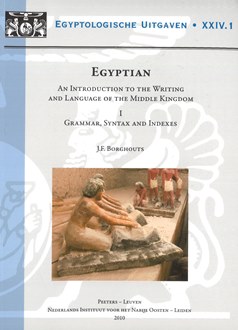
245 10|aEgyptian :|ban introduction to the writing and language of the Middle Kingdom /|cJ. F. Borghouts.
260 |aLeiden :|bNederlands Instituut voor het Nabije Oosten ;|aLeuven :|bPeeters,|c©2010.
300 |a2 c. (1. c. xxxii s., s. 33-581 ; 2. c. vii, [3] s., s. 11-481) :|bresim, şekil, tablo ;|c27 cm.
490 1 |aEgyptologische uitgaven,|x0927-0043 ;|vXXIV.1, XXIV.2
500 |aİndeks s. [449]-581 (1. cilt).
504 |aBibliyografik bilgi içerir.
505 |g1. Cilt.|tGrammar, syntax and indexes --|g2. Cilt.|tSign lists, exercises and reading texts.
520 |a"This is a data-oriented grammatical description of Middle Egyptian, a now extinct Pharaonic language, spoken and written in the hieroglyphic and hieratic scripts, between 2100 and 1700 before our era, the period of the Middle Kingdom. Middle Egyptian was regarded by the Egyptians as a classical stage of their language and it remained in use for a long time after that period. Middle Egyptian texts are extremely varied and comprise stories, historical narratives, letters, scientific treatises, and a large number of religious sources. The first volume is a systematic description of the language, illustrated by a great number of quotations from original texts, and provided with word lists and other indexes. The second volume leads the reader in a gradual way in 33 lessons through the grammatical description provided in the first volume, and moreover contains an extensive list of hieroglyphic signs and their values, exercises and, finally, original texts for reading." --|cYayıncı.
830 |aEgyptologische uitgaven ;|v24.1, 24.2.