LEADER 02200ntm 2200241 a 4500
001 584984
003 TR_AnAIT
005 20250715032542
008 161114t2015 be#### 000 eng##
020 |a9789042930629
040 |aTTK
041 |aeng
049 |aTürk Tarih Kurumu Kütüphanesi
090 |aB.I/7221
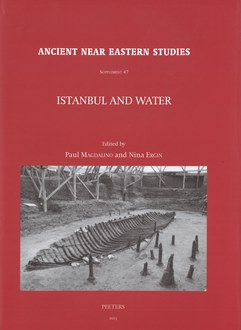
245 00|aIstanbul and water /|cedited by Paul Magdalino and Nina Ergin.
260 |aLeuven :|bPeeters,|c2015.
300 |ax, 274 s. :|bresim (kimi renkli), harita, grafik, plan, tıpkıbasım ;|c30 cm.
490 1 |aAncient Near Eastern studies.|aSupplement ;|v47
504 |aBibliyografya, makale sonlarındadır.
520 |a"Istanbul stands at a unique conjunction of an inland sea with a long maritime inlet, and a winding, turbulent maritime strait that links two seas and separates two continents. These topographical features have greatly facilitated maritime trade, for which the city has had an enormous harbor capacity. Istanbul's relationship with fresh water is also idiosyncratic: its dearth meant that fresh water for consumption had to be channeled, stored, and distributed with the help of long-distance aqueducts, open-air reservoirs and cisterns. The natural environment combined with the norms of local societies created a culture of water that has constituted an important part of Istanbul's identity. Various aspects of it are explored in this volume, the outcome of a symposium organized by Koç University's Research Center for Anatolian Civilizations. The eleven essays by leading scholars present recent research findings from the archaeological excavations at Yenikapi, examine the distribution and consumption of water in Byzantine times as well as the social impact of water in the Ottoman era, and offer reflections on the aesthetics of water." --|cYayıncı.
700 1 |aMagdalino, Paul,|eeditör.
700 1 |aErgin, Nina,|eeditör.
830 |aSupplement (Ancient Near Eastern studies) ;|v47.