LEADER 03143ntm 2200361 a 4500
001 584997
003 TR_AnAIT
005 20250715032518
008 161114t2013 be#### 000 mul##
020 |a9789042925588
040 |aTTK
041 |aeng|afre
049 |aTürk Tarih Kurumu Kütüphanesi
090 |aA.VIII/4318
110 2 |aUnion europeénne des arabisants et islamisants.|bCongrès|n(24 :|d2008 :|cLeipzig)
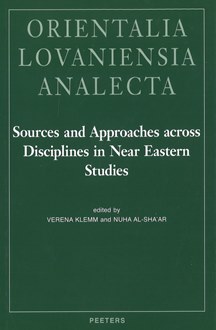
245 00|aSources and approaches across disciplines in Near Eastern studies :|bproceedings of the 24th Congress, Union Europeénne des Arabisants et Islamisants, Leipzig 2008 /|cedited by Verena Klemm and Nuha Al-Sha'ar with L. Behzadi, S. Brinkmann, S. Günther and M. Jagonak in cooperation with B. Backe, H.-G. Ebert, L.M. Franke, M. Koerter and D. de Smet.
246 3 |aSources and approaches across disciplines in Near Eastern studies|bproceedings of the twenty fourth Congress, Union Europeénne des Arabisants et Islamisants, Leipzig 2008
246 3 |aSources and approaches across disciplines in Near Eastern studies|bproceedings of the XXIVth Congress, Union Europeénne des Arabisants et Islamisants, Leipzig 2008
260 |aLeuven :|bUitgeverij Peeters en Departement Oosterse Studies,|c2013.
300 |axiv, 562 s. :|bresim, tıpkıbasım, tablo ;|c25 cm.
440 0|aOrientalia lovaniensia analecta ;|v215
504 |aBibliyografya, bildiri sonlarındadır.
520 |a"This volume collects papers from the 24th Congress of the Union Européenne des Arabisants et Islamisants (UEAI) in 2008 at the University of Leipzig. Original research and new approaches illustrate its theme of "Sources and Approaches across Disciplines in Near Eastern Studies". The studies span Muslim culture, civilizations, and intellectual thought in the medieval and modern periods. The contributions demonstrate the benefits of following methodological and interdisciplinary approaches that draw upon literary criticism, sociology and anthropology in the field of Qur'anic studies, religion, philosophy and mysticism; state and society; literature and rhetoric; philology and linguistics; mathematics and astronomy; art and epigraphy; and Islamic sciences and economic history. The volume also highlights the commonalities and overlaps that exist between these different branches and fosters cooperative study across a wide cultural, historical, and sociological milieu. Rather than following an isolated approach to their areas of study, academics in different fields of Islamic and Middle Eastern Studies benefited from one another’s methodologies, and collectively built a wide body of knowledge." --|cYayıncı.
700 1 |aKlemm, Verena,|eeditör.
700 1 |aal-Sha'ar, Nuha,|eeditör.
700 1 |aBehzadi, L.,|eeditör.
700 1 |aBrinkmann, S.,|eeditör.
700 1 |aGünther, S.,|eeditör.
700 1 |aJagonak, M.,|eeditör.
700 1 |aBacke, B.,|eişbriliği.
700 1 |aH.-G. Ebert,|eişbriliği.
700 1 |aFranke, L. M.,|eişbriliği.
700 1 |aKoerter, M.,|eişbriliği.
700 1 |aSmet, D. de,|eişbriliği.