LEADER 01521ntm 2200253 a 4500
001 585013
003 TR_AnAIT
005 20250715032448
008 161115t2011 nyu#### 000 eng##
020 |a9781846035067
040 |aTTK
041 |aeng
049 |aTürk Tarih Kurumu Kütüphanesi
090 |aA.VIII/4334
100 |aNicolle, David,|d1944-
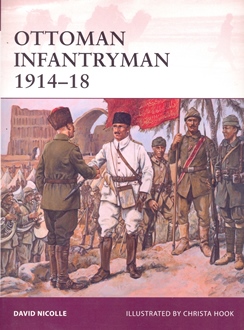
245 10|aOttoman infantryman, 1914-18 /|cDavid Nicolle.
250 |a2nd impression.
260 |aNew York :|bOsprey Publishing,|c2011, ©2010.
300 |a64 s. :|bresim (kimi renkli), harita (renkli) ;|c25 cm
440 0|aWarrior ;|v145
500 |aSözlük s. 61-63.
500 |aİndeks s. 64.
504 |aBibliyografya s. 60.
520 |a"Following the Balkan Wars of 1912-1913, the Ottoman Empire undertook a massive military retraining program. Although many histories have depicted the Ottomans as a poor fighting force, this was more often due to poor leadership and logistics. The typical Ottoman soldier, the asker, was tough, well-trained, and courageous. While fighting over varied terrain from Gallipoli, to Mesopotamia and to the Caucasus, they proved themselves to be able front-line troops. This is the first English-language book to focus exclusively on the Ottoman infantryman in the First World War. Using a combination of first-hand accounts, period photographs and specially commissioned artwork, it explores the recruitment, training, and combat experiences of these often-neglected warriors." --|cYayıncı.