LEADER 02009ntm 2200289 a 4500
001 585756
003 TR_AnAIT
005 20250715025926
008 170217t2014 nyu#### 000 eng##
020 |a9781107000063 (hardback)
020 |a9781107435919 (paperback)
040 |aTTK
041 |aeng
049 |aTürk Tarih Kurumu Kütüphanesi
090 |aA.VIII/4933
100 |aNeep, Daniel.
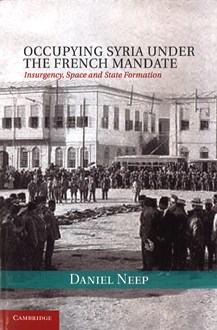
245 10|aOccupying Syria under the French mandate :|binsurgency, space and state formation /|cDaniel Neep.
250 |a1st paperback edition.
260 |aNew York :|bCambridge University Press,|c2014.
300 |axiii, 229 s. :|bresim ;|c23 cm.
490 1 |aCambridge Middle East studies ;|v[38]
500 |aİndeks s. 227-229.
504 |aBibliyografya s. 211-225.
520 |a"What role does military force play during a colonial occupation? The answer seems obvious: coercion crushes local resistance, quashes political dissent and consolidates the dominance of the occupying power. However, as this discerning and theoretically rigorous study suggests, violence can have much more ambiguous consequences. Set in Syria during the French Mandate from 1920 to 1946, the book explores a turbulent period in which conflict between armed Syrian insurgents and French military forces not only determined the strategic objectives of the colonial state, but also transformed how the colonial state organised, controlled and understood Syrian society, geography and population. In addition to the coercive techniques, the book shows how civilian technologies such as urban planning and engineering were also commandeered in the effort to undermine rebel advances. Colonial violence had a lasting effect in Syria, shaping a peculiar form of social order that endured well after the French occupation." --|cYayıncı.
650 |aAyaklanmalar|zSuriye|xTarih|y20. yy.
651 |aSuriye|xSosyal durum|xTarih|y20. yy.
651 |aSuriye|xTarih|xFransız Mandası, 1918-1946.