LEADER 02538ntm 2200313 a 4500
001 586024
003 TR_AnAIT
005 20250715025009
008 170404t2016 xxk#### 000 eng##
020 |a9781785702273 (hardback edition)
020 |a9781785702280 (digital edition)
040 |aTTK
041 |aeng
049 |aTürk Tarih Kurumu Kütüphanesi
090 |aA.VIII/5125
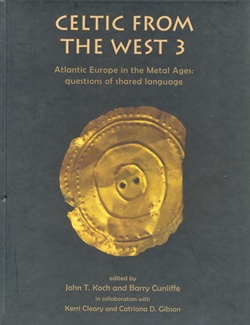
245 00|aCeltic from the West 3 :|bAtlantic Europe in the Metal Ages : questions of shared language /|cedited by John T. Koch and Barry Cunliffe ; in collaboration with Kerri Cleary and Catriona D. Gibson.
246 3 |aCeltic from the West three
246 3 |aCeltic from the West III
260 |aOxford, UK :|bOxbow Books,|c2016.
300 |axii, 539 s. :|bresim (çoğu renkli), harita (çoğu renkli), grafik, tablo ;|c25 cm.
490 1 |aCeltic studies publications ;|vXIX
500 |aİndeks s. [533]-539.
504 |aBibliyografya, makale sonlarındadır.
520 |a"The Celtic languages and groups called Keltoi (i.e. ‘Celts’) emerge into our written records at the pre-Roman Iron Age. The impetus for this book is to explore from the perspectives of three disciplines—archaeology, genetics, and linguistics—the background in later European prehistory to these developments. There is a traditional scenario, according to which, Celtic speech and the associated group identity came in to being during the Early Iron Age in the north Alpine zone and then rapidly spread across central and western Europe. This idea of ‘Celtogenesis’ remains deeply entrenched in scholarly and popular thought. But it has become increasingly difficult to reconcile with recent discoveries pointing towards origins in the deeper past. It should no longer be taken for granted that Atlantic Europe during the 2nd and 3rd millennia BC were pre-Celtic or even pre-Indo-European. The explorations in Celtic from the West 3 are drawn together in this spirit, continuing two earlier volumes in the influential series." --|cYayıncı.
700 1 |aKoch, John T.,|eeditör.
700 1 |aCunliffe, Barry,|eeditör.
700 1 |aCleary, Kerri,|eişbirliği.
700 1 |aGibson, Catriona D.,|eişbirliği.
830 |aCeltic studies publications ;|v19.