LEADER 03521cam a22004818i 4500
001 597342
003 TR_AnAIT
005 20250627150921
006 m o d
007 cr |||||||||||
008 190401s2019 enk ob 001 0 eng
020 |a9780429027352|q(Ebook)
020 |a0429027354
020 |a9780429651274|q(Adobe Reader)
020 |a0429651279
020 |a9780429648632|q( ePub)
020 |a0429648634
020 |a9780429645990|q(Mobipocket Encrypted)
020 |a0429645996
020 |z9780367135898
035 |a(OCoLC-P)1091239439
040 |aOCoLC-P|beng|erda|cOCoLC-P
041 |aeng
049 |aTürk Tarih Kurumu Kütüphanesi
050 |aBP188.8.E3
072 |aHRA|2bicssc
082 |a297.40962|223
090 |aDK/0003
100 |aChih, Rachida,|d1965-
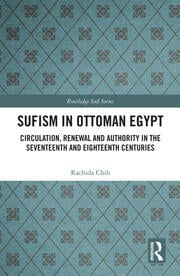
245 |aSufism in Ottoman Egypt :|bcirculation, renewal and authority in the seventeenth and eighteenth centuries /|cRachida Chih.
264 |aMilton Park, Abingdon, Oxon ;|aNew York, NY :|bRoutledge,|c2019.
300 |a1 online resource.
336 |atext|2rdacontent
337 |acomputer|2rdamedia
338 |aonline resource|2rdacarrier
490 |aRoutledge Sufi series ;|v22
505 |aCirculation and networks: the role of Cairo and al-Azhar -- Education : how to guide disciples? -- The Muhammadan path (Tariqa Muhammadiyya) and Sufi renewal -- Prophetic heritage, authority and the intercession of saints.
520 |aThis book analyses the development of Sufism in Ottoman Egypt, during the seventeenth and eighteenth centuries. Examining the cultural, socio-economic and political backdrop against which Sufism gained prominence, it looks at its influence in both the institutions for religious learning and popular piety. The study seeks to broaden the observed space of Sufism in Ottoman Egypt by placing it within its imperial and international context, highlighting on one hand the specificities of Egyptian Sufism, and on the other the links that it maintained with other spiritual traditions that influenced it. Studying Sufism as a global phenomenon, taking into account its religious, cultural, social and political dimensions, this book also focuses on the education of the increasing number of aspirants on the Sufi path, as well as on the social and political role of the Sufi masters in a period of constant and often violent political upheaval. It ultimately argues that, starting in medieval times, Egypt was simultaneously attracting foreign scholars inward and transmitting ideas outward, but these exchanges intensified during the seventeenth and eighteenth centuries as a result of the new imperial context in which the country and its people found themselves. Hence, this book demonstrates that the concept of 'neosufism' should be dispensed with and that the Ottoman period in no way constituted a time of decline for religious culture, or the beginning of a normative and fundamentalist Islam. Sufism in Ottoman Egypt provides a valuable contribution to the new historiographical approach to the period, challenging the prevailing teleology. As such, it will prove useful to students and scholars of Islam, Sufism and religious history, as well as Middle Eastern history more generally.
588 |aOCLC-licensed vendor bibliographic record.
650 4|aSufizm|zMısır|xTarih|y17. yy.
650 4|aSufizm|zMısır|xTarih|y18. yy.
650 4|aSufizm.
856 |3Taylor & Francis|uhttps://www.taylorfrancis.com/books/9780429027352