

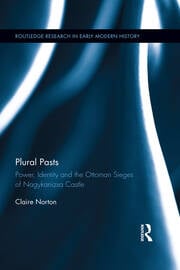
Plural pasts : power, identity and the Ottoman sieges of Nagykanizsa Castle / Claire Norton.
Erişim Adresi
ISBN
9781315600918 (e-book : PDF)
9781317079583 (e-book: Mobi)
9781472485342 (hardback)
9781317079583 (e-book: Mobi)
9781472485342 (hardback)
Dil Kodu
İngilizce
Yer Numarası
DK/0058
Yazar
Yayın Bilgisi
London ; New York, : Routledge, Taylor & Francis Group, 2017.
Fiziksel Niteleme
1 online resource
Dizi
Routledge research in early modern history
Bibliyografi, vb. Notu
Includes bibliographical references (pages 161-184) and index.
İçindekiler Notu
The authority of eyewitness accounts reconsidered -- Fethnames : not just literary bombast -- The Gazavatnames : erasing oral residue and correcting scribal error -- The gazavatnames : re-writing the exemplar : individual scripta -- Writers reading : reading the gazavat-i Tiryaki Hasan Pasa with Katib Celebi and Naima -- Nationalism and the re-invention of early modern identities -- Conclusion: Making the sieges of Nagykanizsa morally defensible.
Özet, vb.
“Through a study of a variety of Ottoman and modern Turkish accounts of the Ottoman-Habsburg sieges of Nagykanizsa Castle (1600-01) including official documents, correspondence, histories, and more literary genres such as gazavatnames [campaign narratives], Plural Pasts explores Ottoman literacy practices. By considering the diverse roles that the various accounts served--construction of identities, forging of diplomatic alliances and legitimization of political ideologies and geo-political imagination's--it explores the cultural and socio-political significance the various accounts had for different audiences. In addition, it interweaves theoretical reflection with textual analysis. Using the sieges of Nagykanizsa as a case study, it offers a sophisticated contribution to ongoing historiographical arguments: namely, how historians construct hierarchies of primary sources and judge some to be more truthful, or more valuable, than others; how texts are assigned to particular genres based on perceived epistemological status--as story or history, fact or fiction; and the circular role that historians and their histories play in constructing, reflecting and reinforcing cultural and political imaginaries“--Provided by publisher.
Konu
Kanizsa Castle (Nagykanizsa, Hungary) __ History __ 17th century __ Sources.
Kanizsa, Battle of, Nagykanizsa, Hungary, 1601 __ Sources.
Literacy __ Political aspects __ Turkey __ History.
Historiography __ Political aspects __ Turkey __ History.
Power (Social sciences) __ Turkey __ History.
Nationalism __ Turkey __ History.
Hungary __ History __ Turkish occupation, 1526-1699 __ Sources.
Nagykanizsa (Hungary) __ History __ 17th century __ Sources.
Turkey __ Intellectual life.
Turkey __ Politics and government.
Kanizsa, Battle of, Nagykanizsa, Hungary, 1601 __ Sources.
Literacy __ Political aspects __ Turkey __ History.
Historiography __ Political aspects __ Turkey __ History.
Power (Social sciences) __ Turkey __ History.
Nationalism __ Turkey __ History.
Hungary __ History __ Turkish occupation, 1526-1699 __ Sources.
Nagykanizsa (Hungary) __ History __ 17th century __ Sources.
Turkey __ Intellectual life.
Turkey __ Politics and government.
