

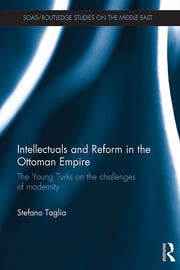
Intellectuals and reform in the Ottoman Empire : the Young Turks on the challenges of modernity / Stefano Taglia.
Erişim Adresi
ISBN
9781315739984 (e-book : PDF)
9781317578611 (e-book: Mobi)
9781317578628 (e-book: ePub)
9781138825451 (hardback)
9780815357865 (paperback)
9781317578611 (e-book: Mobi)
9781317578628 (e-book: ePub)
9781138825451 (hardback)
9780815357865 (paperback)
Dil Kodu
İngilizce
Yer Numarası
DK/0067
Yazar
Yayın Bilgisi
Milton Park, Abingdon, Oxon : Routledge, 2015.
Fiziksel Niteleme
1 online resource (ix, 167 pages)
Dizi
SOAS/Routledge studies on the Middle East ; 23
İçindekiler Notu
Introduction: Locating reform in the nineteenth century Ottoman Empire -- The Ottoman Empire under Sultan Abdulhamit II -- Young Turk emigres, the press and the Parisian milieu -- Ahmet Riza and Mechveret -- Mehmet Sabahattin and social science -- The end of an idea, the 1902 Congress of Ottoman Liberals in Paris -- Conclusion -- Afterword: The enduring legacies of the Young Turk intellectuals.
Özet, vb.
“This book uncovers the political and social ideas of the Young Turks at the end of the nineteenth century, during the intellectual phase of the movement. Analysing the life in exile of two of the most charismatic leaders of the Young Turk movement, Ahmed Ryza and Mehmed Sabaheddin, the book unravels their plans for the future of the Ottoman Empire, covering issues of power, religion, citizenship, minority rights, the role of the West, and the accountability of the Sultan. The book follows Ryza and Sabaheddin through their association with philosophical circles, and highlights how their emphasis on intellectualism and elitism had a twofold effect. On the one hand, seeing themselves as enlightened and entrusted with a mission, they engaged in enduring debates, leaving an important legacy for both Ottoman and Republican rule. On the other hand, the rigidity resulting from elitism and intellectualism prevented the conception of concrete plans for change, causing a schism at the 1902 Congress of Ottoman Liberals and marking the end of the intellectual phase. Using bilingual period journals, contemporary accounts, police archives and political and philosophical treaties, this book is of interest to students, scholars and researchers of Middle East and Ottoman History, and Political Science more broadly“--Provided by publisher.
Konu
Ahmet Riza, __ 1859-1930.
Sabahaddin, __ Prens, __ 1877-1948.
Ittihat ve Terakki Cemiyeti __ History.
Political activists __ Turkey __ Biography.
Exiles __ Biography.
Social change __ Turkey __ History __ 19th century.
Liberalism __ Turkey __ History __ 19th century.
Intellectuals __ Turkey __ Biography.
Turkey __ Intellectual life __ 19th century.
Turkey __ Politics and government __ 1878-1909.
Sabahaddin, __ Prens, __ 1877-1948.
Ittihat ve Terakki Cemiyeti __ History.
Political activists __ Turkey __ Biography.
Exiles __ Biography.
Social change __ Turkey __ History __ 19th century.
Liberalism __ Turkey __ History __ 19th century.
Intellectuals __ Turkey __ Biography.
Turkey __ Intellectual life __ 19th century.
Turkey __ Politics and government __ 1878-1909.
