LEADER 02906naaa22200337 a04500
001 597637
003 TR_AnAIT
005 20250627145947
006 aobd|e |||| 001 0
007 ta
008 210416s2017 xxuobd|e |||| 001 0 eng c
020 |a9780691172644
040 |aTTK
041 |aeng
049 |aTürk Tarih Kurumu Kütüphanesi
090 |aA.IX/2127
100 1 |aMestyan, Adam,|d1979-
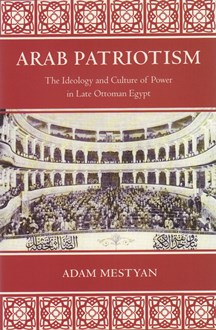
245 10|aArab patriotism :|bthe ideology and culture of power in Late Ottoman Egypt /|cAdam Mestyan.
260 |aPrinceton :|bPrinceton University Press,|c©2017.
300 |avi, 356 sayfa :|bresim, tablo ;|c24 cm
500 |aİndeks s. [345]-356.
504 |aBibliyografya s. [313]-344.
505 |gPart I --|tThe making of the Khedivate --|tThe Ottoman origins of Arab patriotism --|tThe Ottoman legitimation of power : the Khedivate --|tThe European aesthetics of Khedivial power .
505 |gPart II --|t“A garden with mellow fruits of refinement“ --|tA gentle revolution --|tConstitutionalism and revolution : the Arab opera.
505 |gPart III --|tThe reinvention of the Khedivate --|tHārūn al-Rāshīd under occupation --|tBehind the scenes : a committee and the law, 1880s-1900s --|tDistinction : Muṣṭafā Kāmil and the making of an Arab prince --|tConclusion : the Ottoman origin of Arab nationalisms.
520 |aArab Patriotism presents the essential backstory to the formation of the modern nation-state and mass nationalism in the Middle East. While standard histories claim that the roots of Arab nationalism emerged in opposition to the Ottoman milieu, Adam Mestyan points to the patriotic sentiment that grew in the Egyptian province of the Ottoman Empire during the nineteenth century, arguing that it served as a pivotal way station on the path to the birth of Arab nationhood. Through extensive archival research, Mestyan examines the collusion of various Ottoman elites in creating this nascent sense of national belonging and finds that learned culture played a central role in this development. Mestyan investigates the experience of community during this period, engendered through participation in public rituals and being part of a theater audience. He describes the embodied and textual ways these experiences were produced through urban spaces, poetry, performances, and journals. From the Khedivial Opera House's staging of Verdi's Aida and the first Arabic magazine to the 'Urabi revolution and the restoration of the authority of Ottoman viceroys under British occupation, Mestyan illuminates the cultural dynamics of a regime that served as the precondition for nation-building in the Middle East. --|cPublisher's website.
600 14|aMustafa Kâmil Paşa, 1874-1908.
650 4|aVatanseverlik|zMısır|xTarih|y19. yüzyıl.
650 4|aArap milliyetçiliği|zMısır|xTarih|y19. yüzyıl.
650 4|aHidivlik|zMısır.