LEADER 03579na 2200289 4500
001 597814
003 TR_AnAIT
005 20250627145237
020 |a9781785708633
020 |a9781785708640 (epub)
040 |aTTK
041 |aeng
049 |aTürk Tarih Kurumu Kütüphanesi
090 |aA.IX/2289
100 1 |aSilver, Morris.
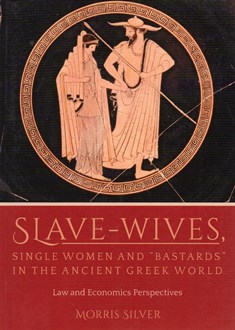
245 10|aSlave-wives, single women and “bastards” in the Ancient Greek world :|blaw and economics perspectives /|cMorris Silver.
260 |aOxford :|bOxbow Books,|c2018.
500 |aİndeks s. [225]-227.
504 |aBibliyografya s. [207]-224.
505 |tSocioeconomic foundation of the Pallakē institution --|tPallakē-wife as privileged slave : central texts --|tConstructing the Greek wife : legal aspects --|tConstructing the Greek-wife : ritual aspects --|t“Wife“ as a multidimensional status in Ancient Greece : supplementary evidence --|t“Wife“ as a multidimensional status in Ancient Greece : testimony of Euripides's Electra --|tPath to Pallakia --|tSingle woman as Hetaira a suppliant --|tWealth transfers in the Greek marriage market with emphasis on the roles of distance and single woman status --|tWealth transfers in the Greek marriage market : the spinning Hetaira --|tCompanionship as an adaptation to the dangerous life of the single woman --|tRole of cults in the marriage of single women --|tHetaira as textile worker --|tLegal status of Nothoi --|tShare the wealth? : not with (foreigner) Nothoi --|tCase studies in Pallakia : Homer's Penelope as Pallakē --|tCase studies in Pallakia : Hera as Zeus's Pallakē --|tCase studies in Pallakia : classical Athens --|tSummary of main findings and problems for future research.
520 |a“Greek scholars have produced a vast body of evidence bearing on nuptial practices that has yet to be mined by a professional economist. By standing on their shoulders, the author proposes and tests radically new interpretations of three important status groups in Greek history: the pallake, the hetaira, and the nothos. It is argued that legitimate marriage - that is “marriage by loan of the bride to the groom“ - was not the only form of legal marriage in classical Athens and the ancient Greek world generally. Pallakia, that is, “marriage by sale of the bride to the groom“, also was legally recognized. The pallake-wifeship transaction is a sale into slavery with a restrictive covenant mandating the employment of the sold woman as a wife. In this highly original and challenging new book economist Morris Silver proposes and tests the hypothesis that the likelihood of bride sale rises with increases in the distance between the ancestral residence of the groom and the father's household. The “bastard“ (nothoi) children of pallakai lacked the legal right to inherit from their fathers but were routinely eligible for Athenian citizenship. It is argued that the basic social meaning of hetaira (“companion“) is not “prostitute“/“courtesan“ but “single woman“ - that is, a woman legally recognized as being under her own authority (kuria). The defensive adaptation of single women is reflected in Greek myth and social practice by their grouping into “packs“, most famously the Daniads and Amazons“ --|cProvided by publisher.
650 4|aEvlilik|xEkonomik yönler|zYunanistan|xTarih.
650 4|aKadınlar|zYunanistan|xSosyal durum.
650 4|aKadınlar|zYunanistan|xEkonomik durum.
651 4|aYunanistan|xEkonomik durum|yM.Ö. 146'ya kadar.
651 4|aYunanistan|xMedeniyet|yM.Ö. 146'ya kadar.