LEADER 03245naaa22200349 a04500
001 597837
003 TR_AnAIT
005 20250627145035
006 ad|||e |||| 001 0
007 ta
008 210730s2018 be d|||e |||| 001 0 eng c
020 |a9789042934368
040 |aTTK
041 |aeng
049 |aTürk Tarih Kurumu Kütüphanesi
090 |aA.IX/2295
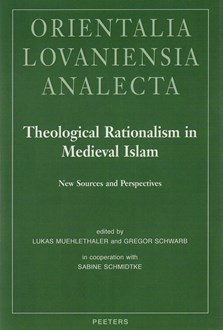
245 00|aTheological rationalism in Medieval Islam :|bnew sources and perspectives /|cedited by Lukas Muehlethaler and Gregor Schwarb in cooperation with Sabine Schmidtke.
260 |aLeuven :|bPeeters,|c2018.
300 |ax, 184 sayfa :|btablo ;|c25 cm.
490 1 |aOrientalia Lovaniensia Analecta ;|v258.
500 |aSözlük s. 177-183.
500 |aİndeks s. [171]-177.
504 |aBibliyografik bilgi içerir.
505 |tʻAbd Allāh b. Yazīd al Fazārī's rebuttal of the teaching of Ibn ʻUmayr /|rWilferd Madelung --|tTheological compendia in late 6th/12th and early 7th/13th century Zaydism : al-Ḥasan al-Raṣṣāṣ's K. al-Taḥṣīl and its commentaries /|rJan Thiele --|t“Delaying the eluciation“ (taʼḫīr al bayān) in early Muslim legal theory : theological issues in legal hermeneutics /|rRobert Gleave --|tLes rapports ambigus entre Ismaélisme et kalām (10e-11e s.) : polémiques et influences /|rDaniel de Smet --|tTracing changing identities through static doxographical representations /|rHeidrun Eichner --|tIbn Taymiyya's ethics between Ašʻarite voluntarism and Muʻtazilite rationalism : a middle road? /|rSophia Vasalou.
520 |aThe present volume comprises substantially revised and enlarged versions of papers read at a conference convened in June 2010 by the ERC-Project at the German Orient-Institut in Istanbul. Under the title “Theological Rationalism in Medieval Islam: New Texts and Perspectives“, a group of leading international scholars was invited to introduce important new kalam-texts that have not been the subject of previous studies or to explore new trajectories in studying known key-texts. While most contributions combine both aspects, they are divided into two groups according to the predominating aspect. The first four contributions introduce hitherto unknown or unexplored texts and assess how these can modify and expand our understanding of kalam. The second group of contributions applies novel methodologies in order to identify and interpret historical and conceptual transformations that occurred within kalam or resulted from its interaction with other disciplines. The question whether God can delay the elucidation of vague or unclear statements raises a number of thorny theological questions. It is hoped that the results of these presentations will have an impact beyond their subject matter in that their novel approaches will find their place in the methodological toolbox of kalam scholarship, thus stimulating work that will further expand our knowledge of Muslim kalam.
546 |aFransızca ve Arapça metin içerir.
650 4|aİslam|xÖğretiler|xTarih|y1500'e kadar|vKongreler.
700 1 |aMuehlethaler, Lukas,|edüzenleyen.
700 1 |aSchwarb, Gregor,|edüzenleyen.
700 1 |aSchmidtke, Sabine,|edüzenleyen.
830 0|aOLA ;|v258.