

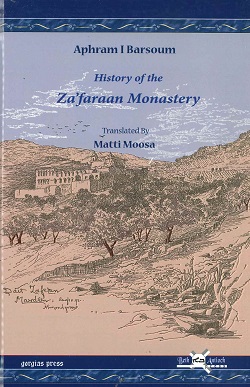
History of the Zaʻfaran Monastery / Aphram (Ephrem) I Barsoum ; translated by Matti Moosa.
Yer Numarası
A.IX/2262
ISBN
9781593336394
Dil Kodu
İngilizce
Kütüphane
Türk Tarih Kurumu Kütüphanesi
Basım Bildirimi
First Gorgias Press edition [1. baskı].
Yayın Bilgisi
Piscataway, NJ : Gorgias Press : Beth Antioch Press, 2008.
Fiziksel Niteleme
vii, 85 sayfa ; 24 cm.
Dizi
Publications of the Archdiocese of the Syriac Orthodox Church in the Eastern United States ; 7
Bibliyografi, vb. Notu
Bibliyografik bilgi içerir.
İçindekiler Notu
The location of the Zaʻfaran Monastery -- The Church of Mar Hananya -- The Sayyida (Virgin Mary) Church -- Church of the patriarchal throne -- The mausoleum or burial chamber of fathers -- The paradise -- The origin of the Zaʻfaran Monastery -- Monasticism in Mardin and its outskirts -- The different names of the Zaʻfaran Monastery -- The biography of metropolitan Yuhanna of Mardin -- Yuhanna's narrative about the Zaʻfaran Monastery -- The rebuilding of the Zaʻfaran Monastery -- Biographies of the known superiors of the Zaʻfaran Monastery -- The monastic order of the Zaʻfaran Monastery in its early ages -- The Zaʻfaran Monastery as center of the Patriarchal See of Antioch -- The councils convened at the Zaʻfaran Monastery to elect patriarchs -- The names of patriarchs and maphryone ascribed to the Zaʻfaran Monastery -- The Metropolitans who graduated from the Zaʻfaran Monastery -- The fathers buried in the Zaʻfaran Monastery -- Patriarchs of Antioch -- The patriarchs of Tur Abdin -- The Maphryone of the East -- The Metropolitans -- The councils convened at the Zaʻfaran Monastery and their canons -- Learning and learned men at the Zaʻfaran Monastery -- The library of the Zaʻfaran Monastery -- The properties of the Zaʻfaran Monastery -- The monasteries neighboring the Zaʻfaran Monastery -- The Sayyida Monastery -- Mar Jacob Monastery -- Mar Azazel Monastery -- Mar Behnam Monastery -- Mardin : its diocese and bishops.
Özet, vb.
“Standing on the side of the mountain ridge a short distance east of the city of Mardin, Turkey, the Za’faran Monastery is a monumental religious relic of the Syrian Church of Antioch. It is one of the many monasteries in the East which has survived to this day. Built by some Byzantine emperors as a military fortress, it was destroyed by the Persians at the beginning of the seventh century. It remained desolate until 793 AD when Mar Hananya, Bishop of Mardin and Kafartut, bought it and converted it to a monastery. Thus, it was known as the Mar Hananya’s Monastery. By the end of the fourteenth century it assumed the name of Za’faran owing to a tradition circulated among Syrians until this day. A merchant of za’faran (saffron) happened to pass by the monastery. Mar Hananya bought some saffron and had it mixed with gypsum to rebuild the monastery, hence, the name of Za’faran Monastery. Following the eighth century, the Za’faran Monastery became the center of Syriac leaning. It housed a huge and substantial library of which a few hundred manuscripts remained until the end of the thirteenth century. A school was also founded which graduated many monks and bishops. In 1163, a superior of the monastery succeeded in drawing water into the monastery through aqueducts from neighboring fountains, a great engineering feat for its time. Toward the end of the thirteenth century, the Za’faran Monastery became the seat of the Syrian patriarchs, and remained so until the first quarter of the twentieth century. It prospered under the patriarchs but did not escape the ravages of time. It was devastated by the Mongol Tamerlane who attacked Mesopotamia and Syria at the end of the fourteenth century. Succeeding patriarchs renovated it only to be further destroyed by the marauding Kurds in 1516. The monastery began to flourish relatively once more under Ottoman rule. In 1881 and 1889, two printing presses from England were introduced into the monastery and printed a number of Syriac books. For a time, its operation stopped but was resumed in 1911. Today, with its several chapels, the Beth Qadishe (The Mausoleum), a small library, and the few monks who inhabit it, the Za’faran Monastery remains a distinctive monument of the past glory of the Syrian Church of Antioch“ -- Yayıncı.
Konu
Emeği Geçenler
Moosa, Matti Isaac, 1924-2014, çeviren.
Eseri Alıntıla
Referansları kullanmadan önce gözden geçirmeniz ve varsa gerekli düzeltmeleri yapmanız önerilir.
Dijital Kaynak
MARC Görünümü
LEADER 05019naaa22200349 a 4500
001 597924
003 TR_AnAIT
005 20250627144656
006 a||||e |||| 000 0
007 ta
008 210804s2008 xxu||||e |||| 000 0 eng c
020 |a9781593336394
040 |aTTK
041 |aeng
049 |aTürk Tarih Kurumu Kütüphanesi
090 |aA.IX/2262
100 0 |aIgnatius Aphram I,|cAntakya Patriği,|d1887-1957.
245 10|aHistory of the Zaʻfaran Monastery /|cAphram (Ephrem) I Barsoum ; translated by Matti Moosa.
250 |aFirst Gorgias Press edition [1. baskı].
260 |aPiscataway, NJ :|bGorgias Press :|bBeth Antioch Press,|c2008.
300 |avii, 85 sayfa ;|c24 cm.
490 0 |aPublications of the Archdiocese of the Syriac Orthodox Church in the Eastern United States ;|v7
504 |aBibliyografik bilgi içerir.
505 |tThe location of the Zaʻfaran Monastery --|tThe Church of Mar Hananya --|tThe Sayyida (Virgin Mary) Church --|tChurch of the patriarchal throne --|tThe mausoleum or burial chamber of fathers --|tThe paradise --|tThe origin of the Zaʻfaran Monastery --|tMonasticism in Mardin and its outskirts --|tThe different names of the Zaʻfaran Monastery --|tThe biography of metropolitan Yuhanna of Mardin --|tYuhanna's narrative about the Zaʻfaran Monastery --|tThe rebuilding of the Zaʻfaran Monastery --|tBiographies of the known superiors of the Zaʻfaran Monastery --|tThe monastic order of the Zaʻfaran Monastery in its early ages --|tThe Zaʻfaran Monastery as center of the Patriarchal See of Antioch --|tThe councils convened at the Zaʻfaran Monastery to elect patriarchs --|tThe names of patriarchs and maphryone ascribed to the Zaʻfaran Monastery --|tThe Metropolitans who graduated from the Zaʻfaran Monastery --|tThe fathers buried in the Zaʻfaran Monastery --|tPatriarchs of Antioch --|tThe patriarchs of Tur Abdin --|tThe Maphryone of the East --|tThe Metropolitans --|tThe councils convened at the Zaʻfaran Monastery and their canons --|tLearning and learned men at the Zaʻfaran Monastery --|tThe library of the Zaʻfaran Monastery --|tThe properties of the Zaʻfaran Monastery --|tThe monasteries neighboring the Zaʻfaran Monastery --|tThe Sayyida Monastery --|tMar Jacob Monastery --|tMar Azazel Monastery --|tMar Behnam Monastery --|tMardin : its diocese and bishops.
520 |a“Standing on the side of the mountain ridge a short distance east of the city of Mardin, Turkey, the Za’faran Monastery is a monumental religious relic of the Syrian Church of Antioch. It is one of the many monasteries in the East which has survived to this day. Built by some Byzantine emperors as a military fortress, it was destroyed by the Persians at the beginning of the seventh century. It remained desolate until 793 AD when Mar Hananya, Bishop of Mardin and Kafartut, bought it and converted it to a monastery. Thus, it was known as the Mar Hananya’s Monastery. By the end of the fourteenth century it assumed the name of Za’faran owing to a tradition circulated among Syrians until this day. A merchant of za’faran (saffron) happened to pass by the monastery. Mar Hananya bought some saffron and had it mixed with gypsum to rebuild the monastery, hence, the name of Za’faran Monastery. Following the eighth century, the Za’faran Monastery became the center of Syriac leaning. It housed a huge and substantial library of which a few hundred manuscripts remained until the end of the thirteenth century. A school was also founded which graduated many monks and bishops. In 1163, a superior of the monastery succeeded in drawing water into the monastery through aqueducts from neighboring fountains, a great engineering feat for its time. Toward the end of the thirteenth century, the Za’faran Monastery became the seat of the Syrian patriarchs, and remained so until the first quarter of the twentieth century. It prospered under the patriarchs but did not escape the ravages of time. It was devastated by the Mongol Tamerlane who attacked Mesopotamia and Syria at the end of the fourteenth century. Succeeding patriarchs renovated it only to be further destroyed by the marauding Kurds in 1516. The monastery began to flourish relatively once more under Ottoman rule. In 1881 and 1889, two printing presses from England were introduced into the monastery and printed a number of Syriac books. For a time, its operation stopped but was resumed in 1911. Today, with its several chapels, the Beth Qadishe (The Mausoleum), a small library, and the few monks who inhabit it, the Za’faran Monastery remains a distinctive monument of the past glory of the Syrian Church of Antioch“ -- Yayıncı.
610 24|aDeyrulzafaran Manastırı|zTürkiye|zMardin.
610 24|aDeyrulzafaran Manastırı|zMardin (Türkiye)|xTarih.
650 4|aManastırlar|zTürkiye|zMardin.
650 4|aSüryani Hristiyanlar|zTürkiye|zMardin|xTarih.
700 1 |aMoosa, Matti Isaac,|d1924-2014,|eçeviren.
001 597924
003 TR_AnAIT
005 20250627144656
006 a||||e |||| 000 0
007 ta
008 210804s2008 xxu||||e |||| 000 0 eng c
020 |a9781593336394
040 |aTTK
041 |aeng
049 |aTürk Tarih Kurumu Kütüphanesi
090 |aA.IX/2262
100 0 |aIgnatius Aphram I,|cAntakya Patriği,|d1887-1957.
245 10|aHistory of the Zaʻfaran Monastery /|cAphram (Ephrem) I Barsoum ; translated by Matti Moosa.
250 |aFirst Gorgias Press edition [1. baskı].
260 |aPiscataway, NJ :|bGorgias Press :|bBeth Antioch Press,|c2008.
300 |avii, 85 sayfa ;|c24 cm.
490 0 |aPublications of the Archdiocese of the Syriac Orthodox Church in the Eastern United States ;|v7
504 |aBibliyografik bilgi içerir.
505 |tThe location of the Zaʻfaran Monastery --|tThe Church of Mar Hananya --|tThe Sayyida (Virgin Mary) Church --|tChurch of the patriarchal throne --|tThe mausoleum or burial chamber of fathers --|tThe paradise --|tThe origin of the Zaʻfaran Monastery --|tMonasticism in Mardin and its outskirts --|tThe different names of the Zaʻfaran Monastery --|tThe biography of metropolitan Yuhanna of Mardin --|tYuhanna's narrative about the Zaʻfaran Monastery --|tThe rebuilding of the Zaʻfaran Monastery --|tBiographies of the known superiors of the Zaʻfaran Monastery --|tThe monastic order of the Zaʻfaran Monastery in its early ages --|tThe Zaʻfaran Monastery as center of the Patriarchal See of Antioch --|tThe councils convened at the Zaʻfaran Monastery to elect patriarchs --|tThe names of patriarchs and maphryone ascribed to the Zaʻfaran Monastery --|tThe Metropolitans who graduated from the Zaʻfaran Monastery --|tThe fathers buried in the Zaʻfaran Monastery --|tPatriarchs of Antioch --|tThe patriarchs of Tur Abdin --|tThe Maphryone of the East --|tThe Metropolitans --|tThe councils convened at the Zaʻfaran Monastery and their canons --|tLearning and learned men at the Zaʻfaran Monastery --|tThe library of the Zaʻfaran Monastery --|tThe properties of the Zaʻfaran Monastery --|tThe monasteries neighboring the Zaʻfaran Monastery --|tThe Sayyida Monastery --|tMar Jacob Monastery --|tMar Azazel Monastery --|tMar Behnam Monastery --|tMardin : its diocese and bishops.
520 |a“Standing on the side of the mountain ridge a short distance east of the city of Mardin, Turkey, the Za’faran Monastery is a monumental religious relic of the Syrian Church of Antioch. It is one of the many monasteries in the East which has survived to this day. Built by some Byzantine emperors as a military fortress, it was destroyed by the Persians at the beginning of the seventh century. It remained desolate until 793 AD when Mar Hananya, Bishop of Mardin and Kafartut, bought it and converted it to a monastery. Thus, it was known as the Mar Hananya’s Monastery. By the end of the fourteenth century it assumed the name of Za’faran owing to a tradition circulated among Syrians until this day. A merchant of za’faran (saffron) happened to pass by the monastery. Mar Hananya bought some saffron and had it mixed with gypsum to rebuild the monastery, hence, the name of Za’faran Monastery. Following the eighth century, the Za’faran Monastery became the center of Syriac leaning. It housed a huge and substantial library of which a few hundred manuscripts remained until the end of the thirteenth century. A school was also founded which graduated many monks and bishops. In 1163, a superior of the monastery succeeded in drawing water into the monastery through aqueducts from neighboring fountains, a great engineering feat for its time. Toward the end of the thirteenth century, the Za’faran Monastery became the seat of the Syrian patriarchs, and remained so until the first quarter of the twentieth century. It prospered under the patriarchs but did not escape the ravages of time. It was devastated by the Mongol Tamerlane who attacked Mesopotamia and Syria at the end of the fourteenth century. Succeeding patriarchs renovated it only to be further destroyed by the marauding Kurds in 1516. The monastery began to flourish relatively once more under Ottoman rule. In 1881 and 1889, two printing presses from England were introduced into the monastery and printed a number of Syriac books. For a time, its operation stopped but was resumed in 1911. Today, with its several chapels, the Beth Qadishe (The Mausoleum), a small library, and the few monks who inhabit it, the Za’faran Monastery remains a distinctive monument of the past glory of the Syrian Church of Antioch“ -- Yayıncı.
610 24|aDeyrulzafaran Manastırı|zTürkiye|zMardin.
610 24|aDeyrulzafaran Manastırı|zMardin (Türkiye)|xTarih.
650 4|aManastırlar|zTürkiye|zMardin.
650 4|aSüryani Hristiyanlar|zTürkiye|zMardin|xTarih.
700 1 |aMoosa, Matti Isaac,|d1924-2014,|eçeviren.
Materyaller
Depodan talep edilen materyal sadece kütüphane içerisinde kullanılmaktadır.
Materyal dışarıya ödünç verilmemektedir.
Materyal dışarıya ödünç verilmemektedir.
