LEADER 01798naaaa2200337aa54500
001 597945
003 TR_AnAIT
005 20250627144606
006 aoc||e |||| 000 0d
007 ta
008 210806s2011 xxuoc||e |||| 000 0deng c
020 |a9781593336554
040 |aTTK
041 |aeng
049 |aTürk Tarih Kurumu Kütüphanesi
090 |aA.IX/2274
100 1 |aArapoglou, Eleftheria.
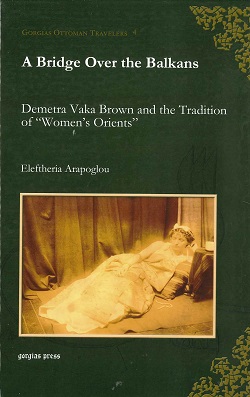
245 10|aA bridge over the Balkans :|bDemetra Vaka Brown and the tradition of “Women's Orients“ /|cEleftheria Arapoglou.
246 1 |aDemetra Vaka Brown and the tradition of “Women's Orients“
246 1 |aA bridge over the Balkans :|bDemetra Vaka Brown and the tradition of women's orients
260 |aPiscataway, NJ :|bGorgias Press,|c2011.
300 |ax, 186 sayfa :|bresim, portre ;|c24 cm.
490 1 |aGorgias Ottoman travelers,|x1946-2212 ;|v4
504 |aBibliyografya s. 175-186.
520 |a“This critical study of Demetra Vaka Brown, one of the most significant Greek American writers of the turn of the last century, is framed within the fields of “Orientalism” and cultural studies. At once a white female and a Greek immigrant from the Ottoman Empire, she worked as a writer in the United States, publishing in English and contributing her work to mainstream publications. The book presents the identity politics of Vaka Brown, recovering the discursive techniques in her identification processes and assessing the significance of her agency in the context of the themes and preoccupations of Orientalism“ -- Yayıncı.
600 14|aVaka, Demetra, 1877-1946|xEleştiri ve yorum.
600 14|aAdıvar, Halide Edib, 1884-1964.
650 4|aKadınlar|xKimlik.
650 4|aKimlik, edebiyatta.
830 0|aGorgias Ottoman travelers ;|v4.