LEADER 02275naaaa2200361aa54500
001 597952
003 TR_AnAIT
005 20250627144550
006 aocbfe |||| 000 0d
007 ta
008 210809s2013 xxuocbfe |||| 000 0deng c
020 |a9781463200022
040 |aTTK
041 |aeng
049 |aTürk Tarih Kurumu Kütüphanesi
090 |aA.IX/2276
100 1 |aJoudah, Ahmad Hasan.
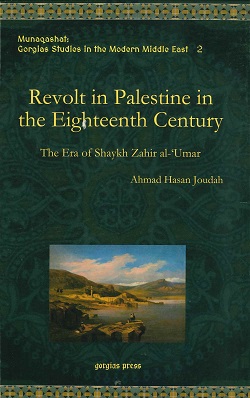
245 10|aRevolt in Palestine in the eighteenth century :|bthe era of Shaykh Zahir al-Umar /|cby Ahmad Hasan Joudah.
246 14|aThe era of Shaykh Zahir al-Umar
260 |aPiscataway, NJ :|bGorgias Press,|c2013.
300 |axiv, 230 sayfa :|bresim (renkli), portre, harita, soyağacı, tıpkıbasım ;|c24 cm.
490 1 |aMunaqashat: Gorgias studies in the modern Middle East ;|v2
500 |aEser, 1987 yılında Kingston Press tarafından yayınlanmıştır.
500 |aSözlük s. 223-226.
500 |aİndeks s. 227-230.
504 |aBibliyografya s. 207-222.
505 |tIntroduction: Ottoman organization in Syria (al-Sham) --|gChapter I.|tThe rise of the Zaydanis --|gChapter II.|tThe consolidation of power --|gChapter III.|tZahir at his Zenith --|gChapter IV.|tThe allience of Zahir and ‘Ali Bey --|gChapter V.|tThe occupation of Damascus --|gChapter VI.|tThe downfall of ‘Ali Bey --|gChapter VII.|tThe end of Zahir --|gChapter VIII.|tEpilogue.
520 |a“In the turbulent atmosphere of the eighteenth century when the Ottoman Empire was enfeebled, local leaders far from Istanbul took matters into their own hands. At first, these leaders only regulated local trade and tax collection, but soon, leaders like Shaykh Zahir al-‘Umar — a district tax collector in Palestine— saw opportunities to amass great wealth and power while providing autonomous government and safer roads to their local followers. A gripping and fascinating read, Ahmad Joudah’s biography of Shaykh Zahir is crucial for scholars seeking to contextualize developments in modern Palestinian history within the politics of the late Ottoman Empire“ -- Yayıncı.
600 14|aZâhir, el-Ömer, 1695-1775.
650 4|aİsyanlar|zFilistin|y18. yy.
651 4|aFilistin|xTarih|yOsmanlı Dönemi, 1517-1917.
830 0|aMunaqashat ;|v2.