LEADER 01903naaa22200373 a04500
001 599852
003 TR_AnAIT
005 20250627134407
006 ad|||e |||| 001 0
007 ta
008 220202s2022 ne d|||e |||| 001 0 eng c
020 |a9789004471191|q(hardback)
020 |a9789004471665|q(ebook)
040 |aTTK
041 |aeng
049 |aTürk Tarih Kurumu Kütüphanesi
090 |aA.IX/3276
100 1 |aVovin, Alexander.
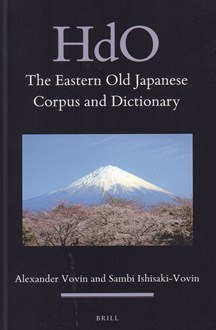
245 14|aThe Eastern old Japanese corpus and dictionary /|cby Alexander Vovin, Sambi Ishisaki-Vovin.
260 |aLeiden ;|aBoston :|bBrill,|c2022.
300 |axv, 501 sayfa :|btablo ;|c24 cm.
490 1 |aHandbook of Oriental Studies. Section five.|aJapan,|x0921-5239 ;|vvolume 17
500 |aSözlük s. [431]-482.
500 |aİndeks s. [493]-501.
504 |aBibliyografya s. [483]-492.
520 |a“This book presents for the first time all texts constituting the Eastern Old Japanese corpus as well as the dictionary including all lexical items found. Unlike its relative Western Old Japanese, Eastern Old Japanese is not based on the language of just two geographic localities, but is stretched along several provinces of Ancient Japan along the Pacific Seaboard (modern Aichi to Ibaraki) and across the island of Honshū from Etchū (Modern Toyama and parts of Ishikawa) province to Shinano and Kai provinces (modern Nagano and Yamanashi). Therefore, references to places of attestation are included into our dictionary, too.“ --|cYayıncı.
650 4|aJapon şiiri|xTarih ve kritik|y1185'e kadar.
650 4|aJapon dili|xDilbilgisi|y794'e kadar.
650 4|aJapon dili|vSözlükler|xİngilizce|y794'e kadar.
700 1 |aIshisaki-Vovin, Sambi,|eortak yazar.
830 0|aHandbook of Oriental Studies,|nSection 5.|pJapan ;|vvolume 17.
830 0|aHandbuch der Orientalistik ;|v17.
830 0|aHdO,|nV ;|vvol. 17.