

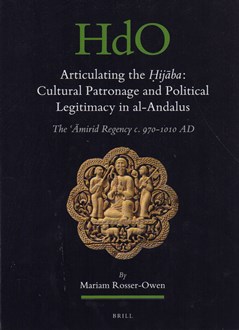
Articulating the Ḥijāba : cultural patronage and political legitimacy in al-Andalus, the ‘Āmirid regency c. 970-1010 AD / by Mariam Rosser-Owen.
Yer Numarası
B.I/9301
ISBN
9789004469136 (hardback)
9789004469204 (e-book)
9789004469204 (e-book)
Dil Kodu
İngilizce
Kütüphane
Türk Tarih Kurumu Kütüphanesi
Yazar
Yayın Bilgisi
Leiden ; Boston : Brill, 2022.
Fiziksel Niteleme
xxvi, 478 sayfa : resim (renkli), harita, plan ; 27 cm.
Dizi
Handbook of Oriental studies. Section one. The Near and Middle East, 0169-9423 ; volume 156
Genel Not
İndeks s. [465]-478.
Bibliyografi, vb. Notu
Bibliyografya s. [430]-464.
Özet, vb.
“In Articulating the Ḥijāba, Mariam Rosser-Owen analyses for the first time the artistic and cultural patronage of the 'Amirid regents of the last Cordoban Umayyad caliph, Hisham II, a period rarely covered in the historiography of al-Andalus. Al-Mansur, the founder of this dynasty, is usually considered a usurper of caliphal authority, who pursued military victory at the expense of the transcendental achievements of the first two caliphs. But he also commissioned a vast extension to the Great Mosque of Cordoba, founded a palatine city, conducted skilled diplomatic relations, patronised a circle of court poets, and owned some of the most spectacular objects to survive from al-Andalus, in ivory and marble. This study presents the evidence for a reconsideration of this period.“ -- Yayıncı.
Konu
Dizi Ek Girişi- Tek Biçim Başlık
Handbook of Oriental Studies, Section 1. The Near and Middle East ; volume 156.
Handbuch der Orientalistik ; 156.
HdO, I ; vol. 156.
Handbuch der Orientalistik ; 156.
HdO, I ; vol. 156.
