LEADER 02439naaa22200373 a04500
001 600012
003 TR_AnAIT
005 20250627133706
006 ab|||e |||| 001 0
007 ta
008 220315s2020 sz b|||e |||| 001 0 eng c
020 |a9783030502584
020 |a9783030502591|q(eBook)
040 |aTTK
041 |aeng
049 |aTürk Tarih Kurumu Kütüphanesi
090 |aA.IX/3462
100 1 |aDuaničić, Vedran.
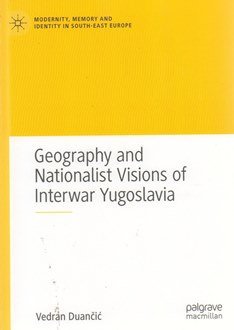
245 10|aGeography and nationalist visions of interwar Yugoslavia /|cVedran Duančić.
260 |aCham, Switzerland :|bPalgrave Macmillan,|c2020.
300 |axi, 286 sayfa :|bharita ;|c22 cm.
490 1 |aModernity, memory and identity in South-East Europe,|x2523-7985
500 |a“ISSN 2523-7993 (electronic).“
500 |aİndeks s. 279-286.
504 |aBibliyografya s. 253-227.
520 |a“This book is the first historical work to examine the notion of national territories in Yugoslavia – a concept fundamental for the understanding of Yugoslav history. Exploring the intertwined histories of geography as an emerging discipline in the South Slavic lands and geographical works describing interwar Yugoslavia, the book focuses on the engagement of geographers in the on-going political conflict over the national question. Duančić shows that geographers were uniquely equipped to address the creation of the new country and the numerous problems it faced, as they provided accounts of Yugoslavia’s past, present, and even future, all of which were understood as inherently embedded in geography. By analyzing a large body of geographical narratives on the Yugoslav state, the book follows both the attempts to “naturalize“ and present Yugoslavia as a sustainable political and cultural unit, as well as the attempts to challenge its existence by pointing to unresolvable, geographically conditioned tensions within it. The book approaches geographical discourse in Yugoslavia as part of a wider European scientific network, pointing to similarities and specifically Yugoslav characteristics.” --|cYayıncı.
650 4|aMilliyetçilik|zYugoslavya|xTarih|y20. yy.
650 4|aCoğrafya|zYugoslavya|xTarih|y20. yy.
650 4|aTarihi coğrafya|zYugoslavya.
650 4|aDünya politikaları.
651 4|aYugoslavya|xTarih|y1918-1945.
651 4|aAvrupa, Orta|xTarih.
830 0|aModernity, memory and identity in South-East Europe.