LEADER 03224naaa22200409 a04500
001 600092
003 TR_AnAIT
005 20250627133225
006 ab|||e |||| 001 0
007 ta
008 220321s2017 nmub|||e |||| 001 0 eng c
020 |a9780826358257|q(cloth : alkaline paper)
020 |a9780826358264|q(electronic)
040 |aTTK
041 |atur
049 |aTürk Tarih Kurumu Kütüphanesi
090 |aA.IX/3494
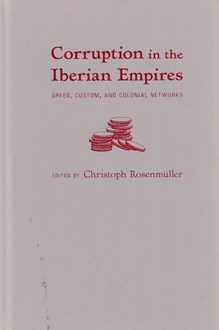
245 00|aCorruption in the Iberian empires :|bgreed, custom, and colonial networks /|cedited by Christoph Rosenmüller.
260 |aAlbuquerque :|bUniversity of New Mexico Press,|c2017.
300 |aviii, 228 sayfa :|bharita ;|c24 cm
500 |aSözlük s. 215-220.
500 |aİndeks s. 225-228.
504 |aBibliyografik notlar makale sonlarındadır.
505 |tIntroduction : corruption, abuse, and justice in the Iberian Empires /|rChristoph Rosenmüller --|tForgery and Tambos : false documents, imagined Incas, and the making of andean space /|rJeremy Ravi Mumford --|tFrom corrupt to criminal : reflections on the Great Potosí Mint Fraud of 1649 /|rKris Lane --|tClients, patrons, and tribute : The Aguilar Family in Mexico, Tenochtitlan, 1644-1689 /|rWilliam F. Connell --|tPortraits of bad officials : malfeasance in visita sentences from seventeenth-century Santo Domingo /|rMarc Eagle --|t“The execrable offense of fraud or bribery“ : corrupt judges and common people in the Visita of Imperial Mexico (1715-1727) /|rChristoph Rosenmüller --|t“Our delivery consists in appointing good ministers“ : corruption and the dilemmas of appointing officials in early eighteenth-century Spain /|rFrancisco A. Eissa-Barroso --|tCustom, corruption, and reform in early eighteenth-century Mexico : Puebla's merchant priests versus the reformist bureaucrat /|rFrances Ramos --|tMerchant-bureaucrats, unwritten contracts, and fraud in the Manila Galleon trade /|rCatherine Tracy Goode --|tAddicted to smuggling : contraband trade in eighteenth-century Brazil and Rio de la Plata /|rFabrício Prado.
520 |a“This book provides new perspectives into a subject that historians have largely overlooked. The contributors use fresh archival research from Spain, Portugal, Brazil, Bolivia, Mexico, and the Philippines to examine the lives of slaves and farmworkers as well as self-serving magistrates, bishops, and traders in contraband. The authors show that corruption was a powerful discourse in the Atlantic world. Investigative judges could dismiss culprits, jail them, or, sometimes, have them 'garroted and their corpses publicly displayed.'“ --|cYayıncı.
650 4|aSiyasi yolsuzluk|zİspanya|xKoloniler|xTarih.
650 4|aSiyasi yolsuzluk|zPortekiz|xKoloniler|xTarih.
650 4|aYolsuzluklar|zİspanya|xKoloniler|xTarih.
650 4|aYolsuzluklar|zPortekiz|xKoloniler|xTarih.
651 4|aİspanya|xKoloniler|xYönetim|xTarih.
651 4|aPortekiz|xKoloniler|xYönetim|xTarih.
651 4|aİspanya|xKoloniler|xTicaret|xTarih.
651 4|aPortekiz|xKoloniler|xTicaret|xTarih.
651 4|aLatin Amerika|xTarih|y1830'a kadar.
651 4|aFilipinler|xTarih|y1521-1812.
700 1 |aRosenmüller, Christoph,|d1969-|eeditör.