LEADER 03609naaaa2200349aa 4500
001 600388
003 TR_AnAIT
005 20250627132003
006 aobede ||||o000 0
007 ta
008 220531s2022 is obede ||||o000 0 eng c
020 |a9789654067539
020 |a9789654067546|q(ebook)
040 |aTTK
041 |aeng
049 |aTürk Tarih Kurumu Kütüphanesi
090 |aB.I/9406
100 1 |aAvner, Rina.
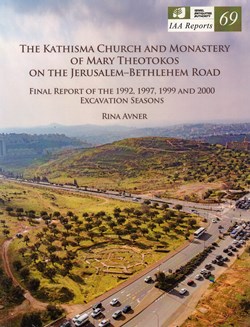
245 10|aThe Kathisma Church and Monastery of Mary Theotokos on the Jerusalem - Bethlehem Road :|bfinal report of the 1992, 1997, 1999 and 2000 excavation seasons /|cRina Avner ; with contributios by Donald T. Ariel, Ariel Berman, Leah Dİ Segni, Gerald Finkielsztejn, Yael Gorin-Rosen, Tamar Winter ; editors Ayelet Hashahar Malka, Shelley Sadeh.
260 |aJerusalem :|bIsrael Antiquities Authority,|c2022.
300 |aix, 321, [3] sayfa :|bresim (çoğu renkli), şekil, harita, plan, tablo ;|c27 cm.
490 1 |aIAA reports ;|vno. 69
504 |aBibliyografya s. [287]-297.
505 |gChapter 1.|tIntroduction /|rRina Avner --|gChapter 2.|tThe octagonal church-architecture and stratigraphy /|rRina Avner --|gChapter 3.|tThe entrance atria and the monastery-architecture and stratigraphy /|rRina Avner --|gChapter 4.|tThe mosaic floors /|rRina Avner --|gChapter 5.|tThe inscriptions /|rLeah Di Segni --|gChapter 6.|tArchitectural elements and liturgical furniture /|rRina Avner --|gChapter 7.|tThe coins /|rDonald T. Ariel, Ariel Berman --|gChapter 8.|tThe pottery /|rRina Avner --|gChapter 9.|tThe glass finds /|rYael Gorin-Rosen, Tamar Winter --|gChapter 10.|tThe Kathisma church in its historical context in the Early Islamic Period /|rRina Avner --|gChapter 11:|tSummary and discussion /|rRina Avner --|gAppendix 1.|tA rhodian stamped amphora handle from Kathisma /|rGerald Finkielsztejn --|gAppendix 2.|tList of selected loci and walls.
520 |a“This volume documents the excavations of the Kathisma church and monastery located on the ancient road from Jerusalem to Bethlehem. Kathisma is mentioned in Byzantine sources and pilgrimage itineraries, and identified as the holy place where Mary sat down to rest in her final stage of pregnancy before giving birth to Jesus. It played a role in the initial stages of Mary’s worship and its influence is still felt today.The octagonal church, built in the fifth century CE, is one of the most important discoveries of Early Christian architecture in the Holy Land in recent decades. The size of the church and its architectural plan, based on three concentric octagons, attest to it being designed as a pilgrimage church that could accommodate large audiences. In the Umayyad period, the church served both Muslim and Christian worshippers, as indicated by a miḥrab installed in the southern part, and the cancelation of the main apse by an Umayyad building. The splendid mosaics from this period in the southern rooms testify to artistic and iconographic influences of the wall mosaics in the Dome of the Rock. The evidence for the existence of a mosque in the Kathisma church constitutes the only archaeological evidence known to date for the ‘Covenants of ‘Umar’, which obliged Christians to relinquish areas in churches to Muslims“ -- Yayıncı.
650 4|aArkeolojik kazılar|zİsrail.
651 4|aİsrail|xEski eserler.
700 1 |aMalka, Ayelet Hashahar,|eeditör.
700 1 |aSadeh, Shelley,|eeditör.
830 0|aPublications of the Israel Antiquities Authority (IAA).|pIAA reports ;|v69.
830 0|aIsrael Antiquities Authority (IAA reports) ;|vno. 69.