LEADER 03066naaaa2200337aa 4500
001 600499
003 TR_AnAIT
005 20250627131545
006 a||||e |||| 001 0
007 ta
008 220616s2017 enk||||e |||| 001 0 eng c
020 |a9781472482204|q(hbk)
020 |a9781315591940|q(ebk)
040 |aTTK
041 |aeng
049 |aTürk Tarih Kurumu Kütüphanesi
090 |aA.IX/3872
100 1 |aGeukjian, Ohannes.
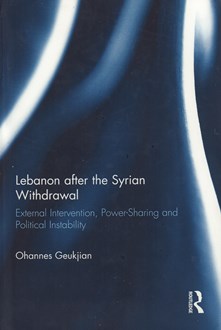
245 00|aLebanon after the Syrian withdrawal :|bexternal intervention, power-sharing and political instability /|cOhannes Geukjian.
250 |aFirst published.
260 |aLondon ;|aNew York :|bRoutledge, Taylor & Francis Group,|c2017.
300 |aix, 315 sayfa ;|c24 cm
500 |aİndeks s. [309]-315.
504 |aBibliyografya s. [302]-308.
505 |g2.|tLebanon’s power-sharing arrangements --|g3.|tThe post-Tai’f period: power-sharing and external intervention --|g4.|tExternal intervention and the Syrian withdrawal in 2005 --|g5.|tEscalating tensions, war and external intervention, 2006 --|g6.|tPolitical and military escalation and the Doha Agreement, 2007–8 --|g7.|tRegional and international dynamics to stabilize Lebanon, 2009–10 --|g8.|tThe limits of Lebanon’s consociationalism to manage internal conflict, 2011–12 --|g9.|tPolitical instability and contradictory resilience of Lebanese consociationalism, 2013–16.
520 |a“Lebanon experienced serious instability and ethno-national conflict following the Syrian withdrawal in 2005 compounded by the Arab Spring which led to regional instability and civil war in Iraq and Syria. Why did consociational democracy fail? Was failure inevitable? What impact could external powers play in creating an environment where consociationalism might be successfully implemented? This book addresses these key questions and provides a comprehensive analysis of how internal and external elite relations influence the chances of a successful regulation of ethno-national conflict through power-sharing. Exploring the roles played by Syria, Qatar, Iran, Saudi Arabia, the United States and France it argues that external actors in the Lebanese conflict largely determined whether power-sharing was successfully established and shows that the consociational democratic model cannot provide long-term conflict regulation in their absence. The author argues that relationships between internal and external actors determine the prospects for successful conflict regulation and pinpoints the crucial role of the external forces in the creation of power-sharing agreements in Lebanon concluding that future success is dependent on the maintenance of positive, exogenous pressures. This book will be of key interest to students and scholars studying politics, international relations, and Middle-East studies“ -- Yayıncı.
651 4|aLübnan|xYönetim ve politikalar|y1990.
651 4|aLübnan|xDış ilişkiler|zSuriye.
651 4|aSuriye|xDış ilişkiler|zLübnan.
651 4|aLübnan|xDış ilişkiler|y20. yy.