

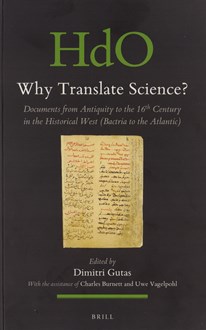
Why translate science? : documents from antiquity to the 16ᵗʰ century in the historical West (Bactria to the Atlantic) / edited by Dimitri Gutas ; with the assistance of Charles Burnett, Uwe Vagelpohl.
Yer Numarası
A.IX/4548
ISBN
9789004472631 (hardback)
9789004472648 (e-book)
9789004472648 (e-book)
Dil Kodu
İngilizce
Kütüphane
Türk Tarih Kurumu Kütüphanesi
Yayın Bilgisi
Leiden ; Boston : Brill, [2022]
Fiziksel Niteleme
ix, 764 sayfa ; 24 cm.
Dizi
Handbook of Oriental Studies = Handbuch der Orientalistik. Section one, Near and Middle East, 0169-9423 ; volume 160
Genel Not
İndeks s. [729]-764.
Bibliyografi, vb. Notu
Bibliyografya bölüm sonlarındadır.
İçindekiler Notu
1. Bölüm Introduction / Dimitri Gutas -- 2. Bölüm. Latin translations of Greek science and philosophy : some relevant passages / Felix Mundt, David Cohen -- 3. Bölüm. Translations from Greek into Middle Persian as repatriated knowledge / Mohsen Zakeri -- 4. Bölüm. Why the Syrians translated Greek philosophy and science / Daniel King -- 5. Bölüm. Why do we translate? Arabic sources on translation / Uwe Vagelpohl, Ignacio Sánchez -- 6. Bölüm. The Nabatean agriculture by Ibn Wahšiyya, a pseudo-translation by a pseudo-translator : the topos of translation in the occult sciences / Isabel Toral -- 7. Bölüm. Translations into Greek in the Byzantine period / Anthony Kaldellis -- 8. Bölüm. The statements of medieval Latin translators on why and how they translate works on science and philosophy from Arabic / Charles Burnett -- 9. Bölüm. Latin translators from Greek in the twelfth century on why and how they translate / Michael Angold, Charles Burnett -- 10. Bölüm. Why did Latin translators translate from the Greek in the thirteenth century and later? / Pieter Beullens -- 11. Bölüm. Why translate? Views From within : egodocuments by translators from Arabic and Latin into Hebrew (twelfth-fourteenth centuries) / Gad Freudenthal -- 12. Bölüm. Renaissance scholars on why they translate scientific and philosophical works from Arabic into Latin / Dag Nikolaus Hasse.
Özet, vb.
“From antiquity to the 16th century, translation united culturally the peoples in the historical West (from Bactria to the shores of the Atlantic) and fueled the production and circulation of knowledge. The Hellenic scientific and philosophical curriculum was translated from and into, to mention the most prevalent languages, Greek, Syriac, Middle Persian, Arabic, Hebrew, and Latin.
To fill a lack in existing scholarship, this volume collects the documents that present the insider evidence provided in contemporary accounts of the motivations and purposes of translation given in the personal statements by the agents in this process, the translators, scholars, and historians of each society. Presented in the original languages with an English translation and introductory essays, these documents offer material for the study of the historical contextualization of the translations, the social history of science and philosophy in their interplay with traditional beliefs, and the cultural policies and ideological underpinnings of these societies“ -- Yayıncı.
Dil Notu
Arapça, Farsça ve İbranice metin içerir.
Emeği Geçenler
Gutas, Dimitri, editör.
Burnett, Charles, katkıda bulunan.
Vagelpohl, Uwe katkıda bulunan.
Burnett, Charles, katkıda bulunan.
Vagelpohl, Uwe katkıda bulunan.
Dizi Ek Girişi- Tek Biçim Başlık
Handbook of Oriental studies. Section 1. The Near and Middle East ; volume 160.
Handbuch der Orientalistik. Section 1. The Near and Middle East ; volume 160.
HdO ; volume 160.
Handbuch der Orientalistik. Section 1. The Near and Middle East ; volume 160.
HdO ; volume 160.
Eseri Alıntıla
Referansları kullanmadan önce gözden geçirmeniz ve varsa gerekli düzeltmeleri yapmanız önerilir.
Dijital Kaynak
MARC Görünümü
LEADER 04065naaaa2200397aa 4500
001 601351
003 TR_AnAIT
005 20250627123859
006 a||||e |||| 001 0
007 ta
008 221103q2022 ne ||||e |||| 001 0 eng c
020 |a9789004472631|q(hardback)
020 |a9789004472648|q(e-book)
040 |aTTK
041 |aeng
049 |aTürk Tarih Kurumu Kütüphanesi
090 |aA.IX/4548
245 00|aWhy translate science? :|bdocuments from antiquity to the 16ᵗʰ century in the historical West (Bactria to the Atlantic) /|cedited by Dimitri Gutas ; with the assistance of Charles Burnett, Uwe Vagelpohl.
260 |aLeiden ;|aBoston :|bBrill,|c[2022]
300 |aix, 764 sayfa ;|c24 cm.
490 1 |aHandbook of Oriental Studies =|aHandbuch der Orientalistik. Section one, Near and Middle East,|x0169-9423 ;|vvolume 160
500 |aİndeks s. [729]-764.
504 |aBibliyografya bölüm sonlarındadır.
505 |g1. Bölüm|tIntroduction /|rDimitri Gutas --|g2. Bölüm.|tLatin translations of Greek science and philosophy : some relevant passages /|rFelix Mundt, David Cohen --|g3. Bölüm.|tTranslations from Greek into Middle Persian as repatriated knowledge /|rMohsen Zakeri --|g4. Bölüm.|tWhy the Syrians translated Greek philosophy and science /|rDaniel King --|g5. Bölüm.|tWhy do we translate? Arabic sources on translation /|rUwe Vagelpohl, Ignacio Sánchez --|g6. Bölüm.|tThe Nabatean agriculture by Ibn Wahšiyya, a pseudo-translation by a pseudo-translator : the topos of translation in the occult sciences /|rIsabel Toral --|g7. Bölüm.|tTranslations into Greek in the Byzantine period /|rAnthony Kaldellis --|g8. Bölüm.|tThe statements of medieval Latin translators on why and how they translate works on science and philosophy from Arabic /|rCharles Burnett --|g9. Bölüm.|tLatin translators from Greek in the twelfth century on why and how they translate /|rMichael Angold, Charles Burnett --|g10. Bölüm.|tWhy did Latin translators translate from the Greek in the thirteenth century and later? /|rPieter Beullens --|g11. Bölüm.|tWhy translate? Views From within : egodocuments by translators from Arabic and Latin into Hebrew (twelfth-fourteenth centuries) /|rGad Freudenthal --|g12. Bölüm.|tRenaissance scholars on why they translate scientific and philosophical works from Arabic into Latin /|rDag Nikolaus Hasse.
520 |a“From antiquity to the 16th century, translation united culturally the peoples in the historical West (from Bactria to the shores of the Atlantic) and fueled the production and circulation of knowledge. The Hellenic scientific and philosophical curriculum was translated from and into, to mention the most prevalent languages, Greek, Syriac, Middle Persian, Arabic, Hebrew, and Latin.
To fill a lack in existing scholarship, this volume collects the documents that present the insider evidence provided in contemporary accounts of the motivations and purposes of translation given in the personal statements by the agents in this process, the translators, scholars, and historians of each society. Presented in the original languages with an English translation and introductory essays, these documents offer material for the study of the historical contextualization of the translations, the social history of science and philosophy in their interplay with traditional beliefs, and the cultural policies and ideological underpinnings of these societies“ -- Yayıncı.
546 |aArapça, Farsça ve İbranice metin içerir.
650 |aÇeviri|xBilim|xTarih.
650 |aBilimsel literatür|xÇeviriler|xTarih ve kritik.
650 |aİletişim, bilimde|xTarih.
700 1 |aGutas, Dimitri,|eeditör.
700 1 |aBurnett, Charles,|ekatkıda bulunan.
700 1 |aVagelpohl, Uwe|ekatkıda bulunan.
830 0|aHandbook of Oriental studies. Section 1.|pThe Near and Middle East ;|vvolume 160.
830 0|aHandbuch der Orientalistik. Section 1.|pThe Near and Middle East ;|vvolume 160.
830 0|aHdO ;|vvolume 160.
001 601351
003 TR_AnAIT
005 20250627123859
006 a||||e |||| 001 0
007 ta
008 221103q2022 ne ||||e |||| 001 0 eng c
020 |a9789004472631|q(hardback)
020 |a9789004472648|q(e-book)
040 |aTTK
041 |aeng
049 |aTürk Tarih Kurumu Kütüphanesi
090 |aA.IX/4548
245 00|aWhy translate science? :|bdocuments from antiquity to the 16ᵗʰ century in the historical West (Bactria to the Atlantic) /|cedited by Dimitri Gutas ; with the assistance of Charles Burnett, Uwe Vagelpohl.
260 |aLeiden ;|aBoston :|bBrill,|c[2022]
300 |aix, 764 sayfa ;|c24 cm.
490 1 |aHandbook of Oriental Studies =|aHandbuch der Orientalistik. Section one, Near and Middle East,|x0169-9423 ;|vvolume 160
500 |aİndeks s. [729]-764.
504 |aBibliyografya bölüm sonlarındadır.
505 |g1. Bölüm|tIntroduction /|rDimitri Gutas --|g2. Bölüm.|tLatin translations of Greek science and philosophy : some relevant passages /|rFelix Mundt, David Cohen --|g3. Bölüm.|tTranslations from Greek into Middle Persian as repatriated knowledge /|rMohsen Zakeri --|g4. Bölüm.|tWhy the Syrians translated Greek philosophy and science /|rDaniel King --|g5. Bölüm.|tWhy do we translate? Arabic sources on translation /|rUwe Vagelpohl, Ignacio Sánchez --|g6. Bölüm.|tThe Nabatean agriculture by Ibn Wahšiyya, a pseudo-translation by a pseudo-translator : the topos of translation in the occult sciences /|rIsabel Toral --|g7. Bölüm.|tTranslations into Greek in the Byzantine period /|rAnthony Kaldellis --|g8. Bölüm.|tThe statements of medieval Latin translators on why and how they translate works on science and philosophy from Arabic /|rCharles Burnett --|g9. Bölüm.|tLatin translators from Greek in the twelfth century on why and how they translate /|rMichael Angold, Charles Burnett --|g10. Bölüm.|tWhy did Latin translators translate from the Greek in the thirteenth century and later? /|rPieter Beullens --|g11. Bölüm.|tWhy translate? Views From within : egodocuments by translators from Arabic and Latin into Hebrew (twelfth-fourteenth centuries) /|rGad Freudenthal --|g12. Bölüm.|tRenaissance scholars on why they translate scientific and philosophical works from Arabic into Latin /|rDag Nikolaus Hasse.
520 |a“From antiquity to the 16th century, translation united culturally the peoples in the historical West (from Bactria to the shores of the Atlantic) and fueled the production and circulation of knowledge. The Hellenic scientific and philosophical curriculum was translated from and into, to mention the most prevalent languages, Greek, Syriac, Middle Persian, Arabic, Hebrew, and Latin.
To fill a lack in existing scholarship, this volume collects the documents that present the insider evidence provided in contemporary accounts of the motivations and purposes of translation given in the personal statements by the agents in this process, the translators, scholars, and historians of each society. Presented in the original languages with an English translation and introductory essays, these documents offer material for the study of the historical contextualization of the translations, the social history of science and philosophy in their interplay with traditional beliefs, and the cultural policies and ideological underpinnings of these societies“ -- Yayıncı.
546 |aArapça, Farsça ve İbranice metin içerir.
650 |aÇeviri|xBilim|xTarih.
650 |aBilimsel literatür|xÇeviriler|xTarih ve kritik.
650 |aİletişim, bilimde|xTarih.
700 1 |aGutas, Dimitri,|eeditör.
700 1 |aBurnett, Charles,|ekatkıda bulunan.
700 1 |aVagelpohl, Uwe|ekatkıda bulunan.
830 0|aHandbook of Oriental studies. Section 1.|pThe Near and Middle East ;|vvolume 160.
830 0|aHandbuch der Orientalistik. Section 1.|pThe Near and Middle East ;|vvolume 160.
830 0|aHdO ;|vvolume 160.
Materyaller
Depodan talep edilen materyal sadece kütüphane içerisinde kullanılmaktadır.
Materyal dışarıya ödünç verilmemektedir.
Materyal dışarıya ödünç verilmemektedir.
