LEADER 03568cam a2200481Ii 4500
001 601381
003 TR_AnAIT
005 20250627123757
008 180706s2016 enka ob 001 0 eng d
020 |a9781315557472|q(e-book : PDF)
020 |a9781317029724|q(e-book: Mobi)
020 |a9781317029731|q(e-book: ePub)
020 |z9781472467805|q(hardback)
024 7 |a10.4324/9781315557472|2doi
035 |a(OCoLC)957773407
041 |aeng
043 |ae-gr---|aaw-----|ae-uk---
049 |aTürk Tarih Kurumu Kütüphanesi
050 4|aDS63.2.G8|bG74 2016
082 04|a327.4105609034|bG793
090 |aDK/0560
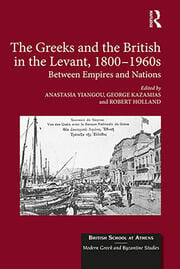
245 04|aThe Greeks and the British in the Levant, 1800-1960s :|bbetween empires and nation's /|cedited by Anastasia Yiangou, George Kazamias and Robert Holland.
264 1|aLondon :|bRoutledge,|c2016.
300 |a1 online resource (xxi, 343 pages)
490 1 |aBritish School at Athens--Modern Greek and Byzantine studies ;|v2
505 0 |apt. I. The Levant : dilemmas of modernity -- pt. II. The Anglo-Hellenic connection -- pt. III. Ambigious relationships in the Greek levant.
520 2 |a“This book explores the concept of 'the Levant' as a component of the regional and international system during the age of imperialism. At its heart is a focus on the experience of Greek-speaking societies and, above all, the independent state of Greece that came into existence in 1830. A key sub-theme running through the account is the Anglo-Hellenic connection stemming from an enhanced British presence in the Eastern Mediterranean from the 1830s and 1840s, and in particular its relationship to the Greek polity. Within this framework the emergence of the idea of 'Greater Greece' is integrated into the narrative, including its regional reverberations and ethnic tensions. Other contributions examine trade and finance, gender issues, colonialism and the distinctive experience of Cyprus. The core of the volume deals centrally with three interlocking themes: modernity, nationalism and trans-nationalism. Ultimately these forces were to prove at odds with the ambiguity and elite structures that characterized the Levant in its nineteenth-century heyday. The book analyses the evolution, and increasing definition from the late 1950s, of Greece's modern European identity, while taking into account the magnetic force of other relationships and regional links. This treatment connects with the choices and dilemmas facing Greece and its surrounding region, which contemporary crises invariably throw into relief. It will be of interest both to specialised historians and students of current affairs seeking to understand the broader historical context“--Provided by publisher.
650 0|aImperialism|xHistory.
650 0|aSocial change|xPolitical aspects|xHistory.
650 0|aNationalism|xHistory.
650 0|aTransnationalism|xPolitical aspects|xHistory.
651 0|aGreat Britain|xRelations|zGreece.
651 0|aGreat Britain|xRelations|zMiddle East.
651 0|aGreece|xRelations|zGreat Britain.
651 0|aGreece|xRelations|zMiddle East.
651 0|aMiddle East|xRelations|zGreat Britain.
651 0|aMiddle East|xRelations|zGreece.
700 1 |aHolland, R. F.|q(Robert F.)
700 1 |aKazamias, Giorgos.
700 1 |aYiangou, Anastasia.
776 08|iPrint version:|z9781472467805|w(DLC) 2015039239
830 0|aBritish School at Athens - Modern Greek and Byzantine studies ;|vVolume 2.
856 40|uhttps://www.taylorfrancis.com/books/9781315557472|zClick here to view.