LEADER 02416nam a22004451i 4500
001 601437
003 TR_AnAIT
005 20250627123542
006 m d
007 cr un uuuua
008 210226s2021 ne sb 001 0 eng d
020 |a9789004459595|q(electronic book)
020 |a9789004459588|q(print)
024 7 |a10.1163/9789004459595|2DOI
035 |z(OCoLC)1237350701
040 |aNL-LeKB|cNL-LeKB|erda
041 |aeng
049 |aTürk Tarih Kurumu Kütüphanesi
050 4|aN72.S6
072 7|aARC|x005000|2bisacsh
082 04|a701.03|223
090 |aDK/0570
100 1 |aMcChesney, R.D.,|eauthor.
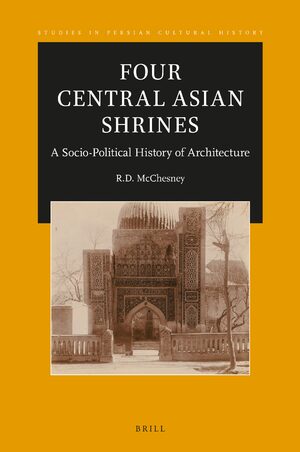
245 10|aFour Central Asian Shrines :|bA Socio-Political History of Architecture /|cR.D. McChesney.
246 3 |aA Socio-Political History of Architecture
264 1|aLeiden;|aBoston :|bBRILL,|c2021.
300 |a1 online resource.
336 |atext|btxt|2rdacontent
337 |acomputer|bc|2rdamedia
338 |aonline resource|2rdacarrier
490 1 |aStudies in Persian Cultural History ;|v18
490 1 |aMiddle East and Islamic Studies E-Books Online, Collection 2021, ISBN: 9789004441286
504 |aIncludes bibliographical references and index.
520 |aIn Central Asia, Muslim shrines have served as community centers for centuries, particularly the large urban shrines that seem, in many cases, to have served as the inspiration as well for a city's architectural development. In Four Central Asian Shrines: A Socio-Political History of Architecture R. D. McChesney documents the histories of four such long-standing shrines-Gur-i Mir at Samarqand, Khwajah Abu Nasr Parsa Mazar at Balkh, the Noble Rawzah at Mazar-i Sharif, and the Khirqat al-Nabi at Qandahar. In all four cases the creation and evolution of the architecture of these shrines is traced through narratives about their social and political histories and in the past century and a half, through the photographic record.
588 |aDescription based on print version record.
650 0|aArt and history.
776 08|iPrint version:|tFour Central Asian Shrines : A Socio-Political History of Architecture,|dLeiden ; Boston : BRILL, 2021|z9789004459588
830 0|aStudies in Persian Cultural History ;|v18.
830 0|aMiddle East and Islamic Studies E-Books Online, Collection 2021, ISBN: 9789004441286.
856 4 |zDOI:|uhttp://dx.doi.org/10.1163/9789004459595