LEADER 03223nam 2200433 i 4500
001 601466
003 TR_AnAIT
005 20250627123443
006 m d
007 cr un uuuua
008 180403s2018 ne a sb 001 0 eng d
020 |a9789004358287|q(electronic book)
020 |z9789004358270|q(print)
024 7 |a10.1163/9789004358287|2DOI
035 |a(OCoLC)1030304486
040 |aNL-LeKB|cNL-LeKB|erda
041 |aeng
049 |aTürk Tarih Kurumu Kütüphanesi
050 4|aDG107|b.H69 2018
072 7|aHIS039000|2bisacsh
082 04|a338.0937|223
090 |aDK/0599
100 1 |aHoyer, Daniel,|d1982-
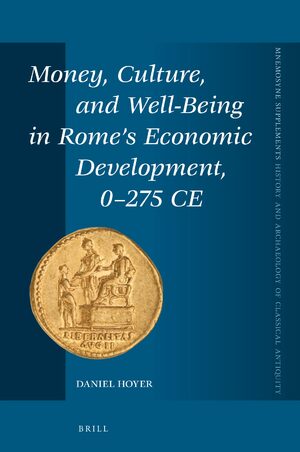
245 10|aMoney, culture, and well-being in Rome's economic development, 0-275 CE /|cby Daniel Hoyer.
264 4|cc2018.
300 |a1 online resource (xii, 215 pages) :|billustrations.
336 |atext|btxt|2rdacontent
337 |acomputer|bc|2rdamedia
338 |aonline resource|2rdacarrier
490 1 |aMnemosyne, Supplements ;|vv. 412
504 |aIncludes bibliographical references and index.
505 00|aFront Matter -- Copyright Page -- Acknowledgements -- Front Matter Part -- List of Roman Emperors* -- Introduction: Approaching the Imperial Roman Economy -- The Gift That Kept On Giving: Perpetual Endowments and the Role of Prosociality in Rome’s Economic Development -- Investing in the Roman Economy: Material Evidence for Economic Development -- Aligning Public and Private Interests: Public Building, Private Money, and Urban Development -- Measuring Economic Performance beyond GDP: Economic Growth, Income Inequality, and Roman Living Standards -- From Prosociality to Civil Strife: Conflict, Stagnation, and Growing Regional Divides in the Third Century CE -- Conclusion: Rome’s Place in a Global History of Development -- List of Inscriptions from the Western Empire Recording Interest being Drawn -- List of Building Inscriptions from the North African Provinces Recording the Sponsor -- Back Matter -- Bibliography -- Index.
506 |aAvailable to subscribing member institutions only.
520 |aThe Roman Empire has long held pride of place in the collective memory of scholars, politicians, and the general public in the western world. In Money, Culture, and Well-Being in Rome's Economic Development, 0-275 CE , Daniel Hoyer offers a new approach to explain Rome's remarkable development. Hoyer surveys a broad selection of material to see how this diverse body of evidence can be reconciled to produce a single, coherent picture of the Roman economy. Engaging with social scientific and economic theory, Hoyer highlights key issues in economic history, placing the Roman Empire in its rightful place as a special—but not wholly unique—example of a successful preindustrial state.
651 0|aRome|xEconomic conditions|y30 B.C.-476 A.D.
776 08|iPrint version:|aHoyer, Daniel.|tMoney, culture, and well-being in Rome's economic development, 0-275 CE.|dLeiden : Koninklijke Brill NV 2017|z9789004358270|w(OCoLC)1019655755
830 0|aMnemosyne, Supplements|v412.
830 0|aMnemosyne Supplements Online, Supplement 2018, ISBN: 9789004363922.
856 4 |zDOI:|uhttp://dx.doi.org/10.1163/9789004358287