LEADER 02963nama222003738a 4500
001 601793
003 TR_AnAIT
005 20250627122223
006 aobe|e |||| 0|1 0
007 ta
008 230202s2022 xxkobe|e |||| 001 0 eng c
020 |a9780755635436|q(PB)
020 |a9781838605490|q(HB)
020 |a9781838605520|q(ePDF)
020 |a9781838605513|q(eBook)
041 |aeng
049 |aTürk Tarih Kurumu Kütüphanesi
090 |aA.IX/5206
100 1 |aÇağaptay, Suna.
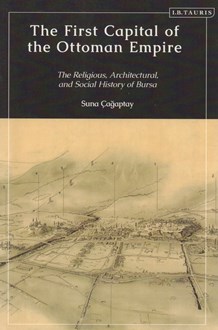
245 10|aThe first capital of the Ottoman Empire :|bthe religious, architectural, and social history of Bursa /|cSuna Çağaptay.
246 14|aThe religious, architectural, and social history of Bursa
260 |aLondon :|aNew York, NY :|bI. B. Tauris,|c2022.
300 |axviii, 214 sayfa :|bresim, harita, plan ;|c23 cm.
500 |aİndeks s. [203]-214.
504 |aBibliyografik notlar s. [111]-172.
504 |aBibliyografya s. [173]-202.
505 |tIntroduction: The First Capital of the Ottoman Empire --|tBecoming Bursa --|tThe City in Transition: Continuity, Conversion, and Reuse --|tContextualizing the Convent- Masjids and Friday Mosques: Local Knowledge and Hybridity --|tThe Roots and Context of the Inverted-T Plan --|tMemory and Monuments: the Külliyes of the Sultans --|tConcluding Remarks on “Invisible Prousa / Bursa”.
520 |a“From 1326 to 1402, Bursa, known to the Byzantines as Prousa, served as the first capital of the Ottoman Empire. It retained its spiritual and commercial importance even after Edirne (Adrianople) in Thrace, and later Constantinople (Istanbul), functioned as Ottoman capitals. Yet, to date, no comprehensive study has been published on the city's role as the inaugural center of a great empire. In works by art and architectural historians, the city has often been portrayed as having a small or insignificant pre-Ottoman past, as if the Ottomans created the city from scratch. This couldn't be farther from the truth. In this book, rooted in the author's archaeological experience, Suna Çagaptay tells the story of the transition from a Byzantine Christian city to an Islamic Ottoman one, positing that Bursa was a multi-faith capital where we can see the religious plurality and modernity of the Ottoman world. The encounter between local and incoming forms, as this book shows, created a synthesis filled with nuance, texture, and meaning. Indeed, when one looks more closely and recognizes that the contributions of the past do not threaten the authenticity of the present, a richer and more accurate narrative of the city and its Ottoman accommodation emerges“ --|cYayıncı.
650 4|aSosyal tarih
650 4|aMimarlık, Osmanlı|zBursa (Türkiye)|xTarih.
651 4|aBursa (Türkiye)|xTarih.
651 4|aBursa (Türkiye)|xSosyal durum|xTarih.
651 4|aBursa (Türkiye)|xTarih|zOsmanlı İmparatorluğu.
651 4|aTürkiye|xTarih|zOsmanlı İmparatorluğu, 1299-1918.