

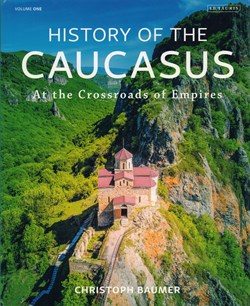
History of the Caucasus : at the crossroads of empire. Volume one / Christoph Baumer.
Yer Numarası
B.I/9657
ISBN
9781788310079 (HB)
9780755639694 (ePDF)
9780755639687 (eBook)
9780755639694 (ePDF)
9780755639687 (eBook)
Dil Kodu
İngilizce
Kütüphane
Türk Tarih Kurumu Kütüphanesi
Yazar
Yayın Bilgisi
London ; New York : I. B. Tauris, 2021.
Fiziksel Niteleme
1. cilt (viii, 386 sayfa) : resim (renkli), harita (renkli), tablo ; 30 cm.
Genel Not
İndeks s. 369-386.
Bibliyografi, vb. Notu
Bibliyografik notlar s. 315-339.
Bibliyografya s. 340-361.
Bibliyografya s. 340-361.
İçindekiler Notu
I. ALONG THE EUROPEAN-ASIAN BORDER : AN INTRODUCTION. A conflict-ridden present age -- A unique geography -- Peoples and languages -- Objectives and sources -- II. THE FORMATION OF THE LANDSCAPE AND EARLY HUMANS OF THE PALAEOLITHIC. The formation of the Caucasus Mountains and the history of the neighbouring seas. Black Sea and Caspian Sea. Excursus: Did the Great Flood take place on the Black Sea? -- Homo georgicus: The first early humans outside Africa -- Neanderthals and Homo sapiens in the North and South Caucasus -- III. PREHISTORIC CULTURES: FROM THE NEOLITHIC TO THE IRON AGE. The Southern Caucasus -- The Shulaveri-Shomutepe-Aratashen culture -- The Chalcolithic cultures of Sioni and Leila Tepe -- The Late Chalcolithic and Early Bronze Age Kura-Araxes culture -- The Kurgan cultures of the Middle Bronze Age. Excursus: The invention of wheel and wagon -- The Late Bronze Age and Iron Age -- Early tribal organizations, war alliances and confederations -- Colchis in prehistoric times -- The Northern Caucasus -- Chalcolithic settlements and early low burial mounds -- The Early Bronze Age cultures of Maikop -- The Middle and Late Bronze Age Dolmen culture -- The Late Bronze Age and Early Iron Age Priel’brus culture -- IV. THE FIRST CAUCASIAN STATE, GREEK EMPORIA AND NORTHERN HORSE PEOPLES. Urartu/Biainili: The first Caucasian state -- The founding of Biainili -- Biainili fights with the Neo-Assyrian Empire for supremacy in the Middle East -- Neo-Assyria’s renewed ascent and Biainili’s demise -- Biainili's fall -- Horsemen from the North and Greek trade colonies -- Cimmerians -- Immigrant Scythians and autochthonous Maiotes -- Greek emporia in the north-western Caucasus -- Sarmatians, Alans and the Hun invasion -- V. THE SOUTH CAUCASUS UNDER ACHAEMENID SUPREMACY, ARMENIAN KINGDOMS AND PONTUS. Achaemenid supremacy -- The Hellenization of the Colchis -- Early kingdoms of Armenia -- Armenian dynasties of the Orontids/Yervanduni and early Artaxiad -- Tigranes the Great, Pontos and the Mithridaic Wars. Excursus: The eight deities of the Armenian pantheon -- Late Artaxiad: Armenia between Rome and Parthia -- Roman client-rulers of Pontos -- VI. ROMAN-PARTHIAN CONDOMINIUMS IN THE SOUTH CAUCASUS. Remarks on early historiography -- The Kingdom of Kartli (Iberia) and Lazica -- Legendary ancestors and the Parnavazids -- Iberia in Rome’s political orbit -- Caucasian Albania in pre-Islamic times -- Armenia -- Armenia as a Roman-Parthian condominium -- Armenia between Sasanid and Roman sovereignty -- VII. THE INTRODUCTION OF CHRISTIANITY AS A STATE IDEOLOGY AND THE DIVISION OF THE SOUTH CAUCASUS. The legends of apostolic missionary work -- Armenia and the tradition of Gregory the Illuminator -- Syrian-Mesopotamian and Greek-Cappadocian influences -- King Trdat IV and Gregory the Illuminator -- Peculiarities of early Armenian Christianity -- A power struggle between kings and church leaders, and Armenia’s division -- The third missionization of Armenia and the end of the monarchy -- Excursus: Mesrop Mashtots and the invention of the Armenian script -- Kartli: From King Mirian III to the abolition of the monarchy -- The legend of St. Nino and the Christianization of Kartli -- Kartli under Persian sovereignty -- The conversion of Albania and the Apostolic Church of Caucasian Albania -- Lazica and the initial Christianization of the North Caucasian Alans -- The Lazican Wars -- The Christianization of Lazica, Alania and Svanetia and the veneration of military saints -- Persian hegemony in Armenia, Georgia and Albania -- Alienation between the Caucasian church hierarchies -- VIII. BETWEEN CALIPHATE, BYZANTIUM AND KHAZARS. South Caucasian principalities under Islamic rule up to the battle of Bagravand in 772 -- The Rise of the Bagratid dynasties -- The emergence of the Kingdom of Armenia. Excursus: Paulicians and Tondrakians -- The emergence of the Georgian Kingdom of Sakartvelo -- The Kingdom of the Khazars -- The Kingdom of Alania -- Muslim dynasties of Albania and the invasion of the Seljuks -- The Sajids -- The Sallarids -- The Rawwadids -- The Shaddadids -- The Yazidids and Hashimids -- The kingdoms of Armenia, Byzantine rule and the Seljuk conquest -- The Armenian kingdoms -- The Byzantine annexation of Armenia -- The Seljuks conquer Armenia -- Ani under the rule of the Shaddadids -- IX. OUTLOOK. Appendices -- Population statistics by country -- Long-established languages of the Caucasus by language family -- Chronology of the most important Caucasian dynasties.
Özet, vb.
“A landscape of high mountains and narrow valleys stretching from the Black to the Caspian Seas, the Caucasus region has been home to human populations for nearly 2 million years. In this richly illustrated 2-volume series, historian and explorer Christoph Baumer tells the story of the region's history through to the present day. It is a story of encounters between many different peoples, from Scythians, Turkic and Mongol peoples of the East to Greeks and Romans from the West, from Indo-European tribes from the West as well as the East, and to Arabs and Iranians from the South. It is a story of rival claims by Empires and nations and of how the region has become home to more than 50 languages that can be heard within its borders to this very day.
This first volume charts the period from the emergence of the earliest human populations in the region – the first known human populations outside Africa - to the Seljuk conquests of 1050CE. Along the way the book charts the development of Neolithic, Iron and Bronze Age cultures, the first recognizable Caucasian state and the arrival of a succession of the great transnational Empires, from the Greeks, the Romans and the Armenian to competing Christian and Muslim conquerors. The History of the Caucasus: Volume 1 also includes more than 200 full colour images and maps bringing the changing cultures of these lands vividly to life“ -- Yayıncı.
Eseri Alıntıla
Referansları kullanmadan önce gözden geçirmeniz ve varsa gerekli düzeltmeleri yapmanız önerilir.
Dijital Kaynak
MARC Görünümü
LEADER 07067namaa22003258a44500
001 601843
003 TR_AnAIT
005 20250627121943
006 aobd|e |||| 001 0||
007 ta
008 230106s2021 xxkobd|e |||| 001 0 eng c
020 |a9781788310079|q(HB)
020 |a9780755639694|q(ePDF)
020 |a9780755639687|q(eBook)
041 |aeng
049 |aTürk Tarih Kurumu Kütüphanesi
090 |aB.I/9657
100 1 |aBaumer, Christoph,|d1952-
245 10|aHistory of the Caucasus :|bat the crossroads of empire.|nVolume one /|cChristoph Baumer.
260 |aLondon ;|aNew York :|bI. B. Tauris,|c2021.
300 |a1. cilt (viii, 386 sayfa) :|bresim (renkli), harita (renkli), tablo ;|c30 cm.
500 |aİndeks s. 369-386.
504 |aBibliyografik notlar s. 315-339.
504 |aBibliyografya s. 340-361.
505 |gI.|tALONG THE EUROPEAN-ASIAN BORDER : AN INTRODUCTION.|tA conflict-ridden present age --|tA unique geography --|tPeoples and languages --|tObjectives and sources --|gII.|tTHE FORMATION OF THE LANDSCAPE AND EARLY HUMANS OF THE PALAEOLITHIC.|tThe formation of the Caucasus Mountains and the history of the neighbouring seas.|tBlack Sea and Caspian Sea.|tExcursus: Did the Great Flood take place on the Black Sea? --|tHomo georgicus: The first early humans outside Africa --|tNeanderthals and Homo sapiens in the North and South Caucasus --|gIII.|tPREHISTORIC CULTURES: FROM THE NEOLITHIC TO THE IRON AGE.|tThe Southern Caucasus --|tThe Shulaveri-Shomutepe-Aratashen culture --|tThe Chalcolithic cultures of Sioni and Leila Tepe --|tThe Late Chalcolithic and Early Bronze Age Kura-Araxes culture --|tThe Kurgan cultures of the Middle Bronze Age.|tExcursus: The invention of wheel and wagon --|tThe Late Bronze Age and Iron Age --|tEarly tribal organizations, war alliances and confederations --|tColchis in prehistoric times --|tThe Northern Caucasus --|tChalcolithic settlements and early low burial mounds --|tThe Early Bronze Age cultures of Maikop --|tThe Middle and Late Bronze Age Dolmen culture --|tThe Late Bronze Age and Early Iron Age Priel’brus culture --|gIV.|tTHE FIRST CAUCASIAN STATE, GREEK EMPORIA AND NORTHERN HORSE PEOPLES.|tUrartu/Biainili: The first Caucasian state --|tThe founding of Biainili --|tBiainili fights with the Neo-Assyrian Empire for supremacy in the Middle East --|tNeo-Assyria’s renewed ascent and Biainili’s demise --|tBiainili's fall --|tHorsemen from the North and Greek trade colonies --|tCimmerians --|tImmigrant Scythians and autochthonous Maiotes --|tGreek emporia in the north-western Caucasus --|tSarmatians, Alans and the Hun invasion --|gV.|tTHE SOUTH CAUCASUS UNDER ACHAEMENID SUPREMACY, ARMENIAN KINGDOMS AND PONTUS.|tAchaemenid supremacy --|tThe Hellenization of the Colchis --|tEarly kingdoms of Armenia --|tArmenian dynasties of the Orontids/Yervanduni and early Artaxiad --|tTigranes the Great, Pontos and the Mithridaic Wars. Excursus: The eight deities of the Armenian pantheon --|tLate Artaxiad: Armenia between Rome and Parthia --|tRoman client-rulers of Pontos --|gVI.|tROMAN-PARTHIAN CONDOMINIUMS IN THE SOUTH CAUCASUS.|tRemarks on early historiography --|tThe Kingdom of Kartli (Iberia) and Lazica --|tLegendary ancestors and the Parnavazids --|tIberia in Rome’s political orbit --|tCaucasian Albania in pre-Islamic times --|tArmenia --|tArmenia as a Roman-Parthian condominium --|tArmenia between Sasanid and Roman sovereignty --|gVII.|tTHE INTRODUCTION OF CHRISTIANITY AS A STATE IDEOLOGY AND THE DIVISION OF THE SOUTH CAUCASUS.|tThe legends of apostolic missionary work --|tArmenia and the tradition of Gregory the Illuminator --|tSyrian-Mesopotamian and Greek-Cappadocian influences --|tKing Trdat IV and Gregory the Illuminator --|tPeculiarities of early Armenian Christianity --|tA power struggle between kings and church leaders, and Armenia’s division --|tThe third missionization of Armenia and the end of the monarchy --|tExcursus: Mesrop Mashtots and the invention of the Armenian script --|tKartli: From King Mirian III to the abolition of the monarchy --|tThe legend of St. Nino and the Christianization of Kartli --|tKartli under Persian sovereignty --|tThe conversion of Albania and the Apostolic Church of Caucasian Albania --|tLazica and the initial Christianization of the North Caucasian Alans --|tThe Lazican Wars --|tThe Christianization of Lazica, Alania and Svanetia and the veneration of military saints --|tPersian hegemony in Armenia, Georgia and Albania --|tAlienation between the Caucasian church hierarchies --|gVIII.|tBETWEEN CALIPHATE, BYZANTIUM AND KHAZARS.|tSouth Caucasian principalities under Islamic rule up to the battle of Bagravand in 772 --|tThe Rise of the Bagratid dynasties --|tThe emergence of the Kingdom of Armenia. Excursus: Paulicians and Tondrakians --|tThe emergence of the Georgian Kingdom of Sakartvelo --|tThe Kingdom of the Khazars --|tThe Kingdom of Alania --|tMuslim dynasties of Albania and the invasion of the Seljuks --|tThe Sajids --|tThe Sallarids --|tThe Rawwadids --|tThe Shaddadids --|tThe Yazidids and Hashimids --|tThe kingdoms of Armenia, Byzantine rule and the Seljuk conquest --|tThe Armenian kingdoms --|tThe Byzantine annexation of Armenia --|tThe Seljuks conquer Armenia --|tAni under the rule of the Shaddadids --|gIX.|tOUTLOOK.|tAppendices --|tPopulation statistics by country --|tLong-established languages of the Caucasus by language family --|tChronology of the most important Caucasian dynasties.
520 |a“A landscape of high mountains and narrow valleys stretching from the Black to the Caspian Seas, the Caucasus region has been home to human populations for nearly 2 million years. In this richly illustrated 2-volume series, historian and explorer Christoph Baumer tells the story of the region's history through to the present day. It is a story of encounters between many different peoples, from Scythians, Turkic and Mongol peoples of the East to Greeks and Romans from the West, from Indo-European tribes from the West as well as the East, and to Arabs and Iranians from the South. It is a story of rival claims by Empires and nations and of how the region has become home to more than 50 languages that can be heard within its borders to this very day.
This first volume charts the period from the emergence of the earliest human populations in the region – the first known human populations outside Africa - to the Seljuk conquests of 1050CE. Along the way the book charts the development of Neolithic, Iron and Bronze Age cultures, the first recognizable Caucasian state and the arrival of a succession of the great transnational Empires, from the Greeks, the Romans and the Armenian to competing Christian and Muslim conquerors. The History of the Caucasus: Volume 1 also includes more than 200 full colour images and maps bringing the changing cultures of these lands vividly to life“ --|cYayıncı.
651 4|aKafkasya|xMedeniyet.
651 4|aKafkasya|y1500'e kadar.
651 4|aKafkasya|xTarih.
651 4|aKafkasya|xTarih|xResimli eserler.
001 601843
003 TR_AnAIT
005 20250627121943
006 aobd|e |||| 001 0||
007 ta
008 230106s2021 xxkobd|e |||| 001 0 eng c
020 |a9781788310079|q(HB)
020 |a9780755639694|q(ePDF)
020 |a9780755639687|q(eBook)
041 |aeng
049 |aTürk Tarih Kurumu Kütüphanesi
090 |aB.I/9657
100 1 |aBaumer, Christoph,|d1952-
245 10|aHistory of the Caucasus :|bat the crossroads of empire.|nVolume one /|cChristoph Baumer.
260 |aLondon ;|aNew York :|bI. B. Tauris,|c2021.
300 |a1. cilt (viii, 386 sayfa) :|bresim (renkli), harita (renkli), tablo ;|c30 cm.
500 |aİndeks s. 369-386.
504 |aBibliyografik notlar s. 315-339.
504 |aBibliyografya s. 340-361.
505 |gI.|tALONG THE EUROPEAN-ASIAN BORDER : AN INTRODUCTION.|tA conflict-ridden present age --|tA unique geography --|tPeoples and languages --|tObjectives and sources --|gII.|tTHE FORMATION OF THE LANDSCAPE AND EARLY HUMANS OF THE PALAEOLITHIC.|tThe formation of the Caucasus Mountains and the history of the neighbouring seas.|tBlack Sea and Caspian Sea.|tExcursus: Did the Great Flood take place on the Black Sea? --|tHomo georgicus: The first early humans outside Africa --|tNeanderthals and Homo sapiens in the North and South Caucasus --|gIII.|tPREHISTORIC CULTURES: FROM THE NEOLITHIC TO THE IRON AGE.|tThe Southern Caucasus --|tThe Shulaveri-Shomutepe-Aratashen culture --|tThe Chalcolithic cultures of Sioni and Leila Tepe --|tThe Late Chalcolithic and Early Bronze Age Kura-Araxes culture --|tThe Kurgan cultures of the Middle Bronze Age.|tExcursus: The invention of wheel and wagon --|tThe Late Bronze Age and Iron Age --|tEarly tribal organizations, war alliances and confederations --|tColchis in prehistoric times --|tThe Northern Caucasus --|tChalcolithic settlements and early low burial mounds --|tThe Early Bronze Age cultures of Maikop --|tThe Middle and Late Bronze Age Dolmen culture --|tThe Late Bronze Age and Early Iron Age Priel’brus culture --|gIV.|tTHE FIRST CAUCASIAN STATE, GREEK EMPORIA AND NORTHERN HORSE PEOPLES.|tUrartu/Biainili: The first Caucasian state --|tThe founding of Biainili --|tBiainili fights with the Neo-Assyrian Empire for supremacy in the Middle East --|tNeo-Assyria’s renewed ascent and Biainili’s demise --|tBiainili's fall --|tHorsemen from the North and Greek trade colonies --|tCimmerians --|tImmigrant Scythians and autochthonous Maiotes --|tGreek emporia in the north-western Caucasus --|tSarmatians, Alans and the Hun invasion --|gV.|tTHE SOUTH CAUCASUS UNDER ACHAEMENID SUPREMACY, ARMENIAN KINGDOMS AND PONTUS.|tAchaemenid supremacy --|tThe Hellenization of the Colchis --|tEarly kingdoms of Armenia --|tArmenian dynasties of the Orontids/Yervanduni and early Artaxiad --|tTigranes the Great, Pontos and the Mithridaic Wars. Excursus: The eight deities of the Armenian pantheon --|tLate Artaxiad: Armenia between Rome and Parthia --|tRoman client-rulers of Pontos --|gVI.|tROMAN-PARTHIAN CONDOMINIUMS IN THE SOUTH CAUCASUS.|tRemarks on early historiography --|tThe Kingdom of Kartli (Iberia) and Lazica --|tLegendary ancestors and the Parnavazids --|tIberia in Rome’s political orbit --|tCaucasian Albania in pre-Islamic times --|tArmenia --|tArmenia as a Roman-Parthian condominium --|tArmenia between Sasanid and Roman sovereignty --|gVII.|tTHE INTRODUCTION OF CHRISTIANITY AS A STATE IDEOLOGY AND THE DIVISION OF THE SOUTH CAUCASUS.|tThe legends of apostolic missionary work --|tArmenia and the tradition of Gregory the Illuminator --|tSyrian-Mesopotamian and Greek-Cappadocian influences --|tKing Trdat IV and Gregory the Illuminator --|tPeculiarities of early Armenian Christianity --|tA power struggle between kings and church leaders, and Armenia’s division --|tThe third missionization of Armenia and the end of the monarchy --|tExcursus: Mesrop Mashtots and the invention of the Armenian script --|tKartli: From King Mirian III to the abolition of the monarchy --|tThe legend of St. Nino and the Christianization of Kartli --|tKartli under Persian sovereignty --|tThe conversion of Albania and the Apostolic Church of Caucasian Albania --|tLazica and the initial Christianization of the North Caucasian Alans --|tThe Lazican Wars --|tThe Christianization of Lazica, Alania and Svanetia and the veneration of military saints --|tPersian hegemony in Armenia, Georgia and Albania --|tAlienation between the Caucasian church hierarchies --|gVIII.|tBETWEEN CALIPHATE, BYZANTIUM AND KHAZARS.|tSouth Caucasian principalities under Islamic rule up to the battle of Bagravand in 772 --|tThe Rise of the Bagratid dynasties --|tThe emergence of the Kingdom of Armenia. Excursus: Paulicians and Tondrakians --|tThe emergence of the Georgian Kingdom of Sakartvelo --|tThe Kingdom of the Khazars --|tThe Kingdom of Alania --|tMuslim dynasties of Albania and the invasion of the Seljuks --|tThe Sajids --|tThe Sallarids --|tThe Rawwadids --|tThe Shaddadids --|tThe Yazidids and Hashimids --|tThe kingdoms of Armenia, Byzantine rule and the Seljuk conquest --|tThe Armenian kingdoms --|tThe Byzantine annexation of Armenia --|tThe Seljuks conquer Armenia --|tAni under the rule of the Shaddadids --|gIX.|tOUTLOOK.|tAppendices --|tPopulation statistics by country --|tLong-established languages of the Caucasus by language family --|tChronology of the most important Caucasian dynasties.
520 |a“A landscape of high mountains and narrow valleys stretching from the Black to the Caspian Seas, the Caucasus region has been home to human populations for nearly 2 million years. In this richly illustrated 2-volume series, historian and explorer Christoph Baumer tells the story of the region's history through to the present day. It is a story of encounters between many different peoples, from Scythians, Turkic and Mongol peoples of the East to Greeks and Romans from the West, from Indo-European tribes from the West as well as the East, and to Arabs and Iranians from the South. It is a story of rival claims by Empires and nations and of how the region has become home to more than 50 languages that can be heard within its borders to this very day.
This first volume charts the period from the emergence of the earliest human populations in the region – the first known human populations outside Africa - to the Seljuk conquests of 1050CE. Along the way the book charts the development of Neolithic, Iron and Bronze Age cultures, the first recognizable Caucasian state and the arrival of a succession of the great transnational Empires, from the Greeks, the Romans and the Armenian to competing Christian and Muslim conquerors. The History of the Caucasus: Volume 1 also includes more than 200 full colour images and maps bringing the changing cultures of these lands vividly to life“ --|cYayıncı.
651 4|aKafkasya|xMedeniyet.
651 4|aKafkasya|y1500'e kadar.
651 4|aKafkasya|xTarih.
651 4|aKafkasya|xTarih|xResimli eserler.
Materyaller
Depodan talep edilen materyal sadece kütüphane içerisinde kullanılmaktadır.
Materyal dışarıya ödünç verilmemektedir.
Materyal dışarıya ödünç verilmemektedir.
