LEADER 03479nama222003498a 4500
001 601849
003 TR_AnAIT
005 20250627121931
006 aobede |||| 000 0
007 ta
008 230411s2021 xxkobede |||| 000 0 eng c
020 |a9781789697032
020 |a9781789697049|q(e-Pdf)
041 |aeng
049 |aTürk Tarih Kurumu Kütüphanesi
090 |aB.I/9775
100 1 |aReade, Wendy.
245 14|aThe first thousand years of glass-making in the ancient Near East compositional analyses of late Bronze and Iron Age glasses /|cWendy Reade.
260 |aOxford :|bArchaeopress Publishing,|c©2021.
300 |axviii, 249 sayfa :|bresim (kimi renkli), harita (kimi renkli), plan, grafik, tablo ;|c29 cm.
490 0 |aArchaeopress archaeology
504 |aBibliyografya s. 209-225.
505 |tIntroduction, Background and Aims --|tMethods for Compositional Analyses and Data Interpretation --|tNuzi: Late Bronze Age Glasses Results of Compositional Analyses --|tPella: Late Bronze Age Glasses Results of Compositional Analyses --|tPella: Iron Age Glasses Results of Compositional Analyses --|tNimrud: Iron Age Glasses Results of Compositional Analyses Part 1 --|tNimrud: Iron Age Glasses Results of Compositional Analyses Part 2 --|tLate Bronze Age Glasses - Comparisons and Interpretations --|tIron Age Glasses - Comparisons and Interpretations --|tConclusions and Future Research --|tEpilogue : Published Research 2009-2019 --|tBibliography 2009-2019.
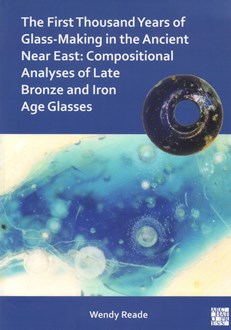
520 |a“Glass-Making in the Ancient Near East explores glass composition and production from the mid-second to mid-first millennia BC, essentially the first thousand years of glass-making. Multi-element analyses of 132 glasses from Pella in Jordan, and Nuzi and Nimrud in Iraq (ancient Mesopotamia), produce new and important data that provide insights into the earliest glass production. A novel method for data interpretation and presentation has been developed and used to characterise the glass types and to investigate questions of composition, raw materials, regional differences and similarities, and changes through time from the earliest consistent glass manufacture as represented at 16th century BC Pella, which is compared with Late Bronze Age Nuzi, to the Iron Age at both Pella and Nimrud. These compositional data are compared with available glass compositional data from the widespread regions of the Levant, Mesopotamia, Egypt, Iran and France, uncovering fascinating connections that, when placed in the archaeological context, reveal much about glass production, raw material sources, and distribution of finished and raw glasses. Technological innovations, including the introduction of natron-fluxed glasses, early decolouring with antimony, and the use of Egyptian cobalt colourant in Near Eastern glasses, are explored as part of this unique investigation of the critical developments in sophisticated and complex glass-making that laid the foundations for the establishment of large-scale production in the ensuing Hellenistic and Roman periods“ --|cYayıncı.
650 4|aCam üretimi|zOrta Doğu|yAntik Çağ.
650 4|aArkeoloji|zOrta Doğu|yAntik Çağ.
650 4|aTunç Çağı|zOrta Doğu|xArkeoloji.
650 4|aCam eşyalar|zYakın Doğu|yAntik Çağ.
650 4|aArkeolojik kazılar|zÜrdün|zPella.
650 4|aArkeolojik kazılar|zIrak|zNuzi.
650 4|aArkeolojik kazılar|zIrak|zNimrud.
650 4|aArkeolojik kazılar|zOrta Doğu.