LEADER 01998nama222003378a 4500
001 601857
003 TR_AnAIT
005 20250627121909
006 aoe||e |||| 000 0d
007 ta
008 230410s2021 xxkoe||e |||| 000 0deng
020 |a9781789698992
020 |a9781789699005|q(e-Pdf)
041 |aeng
049 |aTürk Tarih Kurumu Kütüphanesi
090 |aA.IX/5663
100 1 |aTiboni, Francesco,|d1976-
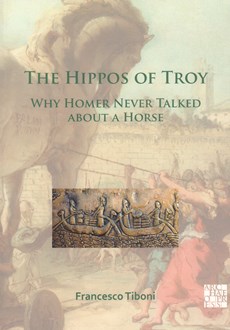
245 10|aThe hippos of Troy why :|bHomer never talked about a horse /|cFrancesco Tiboni.
260 |aOxford :|bArchaeopress Publishing Ltd.,|c2021.
300 |aiv, 112 sayfa :|bresim (çoğu renkli), plan (kimi renkli) ;|c24 cm.
490 0 |aArchaeopress archaeology
504 |aBibliyografya s. 102-112.
505 |tThe naval dimension of Homer --|tThe wooden horse in ancient texts --|tThe wooden horse of Troy in classical art --|tThe hippos ships in the Ancient Mediterranean --|tWhy Homer never talked about a horse.
520 |a“Deals with one of the most famous episodes of the whole of Classical mythology, the Wooden Horse of Troy. Thanks to the analysis of words, images and wrecks, the author proposes a new interpretation of what Homer actually intended when he spoke of the hippos used by the Greeks to conquer the city of Troy. The archaeological, iconographic and philological evidence discussed by the author leads to the conclusion that Homer never talked about a giant wooden horse, nor a war machine. In fact, Homer referred to the use of a particular ship type, a merchant ship of Levantine origin in use in the Late Bronze Age/Early Iron Age Mediterranean, used to pay tribute to Levantine kings, as well as to trade precious metal around the Mediterranean coast“--|cYayıncı.
600 04|aHomeros.
600 04|aHomeros|xKritik ve yorum.
600 04|aHomeros. Odysseia.
650 4|aTruva atı (Antik Yunan mitolojisi).
650 4|aMitoloji, Antik Yunan.
650 4|aTruva Savaşı.
650 4|aSavaş gemileri|zYunanistan|xTarih.