

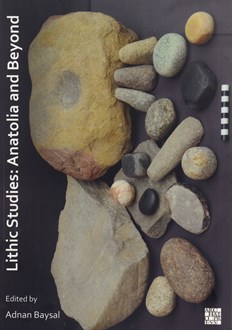
Lithic studies Anatolia and beyond / edited by Adnan Baysal.
Yer Numarası
B.I/9777
ISBN
9781789699265
9781789699272 (e-Pdf)
9781789699272 (e-Pdf)
Dil Kodu
İngilizce
Kütüphane
Türk Tarih Kurumu Kütüphanesi
Yayın Bilgisi
Oxford : Archaeopress Publishing, ©2022.
Fiziksel Niteleme
vi, 278 sayfa : resim (kimi renkli), portre (renkli), çizim, harita (kimi renkli), plan, grafik tablo ; 29 cm.
Dizi
Archaeopress archaeology
Bibliyografi, vb. Notu
Bibliyografya makale sonlarındadır.
İçindekiler Notu
Foreword / Mehmet Özdoğan -- Connecting Lithics: An Introduction to Lithic Studies in Anatolia and Beyond / Adnan Baysal -- Raw Material Matters / Elizabeth Healey -- Use-wear Analysis of Lithic Tools: Technical Processes and Cultural Developments in Anatolia / Laurence Astruc -- The Projectile Points of Neolithic Çatalhöyük: A Contextual Multi-Attribute Analysis / Lilian Dogiama -- The Importance of Lithics in Determining the Economic Models and Lifestyles of Prehistoric Societies: The Kanlıtaş Höyük Example / Neyir Kolankaya-Bostancı -- The Lithic Assemblage of Suluin Cave in Antalya (sw Anatolia) / Zehra Fürüzen Taşkıran, Harun Taşkıran -- Lithic Assemblages from the Marmara Region : 7th -3rd mill. BC / Ivan Gatsov, Petranka Nedelcheva -- Yeşilova Höyük Neolithic Period Chipped Stone Industry / Betül Fındık, Zafer Derin -- The Techno-Typology of the Projectile Points of the Neolithic Settlement of Ege Gübre (Izmir/Turkey) / Eşref Erbil -- Interpreting Chipped Stone Assemblages of the Neolithic in Western Anatolia - A Conceptual View / Bogdana Milic -- Looking West: Central Anatolian Obsidian in the Western Anatolian Peninsula and Eastern Aegean / Marina Milic -- Viewing Melian Neolithic Obsidian Networks from the Western Side of the Aegean sea (Greece): Distribution Parameters and Data Reconsidered / Lia Karimali, Stella Papadopoulou -- Stone Technology Under the Microscope: the Contribution of Microwear Analysis of Ground Stone Tools to the Understanding of Daily Activities / Christina Tsoraki -- On the Function and Ethnographic Analogies of North East Aegean Ground Stone Tools / Abdulkadir Özdemir, A. Onur Bamyacı -- General Assessment of the Ground Stone Industries of the Marmara Region / Emre Güldoğan -- So Close, Yet So Far Away: the Ground Stone Tool Assemblages from the Two Neighbouring Settlements of Kleitos, North-western Greece / Danai Chondrou -- Abrasive Stone Tools in the Neolithic of Serbia: from Recognition to Publication / Dragana Antonovic, Vidan Dimic.
Özet, vb.
“Lithic Studies : Anatolia and Beyond aims to show networks of cultural interactions by focusing on the latest lithic studies from Turkey, Greece, and the Balkans, bringing to the forefront the connectedness and techno-cultural continuity of knapped and ground stone technologies. Lithic studies are mostly conducted on a site by site basis, and specialist studies on lithics tend to focus primarily on technology and typology. As a result, information acquired through lithic research is presented as the identifier of the particular site with the addition of brief local correlations. This creates isolated islands of information. This volume is intended to bring these islands together to build the bigger picture, showcasing the fluidity of technological change, transitional cultural developments, and cultural formation by focusing on the interrelations between sites, localities and regions. Individually and collectively the wide range of papers in the volume give perspectives on Neolithization as seen through stone technologies, highlighting both regional trends and interregional relationships. The volume lays the foundations for creating an integrated understanding of Neolithic lithic technologies across the broad geographical regions of Turkey, Greece and the Balkans“ -- Yayıncı.
Konu
Yaşam tarzı__Türkiye__Eskişehir__Kanlıtaş Höyük__Neolitik Çağ.
Yontma taş sanayi__Türkiye__Aksaray__Yeşilova Höyük__Neolitik Çağ.
Yontma taş buluntular__Batı Anadolu.
Taş aletler__Kuzey Doğu Ege.
Sürtme taş endüstrisi__Marmara Bölgesi.
Sürtme taş aletler__Yunanistan__Kleitos (antik kent)
Obsidyen__Yunanistan.
Çatalhöyük (Konya, Türkiye)__Neolitik Çağ.
Suluin Mağarası (Antalya, Türkiye)
Türkiye__Eski eserler.
Yunanistan__Eski eserler.
Balkan Yarımadası__Eski eserler.
Yontma taş sanayi__Türkiye__Aksaray__Yeşilova Höyük__Neolitik Çağ.
Yontma taş buluntular__Batı Anadolu.
Taş aletler__Kuzey Doğu Ege.
Sürtme taş endüstrisi__Marmara Bölgesi.
Sürtme taş aletler__Yunanistan__Kleitos (antik kent)
Obsidyen__Yunanistan.
Çatalhöyük (Konya, Türkiye)__Neolitik Çağ.
Suluin Mağarası (Antalya, Türkiye)
Türkiye__Eski eserler.
Yunanistan__Eski eserler.
Balkan Yarımadası__Eski eserler.
Emeği Geçenler
Baysal, Adnan, editör.
Eseri Alıntıla
Referansları kullanmadan önce gözden geçirmeniz ve varsa gerekli düzeltmeleri yapmanız önerilir.
Dijital Kaynak
MARC Görünümü
LEADER 04858nam a22003978a 4500
001 601858
003 TR_AnAIT
005 20250627121906
006 aocabe |||| 000 0
007 ta
008 230411s2022 xxkocabe |||| 000 0 eng c
020 |a9781789699265
020 |a9781789699272|q(e-Pdf)
041 |aeng
049 |aTürk Tarih Kurumu Kütüphanesi
090 |aB.I/9777
245 00|aLithic studies Anatolia and beyond /|cedited by Adnan Baysal.
260 |aOxford :|bArchaeopress Publishing,|c©2022.
300 |avi, 278 sayfa :|bresim (kimi renkli), portre (renkli), çizim, harita (kimi renkli), plan, grafik tablo ; 29 cm.
490 0 |aArchaeopress archaeology
504 |aBibliyografya makale sonlarındadır.
505 |tForeword / Mehmet Özdoğan --|tConnecting Lithics: An Introduction to Lithic Studies in Anatolia and Beyond /|rAdnan Baysal --|tRaw Material Matters /|rElizabeth Healey --|tUse-wear Analysis of Lithic Tools: Technical Processes and Cultural Developments in Anatolia /|rLaurence Astruc --|tThe Projectile Points of Neolithic Çatalhöyük: A Contextual Multi-Attribute Analysis /|rLilian Dogiama --|tThe Importance of Lithics in Determining the Economic Models and Lifestyles of Prehistoric Societies: The Kanlıtaş Höyük Example /|rNeyir Kolankaya-Bostancı --|tThe Lithic Assemblage of Suluin Cave in Antalya (sw Anatolia) /|rZehra Fürüzen Taşkıran, Harun Taşkıran --|tLithic Assemblages from the Marmara Region : 7th -3rd mill. BC /|rIvan Gatsov, Petranka Nedelcheva --|tYeşilova Höyük Neolithic Period Chipped Stone Industry /|rBetül Fındık, Zafer Derin --|tThe Techno-Typology of the Projectile Points of the Neolithic Settlement of Ege Gübre (Izmir/Turkey) /|rEşref Erbil --|tInterpreting Chipped Stone Assemblages of the Neolithic in Western Anatolia - A Conceptual View /|rBogdana Milic --|tLooking West: Central Anatolian Obsidian in the Western Anatolian Peninsula and Eastern Aegean /|rMarina Milic --|tViewing Melian Neolithic Obsidian Networks from the Western Side of the Aegean sea (Greece): Distribution Parameters and Data Reconsidered /|rLia Karimali, Stella Papadopoulou --|tStone Technology Under the Microscope: the Contribution of Microwear Analysis of Ground Stone Tools to the Understanding of Daily Activities /|rChristina Tsoraki --|tOn the Function and Ethnographic Analogies of North East Aegean Ground Stone Tools /|rAbdulkadir Özdemir, A. Onur Bamyacı --|tGeneral Assessment of the Ground Stone Industries of the Marmara Region /|rEmre Güldoğan --|tSo Close, Yet So Far Away: the Ground Stone Tool Assemblages from the Two Neighbouring Settlements of Kleitos, North-western Greece /|rDanai Chondrou --|tAbrasive Stone Tools in the Neolithic of Serbia: from Recognition to Publication /|rDragana Antonovic, Vidan Dimic.
520 |a“Lithic Studies : Anatolia and Beyond aims to show networks of cultural interactions by focusing on the latest lithic studies from Turkey, Greece, and the Balkans, bringing to the forefront the connectedness and techno-cultural continuity of knapped and ground stone technologies. Lithic studies are mostly conducted on a site by site basis, and specialist studies on lithics tend to focus primarily on technology and typology. As a result, information acquired through lithic research is presented as the identifier of the particular site with the addition of brief local correlations. This creates isolated islands of information. This volume is intended to bring these islands together to build the bigger picture, showcasing the fluidity of technological change, transitional cultural developments, and cultural formation by focusing on the interrelations between sites, localities and regions. Individually and collectively the wide range of papers in the volume give perspectives on Neolithization as seen through stone technologies, highlighting both regional trends and interregional relationships. The volume lays the foundations for creating an integrated understanding of Neolithic lithic technologies across the broad geographical regions of Turkey, Greece and the Balkans“ --|cYayıncı.
650 4|aYaşam tarzı|zTürkiye|zEskişehir|zKanlıtaş Höyük|yNeolitik Çağ.
650 4|aYontma taş sanayi|zTürkiye|zAksaray|zYeşilova Höyük|yNeolitik Çağ.
650 4|aYontma taş buluntular|zBatı Anadolu.
650 4|aTaş aletler|zKuzey Doğu Ege.
650 4|aSürtme taş endüstrisi|zMarmara Bölgesi.
650 4|aSürtme taş aletler|zYunanistan|zKleitos (antik kent)
650 4|aObsidyen|zYunanistan.
651 4|aÇatalhöyük (Konya, Türkiye)|yNeolitik Çağ.
651 4|aSuluin Mağarası (Antalya, Türkiye)
651 4|aTürkiye|xEski eserler.
651 4|aYunanistan|xEski eserler.
651 4|aBalkan Yarımadası|xEski eserler.
700 1 |aBaysal, Adnan,|eeditör.
001 601858
003 TR_AnAIT
005 20250627121906
006 aocabe |||| 000 0
007 ta
008 230411s2022 xxkocabe |||| 000 0 eng c
020 |a9781789699265
020 |a9781789699272|q(e-Pdf)
041 |aeng
049 |aTürk Tarih Kurumu Kütüphanesi
090 |aB.I/9777
245 00|aLithic studies Anatolia and beyond /|cedited by Adnan Baysal.
260 |aOxford :|bArchaeopress Publishing,|c©2022.
300 |avi, 278 sayfa :|bresim (kimi renkli), portre (renkli), çizim, harita (kimi renkli), plan, grafik tablo ; 29 cm.
490 0 |aArchaeopress archaeology
504 |aBibliyografya makale sonlarındadır.
505 |tForeword / Mehmet Özdoğan --|tConnecting Lithics: An Introduction to Lithic Studies in Anatolia and Beyond /|rAdnan Baysal --|tRaw Material Matters /|rElizabeth Healey --|tUse-wear Analysis of Lithic Tools: Technical Processes and Cultural Developments in Anatolia /|rLaurence Astruc --|tThe Projectile Points of Neolithic Çatalhöyük: A Contextual Multi-Attribute Analysis /|rLilian Dogiama --|tThe Importance of Lithics in Determining the Economic Models and Lifestyles of Prehistoric Societies: The Kanlıtaş Höyük Example /|rNeyir Kolankaya-Bostancı --|tThe Lithic Assemblage of Suluin Cave in Antalya (sw Anatolia) /|rZehra Fürüzen Taşkıran, Harun Taşkıran --|tLithic Assemblages from the Marmara Region : 7th -3rd mill. BC /|rIvan Gatsov, Petranka Nedelcheva --|tYeşilova Höyük Neolithic Period Chipped Stone Industry /|rBetül Fındık, Zafer Derin --|tThe Techno-Typology of the Projectile Points of the Neolithic Settlement of Ege Gübre (Izmir/Turkey) /|rEşref Erbil --|tInterpreting Chipped Stone Assemblages of the Neolithic in Western Anatolia - A Conceptual View /|rBogdana Milic --|tLooking West: Central Anatolian Obsidian in the Western Anatolian Peninsula and Eastern Aegean /|rMarina Milic --|tViewing Melian Neolithic Obsidian Networks from the Western Side of the Aegean sea (Greece): Distribution Parameters and Data Reconsidered /|rLia Karimali, Stella Papadopoulou --|tStone Technology Under the Microscope: the Contribution of Microwear Analysis of Ground Stone Tools to the Understanding of Daily Activities /|rChristina Tsoraki --|tOn the Function and Ethnographic Analogies of North East Aegean Ground Stone Tools /|rAbdulkadir Özdemir, A. Onur Bamyacı --|tGeneral Assessment of the Ground Stone Industries of the Marmara Region /|rEmre Güldoğan --|tSo Close, Yet So Far Away: the Ground Stone Tool Assemblages from the Two Neighbouring Settlements of Kleitos, North-western Greece /|rDanai Chondrou --|tAbrasive Stone Tools in the Neolithic of Serbia: from Recognition to Publication /|rDragana Antonovic, Vidan Dimic.
520 |a“Lithic Studies : Anatolia and Beyond aims to show networks of cultural interactions by focusing on the latest lithic studies from Turkey, Greece, and the Balkans, bringing to the forefront the connectedness and techno-cultural continuity of knapped and ground stone technologies. Lithic studies are mostly conducted on a site by site basis, and specialist studies on lithics tend to focus primarily on technology and typology. As a result, information acquired through lithic research is presented as the identifier of the particular site with the addition of brief local correlations. This creates isolated islands of information. This volume is intended to bring these islands together to build the bigger picture, showcasing the fluidity of technological change, transitional cultural developments, and cultural formation by focusing on the interrelations between sites, localities and regions. Individually and collectively the wide range of papers in the volume give perspectives on Neolithization as seen through stone technologies, highlighting both regional trends and interregional relationships. The volume lays the foundations for creating an integrated understanding of Neolithic lithic technologies across the broad geographical regions of Turkey, Greece and the Balkans“ --|cYayıncı.
650 4|aYaşam tarzı|zTürkiye|zEskişehir|zKanlıtaş Höyük|yNeolitik Çağ.
650 4|aYontma taş sanayi|zTürkiye|zAksaray|zYeşilova Höyük|yNeolitik Çağ.
650 4|aYontma taş buluntular|zBatı Anadolu.
650 4|aTaş aletler|zKuzey Doğu Ege.
650 4|aSürtme taş endüstrisi|zMarmara Bölgesi.
650 4|aSürtme taş aletler|zYunanistan|zKleitos (antik kent)
650 4|aObsidyen|zYunanistan.
651 4|aÇatalhöyük (Konya, Türkiye)|yNeolitik Çağ.
651 4|aSuluin Mağarası (Antalya, Türkiye)
651 4|aTürkiye|xEski eserler.
651 4|aYunanistan|xEski eserler.
651 4|aBalkan Yarımadası|xEski eserler.
700 1 |aBaysal, Adnan,|eeditör.
Materyaller
Depodan talep edilen materyal sadece kütüphane içerisinde kullanılmaktadır.
Materyal dışarıya ödünç verilmemektedir.
Materyal dışarıya ödünç verilmemektedir.
