LEADER 02118naaaa2200313aa54500
001 601862
003 TR_AnAIT
005 20250627121856
006 aoad|e |||| 000 0d
007 ta
008 240214s2022 enkoad|e |||| 000 0deng c
020 |a9781803271903
020 |a9781803271910|q(e-Pdf)
040 |aTTK
041 |aeng
049 |aTürk Tarih Kurumu Kütüphanesi
090 |aB.II/0076
100 1 |aRodrigo, Kalangi.
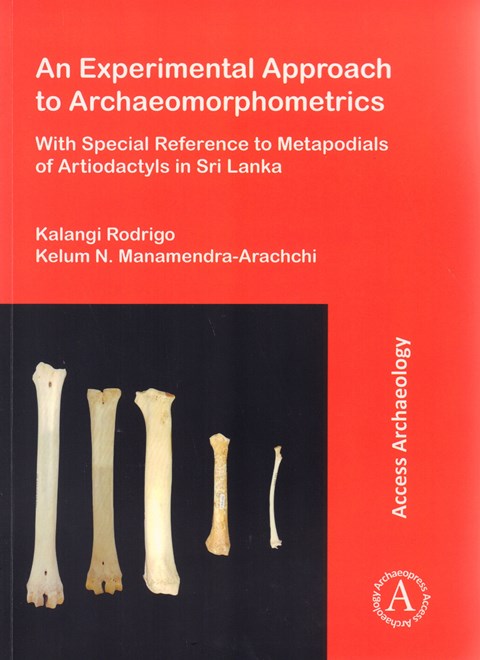
245 13|aAn experimental approach to archaeomorphometrics :|bwith special reference to metapodials of artiodactyls in Sri Lanka /|cKalangi Rodrigo, Kelum N. Manamendra-Arachchi.
260 |aOxford :|bArchaeopress,|c©2022.
300 |a62 sayfa :|bresim (renkli), çizim, grafik, tablo ;|c28 cm.
490 0 |aAccess archaeology
504 |aBibliyografya s. 57-62.
520 |a“Measurements of bones and teeth play an important role in zooarchaeology. They are useful in distinguishing between closely related species and between their wild and domestic forms. Measurements can tell us about size and shape, and for large samples it is sometimes possible to ascertain the sex ratio of the animals from which the bones are derived. For sequences of archaeological assemblages, changes in sizes can tell us about environmental and economic changes such as the advent of domestication and livestock improvement. An Experimental Approach to Archaeomorphometrics has the following aims: to publish a set of metapodial (Artiodactyl) measurements to facilitate comparisons with other bones from archaeological sites and to help the interpretation of measurement data; and to gain a better understanding of metric data, i.e., how much dimensions of different bones and parts of bones vary, and how they reflect the condition of the animal in life. To this end the volume uses principal component analysis to interpret morphological differences between taxa.” --|cArka kapak.
650 4|aArkeozooloji|zSri Lanka.
650 4|aArtiodaktiller|xFosiller|zSri Lanka.
650 4|aKemikler|xÖlçüm|zSri Lanka.
700 1 |aManamendra-Arachchi, Kelum N.,|eortak yazar.