LEADER 03256nama222003738a 4500
001 601908
003 TR_AnAIT
005 20250627121540
006 aoae|e |||| 000 0
007 ta
008 230208s2021 gw oae|e |||| 000 0 ger c
020 |a9783447115254
041 |ager
049 |aTürk Tarih Kurumu Kütüphanesi
090 |aB.I/9674
100 1 |aHerbordt, Suzanne,|d1956-
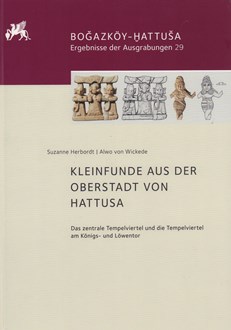
245 10|aKleinfunde aus der Oberstadt von Hattusa :|bdas zentrale Tempelviertel und die Tempelviertel am Königs- und Löwentor /|cSuzanne Herbordt, Alwo von Wickede.
260 |aWiesbaden :|bHarrassowitz Verlag,|c© 2021.
300 |axiv, 591 sayfa, 131 sayfa çizim, xxvi sayfa resim, [6] katlı plan :|bresim, çizim, plan, grafik ;|c30 cm.
490 1 |aDeutsches Archäologisches Institut.|aBoğazköy-Hattuša : ergebnisse der Ausgrabungen ;|v29
504 |aBibliyografya s. 574-581.
520 |a“This book presents the small finds from Peter Neves’ excavations in 1978–1992 in the Upper City of the Hittite capital Hattusa/Boğazköy in the central temple district and the temples at the King’s Gate and Lion Gate. The find material mainly comes from 29 temples and 37 other buildings that are interpreted as workshops and houses. The sanctuaries amassed a rich inventory from Hittite times (15th–13th century B.C.), including objects with a cultic function, household implements, tools, weapons, jewelry, seals, sealed clay bullae, written documents and household pottery. The complete and self-contained find complexes from the temples and workshops/houses present a rare opportunity to investigate inventories in the archaeological context and to correlate the find groups with the various temple areas. The already published written documents, clay bullae and household pottery are utilized for an analysis of the function of the temples’ rooms and sections of the buildings. The differences between the artefacts and tools in sacred and secular areas are specified. In addition to the Hittite find material the finds from the Early Bronze Age and Iron Age are also published. The small finds contribute to a more exact understanding of the significance of the Upper City of the Hittite capital and how it developed over time. They furthermore extend our knowledge of the material culture of central Anatolia during the 2nd and early 1st millennium B.C.“ --|cYayıncı.
650 4|aArkeolojik kazılar|zTürkiye|zBoğazköy (Çorum)|y1978-1992.
651 4|aHattuşa/Boğazköy (Çorum, Türkiye)|zYukarı Şehir|xKüçük buluntular.
651 4|aHattuşa/Boğazköy (Çorum, Türkiye)|xHititler|xKüçük buluntular|yMÖ 15-13 yy.
651 4|aHattuşa/Boğazköy (Çorum, Türkiye)|xKüçük buluntular|yErken Tunç Çağı.
651 4|aHattuşa/Boğazköy (Çorum, Türkiye)|xKüçük buluntular|yDemir Çağı.
651 4|aAnadolu, Orta|xMaddi kültür|xTarih|yMÖ 2. Binyıl.
651 4|aAnadolu, Orta|xMaddi kültür|xTarih|yMÖ Erken 1. Binyıl.
700 1 |aWickede, Alwo von,|eortak yazar.
830 0|aDeutsches Archäologisches Institut.
830 0|aDeutsches Archäologisches Institut.|pBoğazköy-Hattuša : ergebnisse der Ausgrabungen ;|v29.
830 0|aBoğazköy-Hattuša ;|v29.