LEADER 02907nama222003498a 4500
001 601909
003 TR_AnAIT
005 20250627121533
006 aobede |||| 001 0
007 ta
008 230208s2021 gw obede |||| 001 0 eng c
020 |a9783447115377
041 |aeng
049 |aTürk Tarih Kurumu Kütüphanesi
090 |aB.I/9675
100 1 |aStefanski, Arthur.
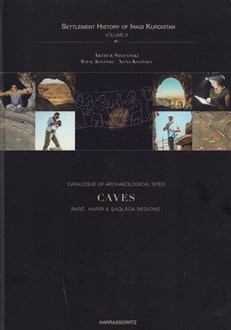
245 10|aCatalogue of archaeological sites :|bcaves : Ākrê, Harĩr & Şaqlāūa regions /|cArthur Stefanski, Rafał Koliński, Xenia Kolińska.
246 1 |aCaves :|bĀkrê, Harĩr and Şaqlāūa regions
246 20|aCaves
260 |aWiesbaden :|bHarrassowitz Verlag,|c2021.
300 |a519 sayfa :|bresim (renkli), harita (renkli), plan, tablo ;|c30 cm
490 1 |aSettlement history of Iraqi Kurdistan,|x2698-6191 ;|vvolume 9
500 |aSözlük s. 502.
500 |aİndeks s. 503-517.
504 |aBibliyografya s. 23.
520 |a“The Upper Greater Zab Archaeological Reconnaissance (UGZAR) project carried out an archaeological survey in the Iraqi Kurdistan on an area over 3,000 km2 big, located on both banks of the Greater Zab River, to the north and north-west of Erbil. During six field seasons, conducted in 2012–2017, the Polish team from the Adam Mickiewicz University in Poznań documented there 313 archaeological sites, 110 caves and 78 other heritage monuments (churches, monasteries, mosques, castles, mills, tombs and cemeteries, etc.), as well as four rock reliefs (three in Gūndk and one in Batas). During the fieldwork, nearly 20,000 artefacts dating from the Late Neolithic (Hassuna culture) to the modern period (early 20th century) were collected and documented. Working in an area located only 40 km south of the famous Şaneder/Shanidar cave, it was natural to devote much attention to sites of this type and traces of potential prehistoric occupation which might have been preserved there. As a result, 110 caves of various size were documented during the 2015, 2016 and 2017 field seasons. The volume presents 91 of these, omitting a group of rock shelters with no sediments preserved inside. Plans, descriptions and photographs of each cave are accompanied by information on finds collected inside and on the talus below its entrance (if present). Moreover, a presence of speleothems in the caves was noted, as a potential basis for the analysis of climatic proxies. While most of the documented caves yielded traces of modern and pre-modern use, only some of the collected pottery and rock artefacts may point to their earlier occupation“ --|cYayıncı.
650 4|aArkeolojik kazılar|zIrak|zKürdistan.
650 4|aMağaralar|zIrak|zKürdistan.
651 4|aKürdistan (Irak)|xEski Eserler|vKataloglar.
700 1 |aKoliński, Rafał,|eortak yazar.
700 1 |aKolińska, Xenia,|eortak yazar.
830 0|aSettlement history of Iraqi Kurdistan ;|vvolume 9.