LEADER 02372naaa22200337 a 4500
001 602014
003 TR_AnAIT
005 20250627120920
006 a||||e |||| 001 0
007 ta
008 221222s2013 xxu||||e |||| 001 0 eng c
020 |a9781107041486|q(hardback)
040 |aTTK
041 |aeng
049 |aTürk Tarih Kurumu Kütüphanesi
090 |aA.IX/5030
100 1 |aEl Shamsy, Ahmed,|d1976-
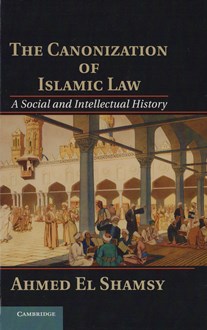
245 14|aThe canonization of Islamic law :|bsocial and intellectual history /|cAhmed El Shamsy, The University of Chicago.
246 1 |aSocial and intellectual history
250 |aFirst published [1. baskı].
260 |aNew York, NY :|bCambridge University Press,|c2013.
300 |aix, 253 sayfa ;|c24 cm
500 |aİndeks s. 245-253.
504 |aBibliyografya s. 227-243.
505 |gPART I.|tCULTURAL REMEMBRANCE TRANSFORMED.|tTradition under siege --|tDebates on Hadith and consensus --|tFrom local community to universal canon --|gPART I.|tCOMMUNITY IN CRISIS.|tStatus, power, and social upheaval --|tScholarship between persecution and patronage --|tPART III.|tFOUNDATIONS OF A NEW COMMUNITY.|tAuthorship, transmission, and intertextuality --|tA community of interpretation --|tCanonization beyond the Shafi'i school.
520 |a“The Canonization of Islamic Law tells the story of the birth of classical Islamic law in the eighth and ninth centuries CE. It shows how an oral normative tradition embedded in communal practice was transformed into a systematic legal science defined by hermeneutic analysis of a clearly demarcated scriptural canon. This transformation was inaugurated by the innovative legal theory of Muhammad b. Idrīs al-Shāfi'ī (d. 820 CE), and it took place against the background of a crisis of identity and religious authority in ninth-century Egypt. By tracing the formulation, reception, interpretation and spread of al-Shāfi'ī's ideas, the author demonstrates how the canonization of scripture that lay at the heart of al-Shāfi'ī's theory formed the basis for the emergence of legal hermeneutics, the formation of the Sunni schools of law, and the creation of a shared methodological basis in Muslim thought“ --|cYayıncı.
650 4|aİslam hukuku|xTarih|y8. yy.
650 4|aİslam hukuku|xTarih|y9. yy.
650 4|aİslam hukuku|vKaynaklar.
650 4|aŞafiler|xTarih.