LEADER 02628naaa22200337 a 4500
001 602018
003 TR_AnAIT
005 20250627120910
006 a||||e |||| 001 0
007 ta
008 221222s2012 xxk||||e |||| 001 0 eng c
020 |a9781107014060|q(hardback)
020 |a9781107687110|q(paperback)
040 |aTTK
041 |aeng
049 |aTürk Tarih Kurumu Kütüphanesi
090 |aA.IX/5032
100 1 |aAnjum, Ovamir,|d1976-
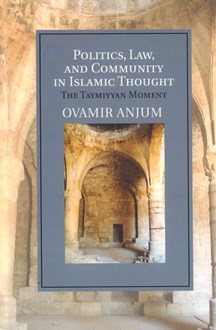
245 10|aPolitics, law, and community in islamic thought :|bthe Taymiyyan moment /|cOvamir Anjum, University of Toledo.
260 |aCambridge ;|aNew York :|bCambridge University Press,|c2012.
300 |axvii, 294 sayfa ;|c24 cm.
490 0 |aCambridge studies in Islamic civilization
500 |aİndeks s. 289-294.
504 |aBibliyografya s. 275-287.
505 |tWhere to look for Islamic political thought? --|tIbn Taymiyya's political thought --|tThe contours --|gPART I.|tTHE CLASSICAL LEGACY.|tA tale of two visions: Sharīa and Siyāsa in early Islam --|tThe political thought of the classical period --|tReason and community in the classical period --|gPART II.|tTHE TAYMIYYAN INTERVETION.|tIbn Taymiyya's world --|tDefending revelation and liberating reason --|tFitra, community, and Islamic politics --|tConclusion.
520 |a“This revisionist account of the history of Islamic political thought from the early to the late medieval period focuses on Ibn Taymiyya, one of the most brilliant theologians of his day. This original study demonstrates how his influence shed new light on the entire trajectory of Islamic political thought. Although he did not reject the Caliphate ideal, as is commonly believed, he nevertheless radically redefined it by turning it into a rational political institution intended to serve the community (umma). Through creative reinterpretation, he deployed the Qur'anic concept of fitra (divinely endowed human nature) to centre the community of believers and its common-sense reading of revelation as the highest epistemic authority. In this way, he subverted the elitism that had become ensconced in classical theological, legal and spiritual doctrines, and tried to revive the ethico-political, rather than strictly legal, dimension of Islam. In reassessing Ibn Taymiyya's work, this book marks a major departure from traditional interpretations of medieval Islamic thought“ --|cYayıncı.
600 04|aİbn Teymiyye, Takıyyüddin, 1263-1328|xSiyasi ve sosyal görüşler.
650 4|aİslam ve devlet|xTarih.
650 4|aSiyaset bilimi|zİslam İmparatorluğu|xTarih.