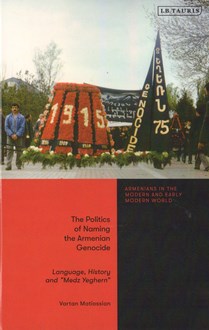
LEADER 02807naaa22200349 a 4500
001 602057
003 TR_AnAIT
005 20250627120739
006 a||||e |||| 001 0
007 ta
008 221223s2022 xxk||||e |||| 001 0 eng c
020 |a9780755641086|q(HB)
020 |a9780755641093|q(ePDF)
020 |a9780755641109|q(eBook)
040 |aTTK
041 |aeng
049 |aTürk Tarih Kurumu Kütüphanesi
090 |aA.IX/5050
100 1 |aMatiossian, Vartan,|d1964-
245 10|aThe politics of naming the Armenian genocide :|blanguage, history and “Medz Yeghern“ / Vartan Matiossian
246 1 |aLanguage, history and “Medz Yeghern“
260 |aLondon :|bI. B. Tauris,|c2022.
300 |axii, 279 sayfa ;|c25 cm
490 0 |aArmenians in the modern and early modern world
500 |aİndeks s. [269]-279.
504 |aBibliyografya s. [238]-268.
505 |tIntroduction: Silencing the Name --|gPART I.|tLANGUAGE AND HISTORY.|tYeghern until the Late Nineteenth Century --|tYeghern before and after 1915 --|tMedz Yeghern and “Genocide” in Armenia and the Diaspora –|gPART II.|tPOLITICS AND LANGUAGE.|tJohn Paul II: “From the Depths of the Metz Yeghérn” --|tTurkey: “The Denial of the Great Catastrophe” --|tUnited States: “Genocide of the Armenians” and “Meds Yeghern” --|tFrom Uruguay to the United States: on the words of recognition --|tConclusion: Unsilencing the Name.
520 |a“This book explores the genealogy of the concept of 'Medz Yeghern' ('Great Crime'), the Armenian term for the mass murder and ethnic cleansing of the Armenian ethno-religious group in the Ottoman Empire between the years 1915-1923. Widely accepted by historians as one of the classical cases of genocide in the 20th century, ascribing the right definition to the crime has been a source of contention and controversy in international politics. Vartan Matiossian here draws upon extensive research based on Armenian sources, neglected in much of the current historiography, as well as other European languages in order to trace the development of the concepts pertaining to mass killing and genocide of Armenians from the ancient to the modern periods. Beginning with an analysis of the term itself, he shows how the politics of its use evolved as Armenians struggled for international recognition of the crime after 1945, in the face of Turkish protest. Taking a combined historical, philological, literary and political perspective, the book is an insightful exploration of the politics of naming a catastrophic historical event, and the competitive nature of national collective memories“ --|cYayıncı.
650 4|aErmeniler|zTürkiye|xTarih.
650 4|aErmeni sorunu|zAmerika Birleşik Devletleri|xSiyasi dil.