LEADER 02665naaa22200373 a 4500
001 602062
003 TR_AnAIT
005 20250627120728
006 aocbde |||| 001 0
007 ta
008 221226s2022 xxkocbde |||| 001 0 eng c
020 |a9780755642243|q(HB)
020 |a9780755642250|q(ePDF)
020 |a9780755642267|q(eBook)
040 |aTTK
041 |aeng
049 |aTürk Tarih Kurumu Kütüphanesi
090 |aA.IX/5052
100 |aCabi, Marouf.
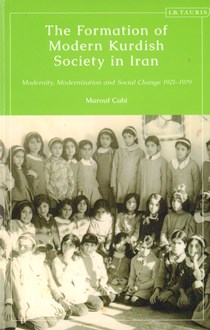
245 10|aThe formation of modern Kurdish society in Iran :|amodernity, modernization and social change 1921-1979 /|cMarouf Cabi.
250 |aFirst published [1. baskı].
260 |aLondon :|bI. B. Tauris,|c2022.
300 |a[xiv], 217 sayfa :|bresim, portre, harita, tablo ;|c24 cm
490 0 |aKurdish studies series
500 |aİndeks s. [215]-217.
504 |aBibliyografik notlar s. [175]-202.
504 |aBibliyografya s. [203]-214.
505 |tThe integration of Kurdish society into modern Iran --|tThe White Revolution: origins, aims and economic plans --|tThe social consequences of modernization --|tThe political and cultural consequences of modernization --|tThe modernization of gender relations --|tConclusion. Kurdish society: past and present.
520 |a“Although the Kurds have attracted widespread international attention, Iranian Kurdistan has been largely overlooked. This book examines the consequences of modernity and modernisation for Iran's Kurdish society in the 20th century. Marouf Cabi argues that while state-led modernisation integrated the Kurds in modern Iran, the homogenisation of identity and culture also resulted in their vigorous pursuit of their political and cultural rights.
Focusing on the dual process of state-led modernisation and homogenisation of identity and culture, Cabi examines the consequences of modernity and modernisation for the socioeconomic, cultural, and political structures as well as for gender relations. It is the consequences of this dynamic dual process that explains the modern structures of Iran's Kurdish society, on the one hand, and its intimate relationship with Iran as a historical, geographical, and political entity, on the other. Using Persian, Kurdish and English sources, the book explores the transformation of Kurdish society between the Second World War and the 1979 Iranian Revolution, with a special focus on the era of the 'White Revolution' during the 1960s and 1970s.“ --|cYayıncı.
650 4|aKürtler|zİran|xTarih|y20. yy.
650 4|aKürtler|zİran|xSosyal durum|y20. yy.
651 4|aİran|xTarih|y20. yy.
651 4|aİran|xEtnik ilişkiler.