LEADER 03262naaa22200421 a 4500
001 602064
003 TR_AnAIT
005 20250627120724
006 aad||e |||| 001 0
007 ta
008 221226s2022 xxkad||e |||| 001 0 eng c
020 |a9781784537319|q(HB)
020 |a9780755635788|q(ePDF)
020 |a9780755635795|q(eBook)
040 |aTTK
041 |aeng
049 |aTürk Tarih Kurumu Kütüphanesi
090 |aA.IX/5053
100 1 |aRichardson, Kristina L.
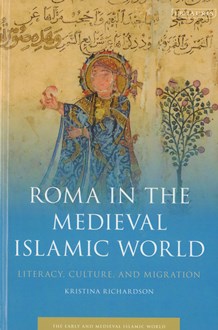
245 10|aRoma in the medieval Islamic world :|bliteracy, culture, and migration /|cKristina Richardson.
250 |aFirst published [1. baskı].
260 |aLondon :|bI. B. Tauris,|c2022.
300 |aix, 239 sayfa :|bçizim, tıpkıbasım, tablo ;|c24 cm
490 0 |aEarly and medieval Islamic world
500 |a“Winner of the 2022 Dan David Prize for outstanding scholarship that illuminates the past and seeks to anchor public discourse in a deeper understanding of history“ -- Yayıncı.
500 |aİndeks s. [227]-239.
504 |aBibliyografik notlar s. [162]-202.
504 |aBibliyografya s. [203]-226.
505 |tThe Roma, Banu Sasan, and the Ghuraba' --|tSin: the language of the Banu Sasan and Ghuraba' --|tGharib literary cultures in Mamluk Cairo --|tHousing, neighborhoods, and cemeteries of urban Ghuraba' --|tIllustrated astrological books (Bulhans) --|tA new narrative of premodern Afro-Eurasian printing --|tGhuraba' astrologers and print in 15th-Century Central Europe.
520 |a“In Middle Eastern cities as early as the mid-8th century, the Sons of Sasan begged, trained animals, sold medicinal plants and potions, and told fortunes. They captivated the imagination of Arab writers and playwrights, who immortalized their strange ways in poems, plays, and the Thousand and One Nights. Using a wide range of sources, Richardson investigates the lived experiences of these Sons of Sasan, who changed their name to Ghuraba' (Strangers) by the late 1200s. This name became the Arabic word for the Roma and Roma-affiliated groups also known under the pejorative term 'Gypsies'.
This book uses mostly Ghuraba'-authored works to understand their tribal organization and professional niches as well as providing a glossary of their language Sin. It also examines the urban homes, neighborhoods, and cemeteries that they constructed. Within these isolated communities they developed and nurtured a deep literary culture and astrological tradition, broadening our appreciation of the cultural contributions of medieval minority communities. Remarkably, the Ghuraba' began blockprinting textual amulets by the 10th century, centuries before printing on paper arrived in central Europe. When Roma tribes migrated from Ottoman territories into Bavaria and Bohemia in the 1410s, they may have carried this printing technology into the Holy Roman Empire“ --|cYayıncı.
650 4|aRomanlar|zİslam ülkeleri|xTarih.
650 4|aRomanlar|zİslam ülkeleri|xEntelektüel yaşam.
650 4|aRomanlar|zOrta Doğu|xTarih.
650 4|aRomanlar|zOrta Doğu|xSosyal yaşam ve gelenekler.
650 4|aRomanlar, edebiyatta.
650 4|aMedeniyet|xTarih|yOrta Çağ.
651 4|aİslam ülkeleri|xMedeniyet.