

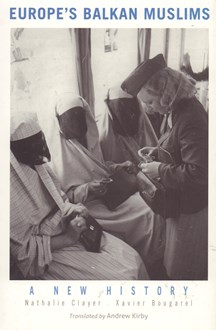
Europe’s Balkan Muslims : a new history / Nathalie Clayer, Xavier Bougarel; translated by Andrew Kirby.
Yer Numarası
A.IX/5097
ISBN
9781849046596 (hardback)
Dil Kodu
İngilizce
Kütüphane
Türk Tarih Kurumu Kütüphanesi
Yazar
Yayın Bilgisi
London : Hurst and Company, 2017.
Fiziksel Niteleme
xxvi, 285 sayfa : harita, tablo ; 22 cm
Genel Not
İndeks s. 269-285.
Bibliyografi, vb. Notu
Bibliyografya s. 239- 267.
İçindekiler Notu
1. From the Ottoman Provincial Autonomies to the Eastern Crisis, 1800-1876 -- When the Ottoman Empire in Europe started to disintegrate -- Reforms, the establishment of bureaucracies and the formation of new elites -- New relationships between Muslims and
Christians -- The multiple networks of Balkan Islam -- From the first scholarly discourses to the first identity constructions -- 2. From the Eastern Crisis to the End of the Empires, 1876-1923. The strengthening and weakening of the Balkan states -- Migrations and population exchanges -- Muslims caught between non-Muslim national states and the Ottoman Empire -- Politicisation of identities and the slow development of nationalism – The central importance of the question of reforms -- Balkan Muslims between representations and practices -- 3. From the end of the Empires to the Advent of Communism, 1920-1944. From one World War to the other: territorial reconfigurations and the rise of authoritarianism -- Nationalisation of societies and ideological radicalisation -- Muslims between emigration, the agrarian question and the construction of minorities -- Partial nationalisation, strengthening and control of the Islamic institutions -- The specific forms of mobilisation of the Muslim populations -- Beyond the “reformers“/“conservatives“ opposition -- A Balkan Islam within new networks -- “European Islam“ “modern Islam“ and local practices -- 4. From the Advent of Communism to its Fall, 1944-1989. Between Cold War and nationalist fervour -- Authoritarian modernisation and anti-religious policies -- Different ways in which national identities crystallised -- Scientific socialism and national mythologies -- The contrasting development ofthe Islamic institutions -- The Bosnian exception: a pan-Islamist current under communism -- The transformations of
Islam through the prism of anthropology -- 5. From the Fall of Communism to European Integration, 1989-2001. Between Yugoslav disintegration and Euro-Atlantic integration -- “Transition“ and the “return of religion“ -- The Balkan Muslims' politicization -- Closer links between Islam and national identity -- The renewal and fragility of Islamic institutions -- Neo-Salafism: what transformations of Balkan Islam does it reveal?
Özet, vb.
“There are roughly eight million Muslims in south-east Europe, among them Albanians, Bosniaks, Turks and Roma — descendants of converts or settlers in the Ottoman period. This new history of the social, political and religious transformations that this population experienced in the nineteenth and twentieth centuries — a period marked by the collapse of the Ottoman, Austro-Hungarian and Russian Empires and by the creation of the modern Balkan states — will shed new light on the European Muslim experience.
South-east Europe’s Muslims have experienced a slow and complex crystallisation of their respective national identities, which accelerated after 1945 as a result of the authoritarian modernisation of communist regimes and, in the late twentieth century, ended in nationalist mobilisations that precipitated the independence of Bosnia-Herzegovina and Kosovo during the break-up of Yugoslavia.
At a religious level, these populations have remained connected to the institutions established by the Ottoman Empire, as well as to various educational, intellectual and Sufi (mystic) networks. With the fall of communism, new transnational networks appeared, especially neo-Salafist and neo- Sufi ones, although Europe’s Balkan Muslims have not escaped the wider processes of secularisation“ -- Yayıncı.
Konu
Emeği Geçenler
Bougarel, Xavier, ortak yazar.
Kirby, Andrew, çeviren.
Kirby, Andrew, çeviren.
Eseri Alıntıla
Referansları kullanmadan önce gözden geçirmeniz ve varsa gerekli düzeltmeleri yapmanız önerilir.
Dijital Kaynak
MARC Görünümü
LEADER 04716naaa22200337 a 4500
001 602108
003 TR_AnAIT
005 20250627120540
006 abd||e |||| 000 0
007 ta
008 221228s2017 xxkbd||e |||| 001 0 eng c
020 |a9781849046596|q(hardback)
040 |aTTK
041 |aeng
049 |aTürk Tarih Kurumu Kütüphanesi
090 |aA.IX/5097
100 1 |aClayer, Nathalie.
245 10|aEurope’s Balkan Muslims :|ba new history /|cNathalie Clayer, Xavier Bougarel; translated by Andrew Kirby.
260 |aLondon :|bHurst and Company,|b2017.
300 |axxvi, 285 sayfa :|bharita, tablo ;|c22 cm
500 |aİndeks s. 269-285.
504 |aBibliyografya s. 239- 267.
505 |g1.|tFrom the Ottoman Provincial Autonomies to the Eastern Crisis, 1800-1876 --|tWhen the Ottoman Empire in Europe started to disintegrate --|tReforms, the establishment of bureaucracies and the formation of new elites --|tNew relationships between Muslims and
Christians --|tThe multiple networks of Balkan Islam --|tFrom the first scholarly discourses to the first identity constructions --|g2.|tFrom the Eastern Crisis to the End of the Empires, 1876-1923.|tThe strengthening and weakening of the Balkan states --|tMigrations and population exchanges --|tMuslims caught between non-Muslim national states and the Ottoman Empire --|tPoliticisation of identities and the slow development of nationalism –|tThe central importance of the question of reforms --|tBalkan Muslims between representations and practices --|g3.|tFrom the end of the Empires to the Advent of Communism, 1920-1944.|tFrom one World War to the other: territorial reconfigurations and the rise of authoritarianism --|tNationalisation of societies and ideological radicalisation --|tMuslims between emigration, the agrarian question and the construction of minorities --|tPartial nationalisation, strengthening and control of the Islamic institutions --|tThe specific forms of mobilisation of the Muslim populations --|tBeyond the “reformers“/“conservatives“ opposition --|tA Balkan Islam within new networks --|t“European Islam“ “modern Islam“ and local practices --|g4.|tFrom the Advent of Communism to its Fall, 1944-1989.|tBetween Cold War and nationalist fervour --|tAuthoritarian modernisation and anti-religious policies --|tDifferent ways in which national identities crystallised --|tScientific socialism and national mythologies --|tThe contrasting development ofthe Islamic institutions --|tThe Bosnian exception: a pan-Islamist current under communism --|tThe transformations of
Islam through the prism of anthropology --|g5.|tFrom the Fall of Communism to European Integration, 1989-2001.|tBetween Yugoslav disintegration and Euro-Atlantic integration --|t“Transition“ and the “return of religion“ --|tThe Balkan Muslims' politicization --|tCloser links between Islam and national identity --|tThe renewal and fragility of Islamic institutions --|tNeo-Salafism: what transformations of Balkan Islam does it reveal?
520 |a“There are roughly eight million Muslims in south-east Europe, among them Albanians, Bosniaks, Turks and Roma — descendants of converts or settlers in the Ottoman period. This new history of the social, political and religious transformations that this population experienced in the nineteenth and twentieth centuries — a period marked by the collapse of the Ottoman, Austro-Hungarian and Russian Empires and by the creation of the modern Balkan states — will shed new light on the European Muslim experience.
South-east Europe’s Muslims have experienced a slow and complex crystallisation of their respective national identities, which accelerated after 1945 as a result of the authoritarian modernisation of communist regimes and, in the late twentieth century, ended in nationalist mobilisations that precipitated the independence of Bosnia-Herzegovina and Kosovo during the break-up of Yugoslavia.
At a religious level, these populations have remained connected to the institutions established by the Ottoman Empire, as well as to various educational, intellectual and Sufi (mystic) networks. With the fall of communism, new transnational networks appeared, especially neo-Salafist and neo- Sufi ones, although Europe’s Balkan Muslims have not escaped the wider processes of secularisation“ --|cYayıncı.
650 4|aMüslümanlar|zBalkan Yarımadası|xTarih.
650 4|aMüslümanlar|zBalkan Yarımadası|xSosyal durum.
650 4|aİslam ve devlet|zBalkan Yarımadası|xTarih.
650 4|aBalkan Yarımadası|xTarih.
700 1 |aBougarel, Xavier,|eortak yazar.
700 1 |aKirby, Andrew,|eçeviren.
001 602108
003 TR_AnAIT
005 20250627120540
006 abd||e |||| 000 0
007 ta
008 221228s2017 xxkbd||e |||| 001 0 eng c
020 |a9781849046596|q(hardback)
040 |aTTK
041 |aeng
049 |aTürk Tarih Kurumu Kütüphanesi
090 |aA.IX/5097
100 1 |aClayer, Nathalie.
245 10|aEurope’s Balkan Muslims :|ba new history /|cNathalie Clayer, Xavier Bougarel; translated by Andrew Kirby.
260 |aLondon :|bHurst and Company,|b2017.
300 |axxvi, 285 sayfa :|bharita, tablo ;|c22 cm
500 |aİndeks s. 269-285.
504 |aBibliyografya s. 239- 267.
505 |g1.|tFrom the Ottoman Provincial Autonomies to the Eastern Crisis, 1800-1876 --|tWhen the Ottoman Empire in Europe started to disintegrate --|tReforms, the establishment of bureaucracies and the formation of new elites --|tNew relationships between Muslims and
Christians --|tThe multiple networks of Balkan Islam --|tFrom the first scholarly discourses to the first identity constructions --|g2.|tFrom the Eastern Crisis to the End of the Empires, 1876-1923.|tThe strengthening and weakening of the Balkan states --|tMigrations and population exchanges --|tMuslims caught between non-Muslim national states and the Ottoman Empire --|tPoliticisation of identities and the slow development of nationalism –|tThe central importance of the question of reforms --|tBalkan Muslims between representations and practices --|g3.|tFrom the end of the Empires to the Advent of Communism, 1920-1944.|tFrom one World War to the other: territorial reconfigurations and the rise of authoritarianism --|tNationalisation of societies and ideological radicalisation --|tMuslims between emigration, the agrarian question and the construction of minorities --|tPartial nationalisation, strengthening and control of the Islamic institutions --|tThe specific forms of mobilisation of the Muslim populations --|tBeyond the “reformers“/“conservatives“ opposition --|tA Balkan Islam within new networks --|t“European Islam“ “modern Islam“ and local practices --|g4.|tFrom the Advent of Communism to its Fall, 1944-1989.|tBetween Cold War and nationalist fervour --|tAuthoritarian modernisation and anti-religious policies --|tDifferent ways in which national identities crystallised --|tScientific socialism and national mythologies --|tThe contrasting development ofthe Islamic institutions --|tThe Bosnian exception: a pan-Islamist current under communism --|tThe transformations of
Islam through the prism of anthropology --|g5.|tFrom the Fall of Communism to European Integration, 1989-2001.|tBetween Yugoslav disintegration and Euro-Atlantic integration --|t“Transition“ and the “return of religion“ --|tThe Balkan Muslims' politicization --|tCloser links between Islam and national identity --|tThe renewal and fragility of Islamic institutions --|tNeo-Salafism: what transformations of Balkan Islam does it reveal?
520 |a“There are roughly eight million Muslims in south-east Europe, among them Albanians, Bosniaks, Turks and Roma — descendants of converts or settlers in the Ottoman period. This new history of the social, political and religious transformations that this population experienced in the nineteenth and twentieth centuries — a period marked by the collapse of the Ottoman, Austro-Hungarian and Russian Empires and by the creation of the modern Balkan states — will shed new light on the European Muslim experience.
South-east Europe’s Muslims have experienced a slow and complex crystallisation of their respective national identities, which accelerated after 1945 as a result of the authoritarian modernisation of communist regimes and, in the late twentieth century, ended in nationalist mobilisations that precipitated the independence of Bosnia-Herzegovina and Kosovo during the break-up of Yugoslavia.
At a religious level, these populations have remained connected to the institutions established by the Ottoman Empire, as well as to various educational, intellectual and Sufi (mystic) networks. With the fall of communism, new transnational networks appeared, especially neo-Salafist and neo- Sufi ones, although Europe’s Balkan Muslims have not escaped the wider processes of secularisation“ --|cYayıncı.
650 4|aMüslümanlar|zBalkan Yarımadası|xTarih.
650 4|aMüslümanlar|zBalkan Yarımadası|xSosyal durum.
650 4|aİslam ve devlet|zBalkan Yarımadası|xTarih.
650 4|aBalkan Yarımadası|xTarih.
700 1 |aBougarel, Xavier,|eortak yazar.
700 1 |aKirby, Andrew,|eçeviren.
Materyaller
Depodan talep edilen materyal sadece kütüphane içerisinde kullanılmaktadır.
Materyal dışarıya ödünç verilmemektedir.
Materyal dışarıya ödünç verilmemektedir.
