LEADER 03259naaaa2200361aa54500
001 602111
003 TR_AnAIT
005 20250627120533
006 ao|||e |||| 001 0
007 ta
008 221229s2021 xxuo|||e |||| 001 0 eng c
020 |a9780190089375|q(hardback)
020 |a9780190089399|q(epub)
040 |aTTK
041 |aeng
049 |aTürk Tarih Kurumu Kütüphanesi
090 |aA.IX/5071
100 1 |aRobb, Megan Eaton,|d1986-
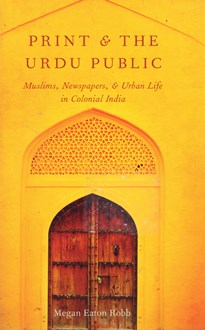
245 10|aPrint and the Urdu public :|bMuslims, newspapers, and urban life in colonial India /|cMegan Eaton Robb.
260 |aNew York, NY :|bOxford University Press,|c2021.
300 |axi, 247 sayfa :|bresim, tıpkıbasım ;|c24 cm
500 |aİndeks s. [239]-247.
504 |aBibliyografya s. [213]-237.
505 |tIntroduction: A public is a place and time: dimensions of an Urdu public sphere --|tPutting the Public House of Madinah on the Muslim map --|tBack to the future Qasbah: the timescape of Bijnor --|tUrdu lithography as a Muslim technology --|tViewing the map of Europe through the lens of Islam --|tProvincializing policies through the Urdu public --|tConclusion: The public as a timescape.
520 |a“In early twentieth century British India, prior to the arrival of digital medias and after the rise of nationalist political movements, a small-town paper from the margins of society became a key player in Urdu journalism. Published in the isolated market town of Bijnor, Madinah grew to hold influence across North India and the Punjab while navigating complex issues of religious and political identity.
In Print and the Urdu Public, Megan Robb uses the previously unexamined perspective of the Madinah to consider Urdu print publics and urban life in South Asia. Through a discursive and material analysis of Madinah, the book explores how Muslims who had settled in ancestral qasbahs, or small towns, used newspapers to facilitate a new public consciousness. The book demonstrates how Madinah connected the Urdu newspaper conversation both explicitly and implicitly with Muslim identity and delineated the boundaries of a Muslim public conversation in a way that emphasized rootedness to local politics and small urban spaces. The case study of this influential but understudied newspaper reveals how a network of journalists with substantial ties to qasbahs produced a discourse self-consciously alternative to the Western-influenced, secularized cities. Megan Robb augments the analysis with evidence from contemporary Urdu, English, and Hindi papers, government records, private diaries, private library holdings, ethnographic interviews, and training materials for newspaper printers. This thoroughly researched volume recovers the erasure of qasbah voices and proclaims the importance of space and time in definitions of the public sphere in South Asia“ --|cYayıncı.
650 4|aBasın|zHindistan|zBijnor|xTarih|y20. yy.
650 4|aUrduca gazeteler|zHindistan|zBijnor|xTarih|y20. yy.
650 4|aİslami basın|zHindistan|zBijnor|xTarih|y20. yy.
650 4|aGazetecilik|xSosyal yönler|zHindistan|zBijnor|zTarih|y20. yy.
650 4|aMüslümanlar|xBasın|zHindistan.
651 4|aMedine (Bijnor, Hindistan)