

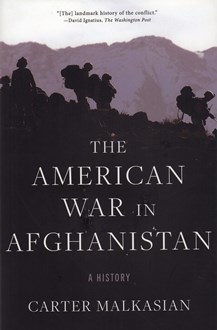
The American War in Afghanistan : a history / Carter Malkasian.
Yer Numarası
A.IX/5070
ISBN
9780197550779 (hardback)
9780197550793 (epub)
9780197550793 (epub)
Dil Kodu
İngilizce
Kütüphane
Türk Tarih Kurumu Kütüphanesi
Yazar
Yayın Bilgisi
New York, NY : Oxford University Press, 2021.
Fiziksel Niteleme
ix, 561 sayfa : resim, harita ; 24 cm
Genel Not
İndeks s. 539-561.
Bibliyografi, vb. Notu
Seçilmiş bibliyografya s. 529-537.
İçindekiler Notu
Thinking about America's war in Afghanistan -- The country and peoples of Afghanistan -- The Taliban Emirate -- The United States enters Afghanistan -- The Karzai regime -- Disorder in Kandahar -- The 2006 Taliban offensive -- Taliban rule, 2007- -- War in the East -- Taliban advances -- The Obama administration and the decision to surge -- The surge in Helmand -- The surge in Kandahar -- End of the surge -- Ghazni and the Andar awakening -- Intervention and identity -- The 2014 elections -- The Taliban offensives of 2015 and -- The Trump administration -- Peace talks -- Looking back.
Özet, vb.
“The first authoritative history of American's longest war by one of the world's leading scholar-practitioners.
The American war in Afghanistan, which began in 2001, is now the longest armed conflict in the nation's history. It is currently winding down, and American troops are likely to leave soon — but only after a stay of nearly two decades.
In The American War in Afghanistan, Carter Malkasian provides the first comprehensive history of the entire conflict. Malkasian is both a leading academic authority on the subject and an experienced practitioner, having spent nearly two years working in the Afghan countryside and going on to serve as the senior advisor to General Joseph Dunford, the US military commander in Afghanistan and later the chairman of the joint chiefs of staff. Drawing from a deep well of local knowledge, understanding of Pashto, and review of primary source documents, Malkasian moves through the war's multiple phases: the 2001 invasion and after; the light American footprint during the 2003 Iraq invasion; the resurgence of the Taliban in 2006, the Obama-era surge, and the various resets in strategy and force allocations that occurred from 2011 onward, culminating in the 2018-2020 peace talks. Malkasian lived through much of it, and draws from his own experiences to provide a unique vantage point on the war. Today, the Taliban is the most powerful faction, and sees victory as probable. The ultimate outcome after America leaves is inherently unpredictable given the multitude of actors there, but one thing is sure: the war did not go as America had hoped. Although the al-Qa'eda leader Osama bin Laden was killed and no major attack on the American homeland was carried out after 2001, the United States was unable to end the violence or hand off the war to the Afghan authorities, which could not survive without US military backing. The American War in Afghanistan explains why the war had such a disappointing outcome.
Wise and all-encompassing, The American War in Afghanistan provides a truly vivid portrait of the conflict in all of its phases that will remain the authoritative account for years to come“ -- Yayıncı.
Eseri Alıntıla
Referansları kullanmadan önce gözden geçirmeniz ve varsa gerekli düzeltmeleri yapmanız önerilir.
Dijital Kaynak
MARC Görünümü
LEADER 03693naaa22200313 a 4500
001 602116
003 TR_AnAIT
005 20250627120520
006 aob||e |||| 001 0
007 ta
008 221229s2021 xxkob||e |||| 00||0 eng c
020 |a9780197550779|q(hardback)
020 |a9780197550793 (epub)
040 |aTTK
041 |aeng
049 |aTürk Tarih Kurumu Kütüphanesi
090 |aA.IX/5070
100 1 |aMalkasian, Carter,|d1975-
245 10|aThe American War in Afghanistan :|ba history /|cCarter Malkasian.
260 |aNew York, NY :|bOxford University Press,|c2021.
300 |aix, 561 sayfa :|bresim, harita ;|c24 cm
500 |aİndeks s. 539-561.
504 |aSeçilmiş bibliyografya s. 529-537.
505 |tThinking about America's war in Afghanistan --|tThe country and peoples of Afghanistan --|tThe Taliban Emirate --|tThe United States enters Afghanistan --|tThe Karzai regime --|tDisorder in Kandahar --|tThe 2006 Taliban offensive --|tTaliban rule, 2007- --|tWar in the East --|tTaliban advances --|tThe Obama administration and the decision to surge --|tThe surge in Helmand --|tThe surge in Kandahar --|tEnd of the surge --|tGhazni and the Andar awakening --|tIntervention and identity --|tThe 2014 elections --|tThe Taliban offensives of 2015 and --|tThe Trump administration --|tPeace talks --|tLooking back.
520 |a“The first authoritative history of American's longest war by one of the world's leading scholar-practitioners.
The American war in Afghanistan, which began in 2001, is now the longest armed conflict in the nation's history. It is currently winding down, and American troops are likely to leave soon — but only after a stay of nearly two decades.
In The American War in Afghanistan, Carter Malkasian provides the first comprehensive history of the entire conflict. Malkasian is both a leading academic authority on the subject and an experienced practitioner, having spent nearly two years working in the Afghan countryside and going on to serve as the senior advisor to General Joseph Dunford, the US military commander in Afghanistan and later the chairman of the joint chiefs of staff. Drawing from a deep well of local knowledge, understanding of Pashto, and review of primary source documents, Malkasian moves through the war's multiple phases: the 2001 invasion and after; the light American footprint during the 2003 Iraq invasion; the resurgence of the Taliban in 2006, the Obama-era surge, and the various resets in strategy and force allocations that occurred from 2011 onward, culminating in the 2018-2020 peace talks. Malkasian lived through much of it, and draws from his own experiences to provide a unique vantage point on the war. Today, the Taliban is the most powerful faction, and sees victory as probable. The ultimate outcome after America leaves is inherently unpredictable given the multitude of actors there, but one thing is sure: the war did not go as America had hoped. Although the al-Qa'eda leader Osama bin Laden was killed and no major attack on the American homeland was carried out after 2001, the United States was unable to end the violence or hand off the war to the Afghan authorities, which could not survive without US military backing. The American War in Afghanistan explains why the war had such a disappointing outcome.
Wise and all-encompassing, The American War in Afghanistan provides a truly vivid portrait of the conflict in all of its phases that will remain the authoritative account for years to come“ --|cYayıncı.
650 4|aAfganistan Savaşı, 2001|xTarih.
650 4|aAfganistan Savaşı, 2001|zAmerika Birleşik Devletleri.
001 602116
003 TR_AnAIT
005 20250627120520
006 aob||e |||| 001 0
007 ta
008 221229s2021 xxkob||e |||| 00||0 eng c
020 |a9780197550779|q(hardback)
020 |a9780197550793 (epub)
040 |aTTK
041 |aeng
049 |aTürk Tarih Kurumu Kütüphanesi
090 |aA.IX/5070
100 1 |aMalkasian, Carter,|d1975-
245 10|aThe American War in Afghanistan :|ba history /|cCarter Malkasian.
260 |aNew York, NY :|bOxford University Press,|c2021.
300 |aix, 561 sayfa :|bresim, harita ;|c24 cm
500 |aİndeks s. 539-561.
504 |aSeçilmiş bibliyografya s. 529-537.
505 |tThinking about America's war in Afghanistan --|tThe country and peoples of Afghanistan --|tThe Taliban Emirate --|tThe United States enters Afghanistan --|tThe Karzai regime --|tDisorder in Kandahar --|tThe 2006 Taliban offensive --|tTaliban rule, 2007- --|tWar in the East --|tTaliban advances --|tThe Obama administration and the decision to surge --|tThe surge in Helmand --|tThe surge in Kandahar --|tEnd of the surge --|tGhazni and the Andar awakening --|tIntervention and identity --|tThe 2014 elections --|tThe Taliban offensives of 2015 and --|tThe Trump administration --|tPeace talks --|tLooking back.
520 |a“The first authoritative history of American's longest war by one of the world's leading scholar-practitioners.
The American war in Afghanistan, which began in 2001, is now the longest armed conflict in the nation's history. It is currently winding down, and American troops are likely to leave soon — but only after a stay of nearly two decades.
In The American War in Afghanistan, Carter Malkasian provides the first comprehensive history of the entire conflict. Malkasian is both a leading academic authority on the subject and an experienced practitioner, having spent nearly two years working in the Afghan countryside and going on to serve as the senior advisor to General Joseph Dunford, the US military commander in Afghanistan and later the chairman of the joint chiefs of staff. Drawing from a deep well of local knowledge, understanding of Pashto, and review of primary source documents, Malkasian moves through the war's multiple phases: the 2001 invasion and after; the light American footprint during the 2003 Iraq invasion; the resurgence of the Taliban in 2006, the Obama-era surge, and the various resets in strategy and force allocations that occurred from 2011 onward, culminating in the 2018-2020 peace talks. Malkasian lived through much of it, and draws from his own experiences to provide a unique vantage point on the war. Today, the Taliban is the most powerful faction, and sees victory as probable. The ultimate outcome after America leaves is inherently unpredictable given the multitude of actors there, but one thing is sure: the war did not go as America had hoped. Although the al-Qa'eda leader Osama bin Laden was killed and no major attack on the American homeland was carried out after 2001, the United States was unable to end the violence or hand off the war to the Afghan authorities, which could not survive without US military backing. The American War in Afghanistan explains why the war had such a disappointing outcome.
Wise and all-encompassing, The American War in Afghanistan provides a truly vivid portrait of the conflict in all of its phases that will remain the authoritative account for years to come“ --|cYayıncı.
650 4|aAfganistan Savaşı, 2001|xTarih.
650 4|aAfganistan Savaşı, 2001|zAmerika Birleşik Devletleri.
Materyaller
Depodan talep edilen materyal sadece kütüphane içerisinde kullanılmaktadır.
Materyal dışarıya ödünç verilmemektedir.
Materyal dışarıya ödünç verilmemektedir.
