LEADER 02428naa a2200313 4500
001 602118
003 TR_AnAIT
005 20250627120510
006 ibdceb|||||||p n
007 mc hdbcdseuuiecei131219
008 160329 fj |||||||||||||||||tur
020 |a9780199736515
040 |aTTK
041 |aeng
049 |aTürk Tarih Kurumu Kütüphanesi
090 |aA.IX/5078
100 1 |aKhalek, Nancy A.,|d1977-
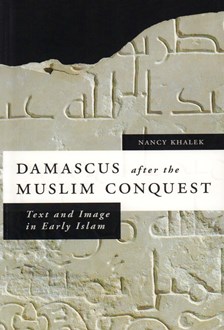
245 10|aDamascus after the Muslim conquest :|btext and image in early Islam /|cNancy Khalek.
260 |aOxford ;|aNew York :|bOxford University Press,|c©2011.
300 |axi, 204 sayfa :|bresim, çizim, plan, tıpkıbasım ;|c24 cm
500 |aİndeks s. [195]-204.
504 |aSeçilmiş bibliyografya s. 181-194.
505 |tNarrative and early Islamic history --|tTelling stories: historical texts in early Islamic Syria --|tIcons: John the Baptist and sanctified spaces in Early Islamic Syria --|tIconic texts: Damascus in the Medieval imagination.
520 |a“Before it fell to Muslim armies in AD 635-6 Damascus had a long and prestigious history as a center of Christianity. How did the city, which became capital of the Islamic Empire, and its people, negotiate the transition from a late antique, or early Byzantine world to an Islamic culture? In this innovative study, Nancy Khalek demonstrates that the changes that took place in Syria during the formative period of Islamic life were not a matter of the replacement of one civilization by another as a result of military conquest, but rather of shifting relationships and practices in a multi-faceted social and cultural setting. Even as late antique forms of religion and culture persisted, the formation of Islamic identity was effected by the people who constructed, lived in, and narrated the history of their city. Khalek draws on the evidence of architecture, and the testimony of pilgrims, biographers, geographers, and historians to shed light on this process of identity formation. Offering a fresh approach to the early Islamic period, she moves the study of Islamic origins beyond a focus on issues of authenticity and textual criticism, and initiates an interdisciplinary discourse on narrative, story-telling, and the interpretations of material culture“ --|cYayıncı.
651 4|aŞam (Suriye)|xTarih.
651 4|aSuriye|xTarih|y634-750.
651 4|aSuriye|xMedeniyet.