LEADER 02609naaa22200349 a 4500
001 602119
003 TR_AnAIT
005 20250627120506
006 a||||e |||| 001 0
007 ta
008 221229s2017 xxk||||e |||| 001 0 eng c
020 |a9780198788775
040 |aTTK
041 |aeng
049 |aTürk Tarih Kurumu Kütüphanesi
090 |aA.IX/5077
100 1 |aSyed, Mairaj U.
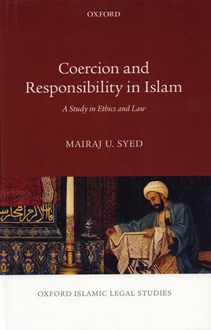
245 10|aCoercion and responsibility in Islam :|ba study in ethics and law /|cMairaj U. Syed, Assistant Professor, University of California, Davis.
250 |aFirst edition [1. baskı].
260 |aOxford :|bOxford University Press,|c2017.
300 |axiii, 259 sayfa ;|c24 cm
490 0 |aOxford Islamic legal studies
500 |aEser, yazarın 2011 yılında yapmış olduğu doktora tezine dayanmaktadır.
500 |aİndeks s. [253]-259.
504 |aBibliyografya s. [243]-252.
505 |tCompulsion and moral agency in Mu'tazilism --|tCoercion and moral agency in Ash'arism --|tDefining coercion in Hanafism --|tDefining coercion in Shafi'ism --|tCoerced speech act jurisprudence in Hanafism and Shafi'ism --|tCoerced harm jurisprudence in Hanafism and Shafi'ism --|tConclusion.
520 |a“In Coercion and Responsibility in Islam, Mairaj Syed explores how classical Muslim theologians and jurists from four intellectual traditions argue about the thorny issues that coercion raises about responsibility for one's action. This is done by assessing four ethical problems: whether the absence of coercion or compulsion is a condition for moral agency; how the law ought to define what is coercive; coercion's effect on the legal validity of speech acts; and its effects on moral and legal responsibility in the cases of rape and murder.
Through a comparative and historical examination of these ethical problems, the book demonstrates the usefulness of a new model for analyzing ethical thought produced by intellectuals working within traditions in a competitive pluralistic environment. The book compares classical Muslim thought on coercion with that of modern Western thinkers on these issues and finds significant parallels between them. The finding suggests that a fruitful starting point for comparative ethical inquiry, especially inquiry aimed at the discovery of common ground for ethical action, may be found in an examination of how ethicists from different traditions considered concrete problems“ --|cYayıncı.
650 4|aİslam hukuku.
650 4|aİslam dini|xAdalet.
650 4|aZorlama (İslam hukuku)
650 4|aSorumluluk (İslam hukuku)