LEADER 02804naaa22200373 a04500
001 602270
003 TR_AnAIT
005 20250627115845
006 aobd|e |||| 001 0
007 ta
008 230214s2022 wauobd|e |||| 001 0 eng c
020 |a9780884024880
040 |aTTK
041 |aeng
049 |aTürk Tarih Kurumu Kütüphanesi
090 |aB.I/9702
100 1 |aYolles, Julian.
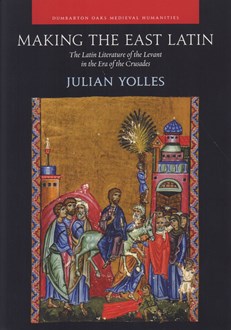
245 10|aMaking the East Latin :|bthe Latin literature of the Levant in the era of the Crusades /|cJulian Yolles.
260 |aWashington, DC :|bDumbarton Oaks Research Library and Collection,|c©2022.
300 |axi, 296 sayfa :|bresim, harita, tıpkıbasım, tablo ;|c26 cm.
490 0 |aDumbarton Oaks medieval humanities
500 |aİndeks s. 281-296.
504 |aBibliyografya s. 257-280.
505 |tLevantine Latinity --|tFulcher of Chartres and the beginnings of Levantine Latin literature --|tInstitutional politics and Latin poetics in the Kingdom of Jerusalem --|tLearned Latinity and Latin orthodoxy in the Principality of Antioch --|tEastern and Western Latin literature in William of Tyre --|tLevantine Latinity as a literary tradition.
520 |a“This new day, new joy, the consummation of toil and devotion with ever new and eternal rejoicing, required new words, new songs from all!“ So wrote Raymond of Aguilers, a Provençal priest, when an army of nobles, knights, footmen, and priests from across Europe managed to conquer Jerusalem after three years of traveling and fighting. And new words, and new songs, there were. These settlers produced a hybrid Latin literature-a “Levantine Latinity“-distinct from that in Europe, and their new literary tradition both drew on and resisted Levantine Muslim, Christian, and Jewish cultures in the newly occupied territories. This volume analyzes the literary and rhetorical techniques of well-known authors such as William of Tyre, literary compositions of communities of canons in the Kingdom of Jerusalem, and individual scholars in the Principality of Antioch. These varied sources reveal the coherent and increasingly sophisticated ways in which Crusader settlers responded to their new environment while maintaining ties with their homelands in western Europe. In a short time, Levantine Latinity emerged to form an indispensable part of the literary history of both the Near East and of Europe.“ --|cYayıncı.
600 04|aTireli William|xLatin edebiyatı.
600 04|aFulcher (Chartres)|xLatin edebiyatı.
650 4|aLatin edebiyatı, Orta Çağ|xLevanten|xTarih ve kritik.
650 4|aRetorik, Orta Çağ|xLevanten|xTarih ve kritik.
650 4|aEdebiyat, Orta Çağ|xTarih ve kritik.
650 4|aOrta Çağ edebiyatı.
651 4|aKudüs Krallığı.
651 4|aAntakya Prensliği|xLatinlik.