LEADER 02863naaa22200361 a 4500
001 602363
003 TR_AnAIT
005 20250627115440
006 a||||e |||| 000 0
007 ta
008 230221s2020 fj ||||e |||| 001 0aeng c
020 |a9780253045706|q(hdbk.)
020 |a9780253045713|q(pbk.)
040 |aTTK
041 |aeng
049 |aTürk Tarih Kurumu Kütüphanesi
090 |aA.IX/5295
100 1 |aRoss, Danielle.
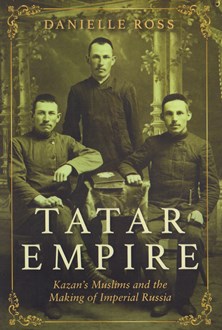
245 10|aTatar Empire :|bKazan’s Muslims and the making of Imperial Russia /|cDanielle
Ross.
246 1 |aKazan’s Muslims and the making of Imperial Russia
260 |aBloomington, Indiana :|bIndiana University Press,|c©2020.
300 |aviii, 276 sayfa ;|c23 cm
500 |aSözlük s. 247.
500 |aİndeks s. 267- 276.
504 |aBibliyografya s. 249-265.
505 |tIntroduction: The empire that Tatars built --|tThe age of the settler 'Ulama' --|tThe art of accruing scholarly prestige --|tColonial trade and religious revial --|tA Shaykyly rural gentry --|tKnowledge, history writing, and becoming colonial --|tMuslim cultural reform and Kazan Tatar cultural imperialism --|tFundamentalism, nationalism and social conflict --|tAt war with the Tatar Kingdom --|tAn empire without Russians –|tConclusion.
520 |a“In the 1700s, Kazan Tatar (Muslim scholars of Kazan) and scholarly networks stood at the forefront of Russia's expansion into the South Urals, western Siberia, and the Kazakh steppe. It was there that the Tatars worked with Russian agents, established settlements, and spread their own religious and intellectual culture that helped shaped their identity in the 19th and early 20th centuries. Kazan Tatars profited economically from Russia's commercial and military expansion to Muslim lands and began to present themselves as leaders capable of bringing Islamic modernity to the rest of Russia's Muslim population. Danielle Ross bridges the history of Russia's imperial project with the history of Russia's Muslims by exploring the Kazan Tatars as participants in the construction of the Russian empire. Ross focuses on Muslim clerical and commercial networks to reconstruct the ongoing interaction among Russian imperial policy, nonstate actors, and intellectual developments within Kazan's Muslim community and also considers the evolving relationship with Central Asia, the Kazakh steppe, and western China. Tatar Empire offers a more Muslim-centered narrative of Russian empire building, making clear the links between cultural reformism and Kazan Tatar participation in the Russian eastward expansion“ --|cYayıncı.
650 4|aTatarlar|zRusya|zKazan|xTarih.
650 4|aMüslümanlar|zRusya|zTataristan|xTarih.
650 4|aUlema|xSiyasi faaliyetler|zRusya.
650 4|aMüslümanlar|xTatar (Rusya)
651 4|aKazan (Rusya)|xTarih.