

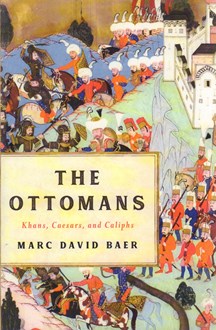
The Ottomans : khans, caesars, and caliphs / Marc David Baer.
Yer Numarası
A.IX/6514
ISBN
9781541673809 (hardcover)
9781541673779 (ebook)
9781541673779 (ebook)
Dil Kodu
İngilizce
Kütüphane
Türk Tarih Kurumu Kütüphanesi
Yazar
Basım Bildirimi
First edition.
Yayın Bilgisi
New York : Basic Books : Hachette Book Group, 2021.
Fiziksel Niteleme
viii, 543 sayfa ; [6] sayfa harita, [16] sayfa resim ; resim (çoğu renkli), minyatür, portre, harita ; 24 cm
Genel Not
İndeks s. 525-543.
Bibliyografi, vb. Notu
Bibliyografik notlar s. 472-524.
İçindekiler Notu
Introduction : The White Castle -- The Beginning : Gazi Osman and Orhan -- The Sultan and His Converted Slaves : Murad I -- Resurrecting the Dynasty : Bayezid I, Mehmed I, and Murad II -- Conquering the Second Rome : Mehmed II -- A Renaissance Prince : Mehmed II -- A Pious Leader Faces Enemies at Home and Abroad : Bayezid II -- Magnificence : From Selim I to the First Ottoman Caliph, Suleiman I -- Sultanic Saviours -- The Ottoman Age of Discovery -- No Way Like the 'Ottoman Way' -- Harem Means Home -- Bearded Men and Beardless Youths -- Being Ottoman, Being Roman : From Murad III to Osman II -- Return of the Gazi : Mehmed IV -- A Jewish Messiah in the Ottoman Palace -- The Second Siege of Vienna and the Sweet Waters of Europe : From Mehmed IV to Ahmed III -- Reform : Breaking the Cycle of Rebellion from Selim III to Abdülaziz I -- Repression : A Modern Caliph, Abdülhamid II -- Looking Within : The Ottoman Orient -- Saving the Dynasty from Itself : Young Turks -- The Genocide of the Armenians and the First World War : Talat Pasha -- The End : Gazi Mustafa Kemal -- Conclusion : The Ottoman Past Endures -- Acknowledgments -- List of Ottoman Rulers and Their Reigns.
Özet, vb.
“Ever since an Ottoman army led by Mehmed II conquered Constantinople in 1453, it has been common to see the Ottoman Empire as the Islamic, Asian antithesis of the Christian, European West. But in reality the Ottoman dynasty ruled a multiethnic, multilingual, and multireligious empire that stretched across parts of Europe, Africa, and Asia. The Ottomans: Sultans, Khans, and Caesars offers a bold new history of this empire that straddled East and West for nearly five hundred years and negotiated the challenges of religious difference in ways that had a profound influence on the emergence of our modern world. As historian Marc David Baer shows, the Ottomans enjoyed a tripartite inheritance as they rose from a frontier principality to a world empire. The dynasty's origins can be traced to the tribes of Turks and Tatars pushed westward into Anatolia by Mongol expansion in the thirteenth and fourteenth centuries. But it was equally indebted to the Islamic scholars and Sufi sheikhs who proselytized Islam across this region and legitimated Ottoman rule. And from the Byzantine empire they supplanted, the Ottomans borrowed bureaucracy, culture, and claims to universal rule as the successors of Rome. Ottoman rulers did not only call themselves khans and sultans, but also caliphs, emperors, and caesars. The Ottomans managed their diverse empire by striking a delicate balance: amid a profoundly hierarchal society, they pioneered the principles and practices of toleration of religious minorities, even as they also freely used religious conversion to integrate conquered peoples into the imperial project. Indeed, the Ottomans were the only world empire to rely on converts to make up its ruling dynasty and to populate its military and administrative leadership. By receiving them as converts to Islam, they brought everyone from Byzantine and Serbian royalty to enslaved captives to common herdsmen into the elite fold as princesses, statesmen, and battlefield commanders. It was only in the final decades of the nineteenth century that the Ottomans began to turn away from this approach, trying to save the empire by making it into an exclusively Ottoman Muslim polity, and then into a Turkish one. The tragic consequence was ethnic cleansing and genocide, and the dynasty's demise in the wake of the First World War. For better and for worse, the Ottoman Empire was as magnificent and as horrible as any of its European contemporaries. The Ottomans reveals its history in full, showing how again and again it remade the world from the Renaissance and the Enlightenment to the dawn of a brutal century world war.” -- Yayıncı.
Eseri Alıntıla
Referansları kullanmadan önce gözden geçirmeniz ve varsa gerekli düzeltmeleri yapmanız önerilir.
Dijital Kaynak
MARC Görünümü
LEADER 04796naaaa2200301aa54500
001 604257
003 TR_AnAIT
005 20250627103659
006 aocb|e |||| 001 0d
007 ta
008 230926s2021 nyuocb|e |||| 001 0deng c
020 |a9781541673809|q(hardcover)
020 |a9781541673779|q(ebook)
040 |aTTK
041 |aeng
049 |aTürk Tarih Kurumu Kütüphanesi
090 |aA.IX/6514
100 1 |aBaer, Marc David,|d1970-
245 14|aThe Ottomans :|bkhans, caesars, and caliphs /|cMarc David Baer.
250 |aFirst edition.
260 |aNew York :|bBasic Books :|bHachette Book Group,|c2021.
300 |aviii, 543 sayfa ; [6] sayfa harita, [16] sayfa resim ;|bresim (çoğu renkli), minyatür, portre, harita ;|c24 cm
500 |aİndeks s. 525-543.
504 |aBibliyografik notlar s. 472-524.
505 |tIntroduction : The White Castle --|tThe Beginning : Gazi Osman and Orhan --|tThe Sultan and His Converted Slaves : Murad I --|tResurrecting the Dynasty : Bayezid I, Mehmed I, and Murad II --|tConquering the Second Rome : Mehmed II --|tA Renaissance Prince : Mehmed II --|tA Pious Leader Faces Enemies at Home and Abroad : Bayezid II --|tMagnificence : From Selim I to the First Ottoman Caliph, Suleiman I --|tSultanic Saviours --|tThe Ottoman Age of Discovery --|tNo Way Like the 'Ottoman Way' --|tHarem Means Home --|tBearded Men and Beardless Youths --|tBeing Ottoman, Being Roman : From Murad III to Osman II --|tReturn of the Gazi : Mehmed IV --|tA Jewish Messiah in the Ottoman Palace --|tThe Second Siege of Vienna and the Sweet Waters of Europe : From Mehmed IV to Ahmed III --|tReform : Breaking the Cycle of Rebellion from Selim III to Abdülaziz I --|tRepression : A Modern Caliph, Abdülhamid II -- Looking Within : The Ottoman Orient --|tSaving the Dynasty from Itself : Young Turks --|tThe Genocide of the Armenians and the First World War : Talat Pasha --|tThe End : Gazi Mustafa Kemal --|tConclusion : The Ottoman Past Endures --|tAcknowledgments --|tList of Ottoman Rulers and Their Reigns.
520 |a“Ever since an Ottoman army led by Mehmed II conquered Constantinople in 1453, it has been common to see the Ottoman Empire as the Islamic, Asian antithesis of the Christian, European West. But in reality the Ottoman dynasty ruled a multiethnic, multilingual, and multireligious empire that stretched across parts of Europe, Africa, and Asia. The Ottomans: Sultans, Khans, and Caesars offers a bold new history of this empire that straddled East and West for nearly five hundred years and negotiated the challenges of religious difference in ways that had a profound influence on the emergence of our modern world. As historian Marc David Baer shows, the Ottomans enjoyed a tripartite inheritance as they rose from a frontier principality to a world empire. The dynasty's origins can be traced to the tribes of Turks and Tatars pushed westward into Anatolia by Mongol expansion in the thirteenth and fourteenth centuries. But it was equally indebted to the Islamic scholars and Sufi sheikhs who proselytized Islam across this region and legitimated Ottoman rule. And from the Byzantine empire they supplanted, the Ottomans borrowed bureaucracy, culture, and claims to universal rule as the successors of Rome. Ottoman rulers did not only call themselves khans and sultans, but also caliphs, emperors, and caesars. The Ottomans managed their diverse empire by striking a delicate balance: amid a profoundly hierarchal society, they pioneered the principles and practices of toleration of religious minorities, even as they also freely used religious conversion to integrate conquered peoples into the imperial project. Indeed, the Ottomans were the only world empire to rely on converts to make up its ruling dynasty and to populate its military and administrative leadership. By receiving them as converts to Islam, they brought everyone from Byzantine and Serbian royalty to enslaved captives to common herdsmen into the elite fold as princesses, statesmen, and battlefield commanders. It was only in the final decades of the nineteenth century that the Ottomans began to turn away from this approach, trying to save the empire by making it into an exclusively Ottoman Muslim polity, and then into a Turkish one. The tragic consequence was ethnic cleansing and genocide, and the dynasty's demise in the wake of the First World War. For better and for worse, the Ottoman Empire was as magnificent and as horrible as any of its European contemporaries. The Ottomans reveals its history in full, showing how again and again it remade the world from the Renaissance and the Enlightenment to the dawn of a brutal century world war.” --|cYayıncı.
651 4|aTürkiye|xTarih|zOsmanlı İmparatorluğu, 1299-1918.
001 604257
003 TR_AnAIT
005 20250627103659
006 aocb|e |||| 001 0d
007 ta
008 230926s2021 nyuocb|e |||| 001 0deng c
020 |a9781541673809|q(hardcover)
020 |a9781541673779|q(ebook)
040 |aTTK
041 |aeng
049 |aTürk Tarih Kurumu Kütüphanesi
090 |aA.IX/6514
100 1 |aBaer, Marc David,|d1970-
245 14|aThe Ottomans :|bkhans, caesars, and caliphs /|cMarc David Baer.
250 |aFirst edition.
260 |aNew York :|bBasic Books :|bHachette Book Group,|c2021.
300 |aviii, 543 sayfa ; [6] sayfa harita, [16] sayfa resim ;|bresim (çoğu renkli), minyatür, portre, harita ;|c24 cm
500 |aİndeks s. 525-543.
504 |aBibliyografik notlar s. 472-524.
505 |tIntroduction : The White Castle --|tThe Beginning : Gazi Osman and Orhan --|tThe Sultan and His Converted Slaves : Murad I --|tResurrecting the Dynasty : Bayezid I, Mehmed I, and Murad II --|tConquering the Second Rome : Mehmed II --|tA Renaissance Prince : Mehmed II --|tA Pious Leader Faces Enemies at Home and Abroad : Bayezid II --|tMagnificence : From Selim I to the First Ottoman Caliph, Suleiman I --|tSultanic Saviours --|tThe Ottoman Age of Discovery --|tNo Way Like the 'Ottoman Way' --|tHarem Means Home --|tBearded Men and Beardless Youths --|tBeing Ottoman, Being Roman : From Murad III to Osman II --|tReturn of the Gazi : Mehmed IV --|tA Jewish Messiah in the Ottoman Palace --|tThe Second Siege of Vienna and the Sweet Waters of Europe : From Mehmed IV to Ahmed III --|tReform : Breaking the Cycle of Rebellion from Selim III to Abdülaziz I --|tRepression : A Modern Caliph, Abdülhamid II -- Looking Within : The Ottoman Orient --|tSaving the Dynasty from Itself : Young Turks --|tThe Genocide of the Armenians and the First World War : Talat Pasha --|tThe End : Gazi Mustafa Kemal --|tConclusion : The Ottoman Past Endures --|tAcknowledgments --|tList of Ottoman Rulers and Their Reigns.
520 |a“Ever since an Ottoman army led by Mehmed II conquered Constantinople in 1453, it has been common to see the Ottoman Empire as the Islamic, Asian antithesis of the Christian, European West. But in reality the Ottoman dynasty ruled a multiethnic, multilingual, and multireligious empire that stretched across parts of Europe, Africa, and Asia. The Ottomans: Sultans, Khans, and Caesars offers a bold new history of this empire that straddled East and West for nearly five hundred years and negotiated the challenges of religious difference in ways that had a profound influence on the emergence of our modern world. As historian Marc David Baer shows, the Ottomans enjoyed a tripartite inheritance as they rose from a frontier principality to a world empire. The dynasty's origins can be traced to the tribes of Turks and Tatars pushed westward into Anatolia by Mongol expansion in the thirteenth and fourteenth centuries. But it was equally indebted to the Islamic scholars and Sufi sheikhs who proselytized Islam across this region and legitimated Ottoman rule. And from the Byzantine empire they supplanted, the Ottomans borrowed bureaucracy, culture, and claims to universal rule as the successors of Rome. Ottoman rulers did not only call themselves khans and sultans, but also caliphs, emperors, and caesars. The Ottomans managed their diverse empire by striking a delicate balance: amid a profoundly hierarchal society, they pioneered the principles and practices of toleration of religious minorities, even as they also freely used religious conversion to integrate conquered peoples into the imperial project. Indeed, the Ottomans were the only world empire to rely on converts to make up its ruling dynasty and to populate its military and administrative leadership. By receiving them as converts to Islam, they brought everyone from Byzantine and Serbian royalty to enslaved captives to common herdsmen into the elite fold as princesses, statesmen, and battlefield commanders. It was only in the final decades of the nineteenth century that the Ottomans began to turn away from this approach, trying to save the empire by making it into an exclusively Ottoman Muslim polity, and then into a Turkish one. The tragic consequence was ethnic cleansing and genocide, and the dynasty's demise in the wake of the First World War. For better and for worse, the Ottoman Empire was as magnificent and as horrible as any of its European contemporaries. The Ottomans reveals its history in full, showing how again and again it remade the world from the Renaissance and the Enlightenment to the dawn of a brutal century world war.” --|cYayıncı.
651 4|aTürkiye|xTarih|zOsmanlı İmparatorluğu, 1299-1918.
Materyaller
Depodan talep edilen materyal sadece kütüphane içerisinde kullanılmaktadır.
Materyal dışarıya ödünç verilmemektedir.
Materyal dışarıya ödünç verilmemektedir.
